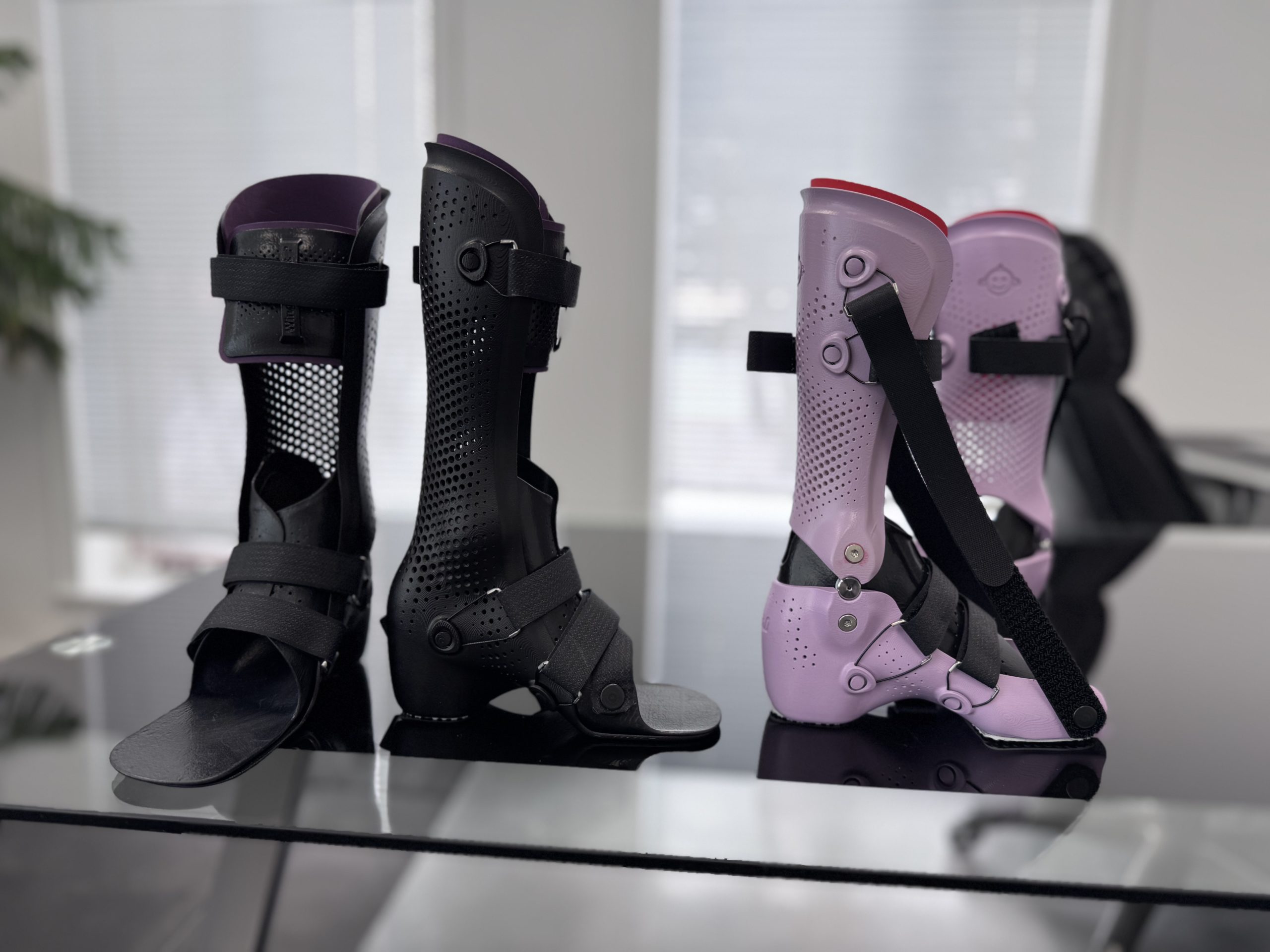
Patient Goal:To stand safely, complete activities of daily living (ADLs), and care for her child independently. Background This patient lives with a spastic movement disorder affecting both sides of the body. The condition causes persistent muscle tightness, uncoordinated movements, and significant difficulty with balance and mobility. Over time, spasticity led to structural changes in the …
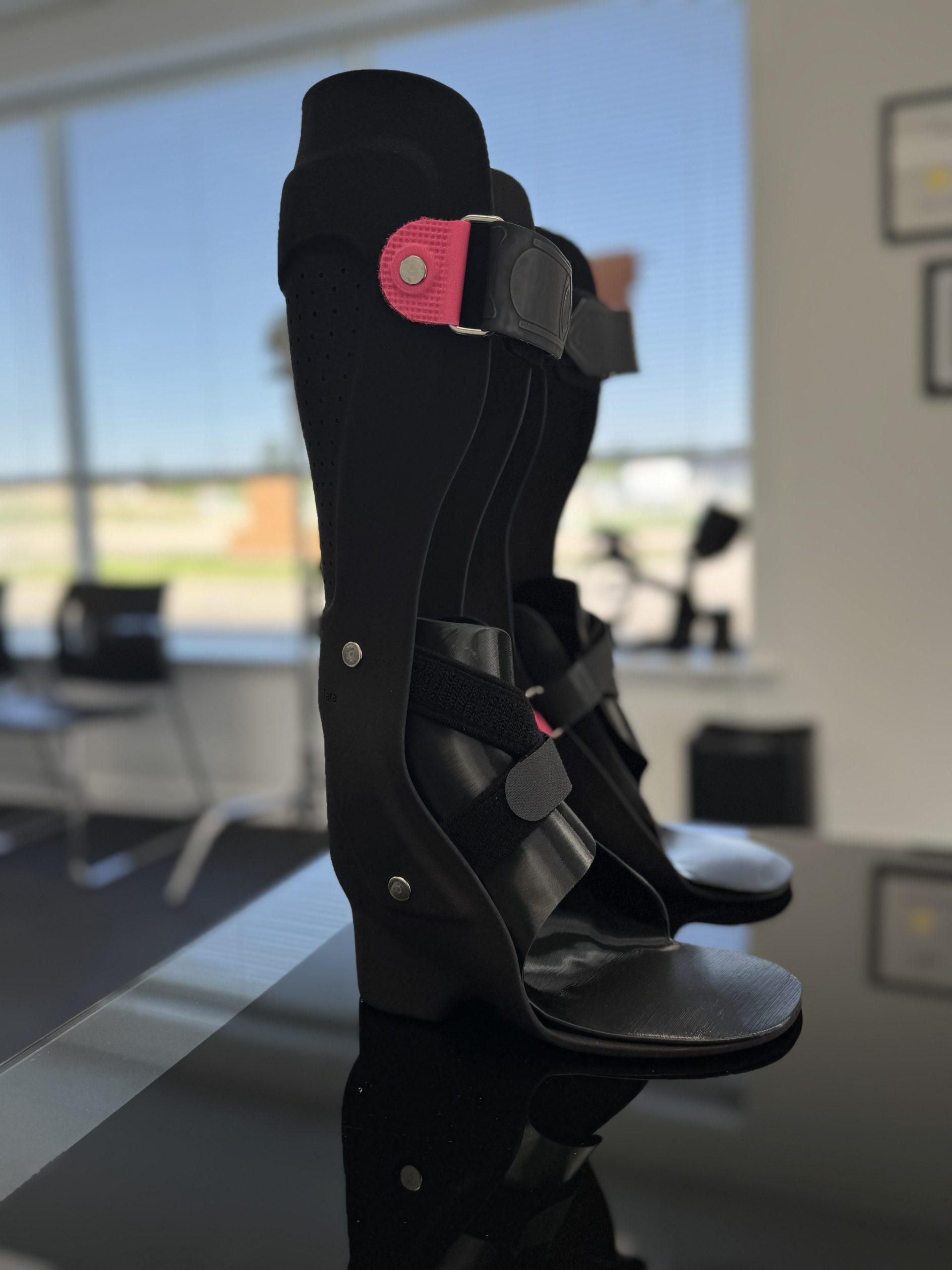
Patient Goal:
To stand safely, complete activities of daily living (ADLs), and care for her child independently.
Background
This patient lives with a spastic movement disorder affecting both sides of the body. The condition causes persistent muscle tightness, uncoordinated movements, and significant difficulty with balance and mobility.
Over time, spasticity led to structural changes in the feet, including:
- Toe pointing (equinus)
- Inward foot positioning (intoeing)
- Weight bearing on the outer edges of the feet (lateral border loading)
- Frequent ankle rolling (inversion sprains)
- Thick callusing and areas of skin breakdown
The patient also exhibited a forward-leaning posture and could not achieve heel contact with the ground due to tight calf musculature, making walking unstable and exhausting.
Previous Treatment Attempts
- Bracing in childhood, later discontinued due to discomfort and poor outcomes
- Botox injections, which eventually lost effectiveness
- Surgery was not an option
The patient had been living with limited stability, pain, and compromised independence in daily tasks.
The Custom Bracing Solution
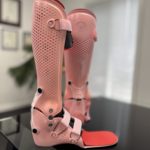
Recognizing the need for a fully individualized approach, we began a long process of designing, testing, and refining a bracing and footwear system. Our focus was not just on alignment, but on comfort, pressure relief, and function.
Key features included:
- Gel padding at vulnerable skin areas to reduce breakdown
- Heel lifts to accommodate tight calves and allow better foot contact
- Arch and metatarsal supports to redistribute pressure away from painful forefoot areas
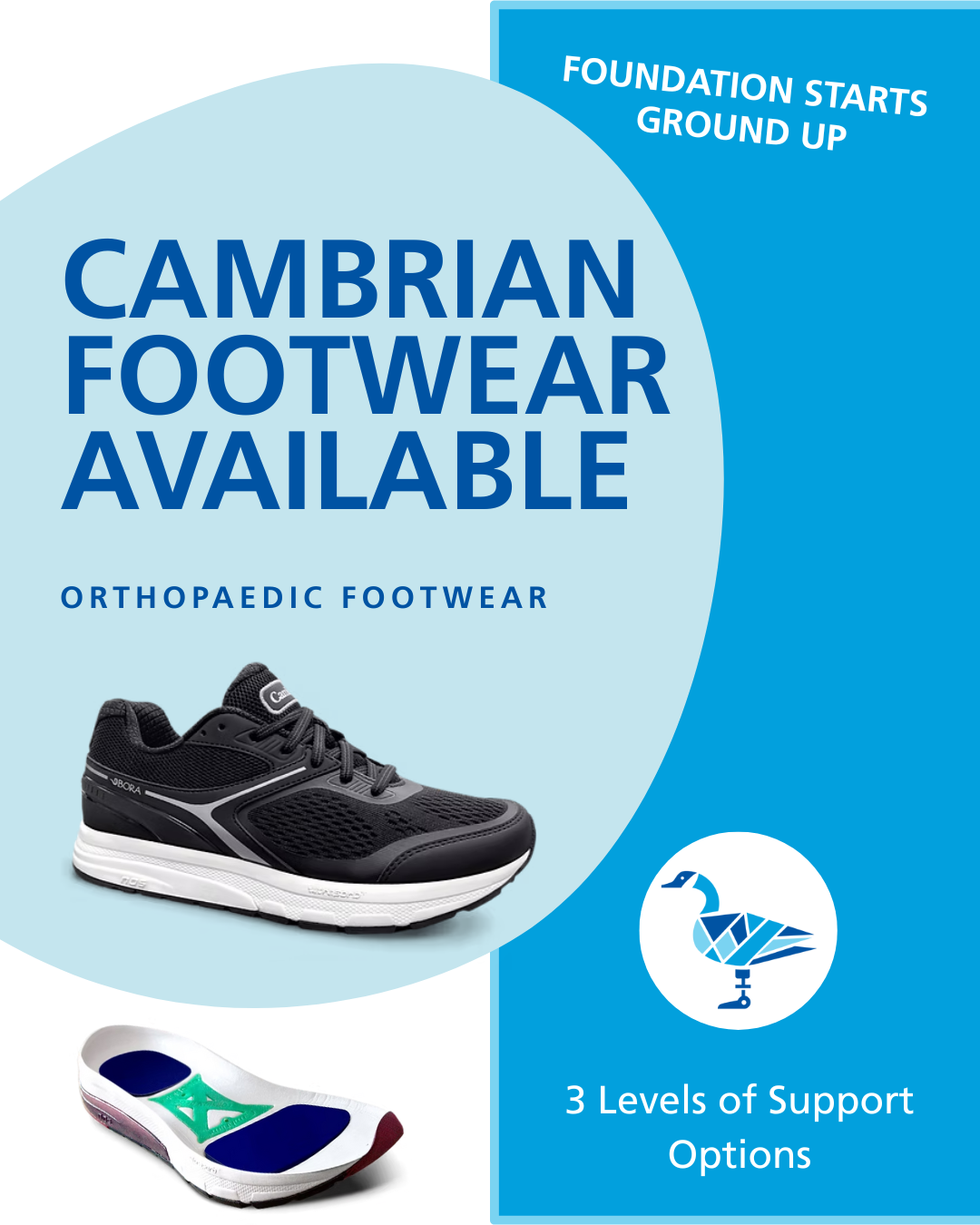
- Supportive footwear trials, ultimately selecting Propet boots with:
- Extra lateral stability
- BOA closure system for ease of use
- Custom lateral buttresses to stop ankle inversion and shift pressure medially
Outcome
After several iterations, we achieved the patient’s primary goal:
1. Stability Standing
2. Skin integrity improved
3. Independence in home activities
What Comes Next?
Bracing is not a cure, and success doesn’t mean the journey is over.
Now that stability has been restored at the foot and ankle, new biomechanical challenges are emerging further up the chain. Including compensations at the knees, hips, and trunk.
These are expected in complex neuro-orthotic cases. Ongoing orthotic support and monitoring will continue as we adapt the intervention to meet new demands.
Takeaway
This case illustrates the importance of truly custom bracing. Not just in shape, but in function and day-to-day reality. It’s a process, not a product. And for this client, it’s meant meaningful progress toward independence, and improved quality of life.