A KAFO, or knee-ankle-foot orthosis, is a brace that supports the knee, ankle, and foot as a single system. For patients working to stand, stabilize, and walk again, it can be the difference between sitting on the sidelines and getting back into life.
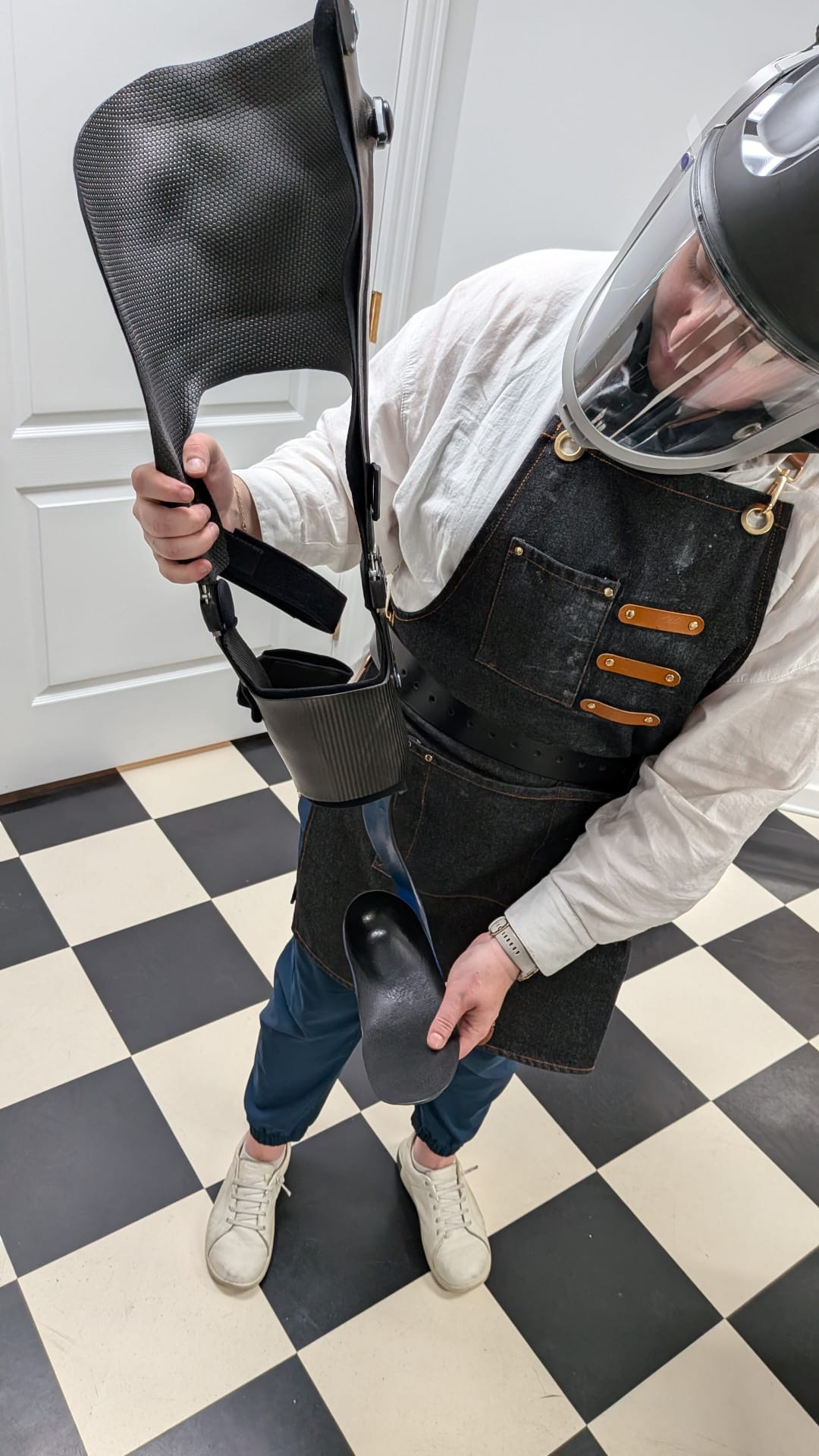
A KAFO, or knee-ankle-foot orthosis, is a brace that supports the knee, ankle, and foot as a single system. For patients working to stand, stabilize, and walk again, it can be the difference between sitting on the sidelines and getting back into life.
Why carbon fiber?
KAFOs have traditionally been made from plastic. Plastic works, but it’s heavy, and for someone managing reduced strength or control in a lower limb, that weight means more fatigue and less endurance over a day.
Carbon fiber changes the equation. It gives a KAFO the strength and rigidity it needs at a fraction of the weight, which can translate into easier movement and longer, more comfortable wear.
A carbon fiber KAFO can be a valuable option for patients living with a range of neurological lower-limb conditions, including:
- Polio and post-polio syndrome
- Multiple sclerosis
- Incomplete spinal cord injury
- Paralysis
- Traumatic brain injury
- Complications following surgery
- Trauma affecting lower-limb function
The part you don’t see: grinding safely
Fitting a KAFO to a specific person means grinding, trimming, and modifying the device by hand. With carbon fiber, that step demands respect. Grinding fractures the material into fine particles and tiny slivers of fiber. The bigger pieces just make a mess, but a fraction are small enough to be inhaled deep into the lungs, and because these fibers are sharp and durable, the body struggles to clear them. They can lodge in lung tissue and stay there. That same airborne dust is abrasive on contact, so it also irritates the skin and eyes.
That’s why proper PPE is non-negotiable whenever we grind: capturing dust at the source, shielding the eyes and skin, and above all, protecting what you breathe.
Choosing the right respiratory protection
Not all respiratory protection is equal, and the difference matters with dust this fine.
A disposable N95 is the most familiar option. It filters at least 95 percent of airborne particles, but it seals loosely, offers no eye protection, and depends entirely on a tight fit against your face. A step up is the reusable cartridge respirator, an elastomeric half- or full-face mask fitted with replaceable filter cartridges, which filters more effectively and lasts longer. Both share the same catch: they are negative-pressure masks, meaning you draw air through the filter every time you breathe, so they only protect you while a perfect seal holds. Facial hair, glasses, sweat, or a shifted strap can break that seal and let unfiltered air slip straight in, and both get warm and tiring over a long session at the grinder.
A powered respirator works the opposite way. A small blower forces filtered air into a full-face shield and holds the space behind the visor at a slight positive pressure, so any leak pushes clean air out instead of drawing dusty air in. That single difference is what makes it safer for this kind of work: your protection no longer hinges on a flawless seal. It also carries a higher rated protection factor than an N95 or a half-mask cartridge respirator, shields the eyes and face at the same time, and the steady airflow keeps it cool enough to wear correctly for the whole job.
The bottom line
The finished device is light, strong, and built to help someone move through their day with less effort. Getting there safely takes real time: fittings and adjustments run longer once you factor in gearing up and gearing down with full PPE for every pass at the grinder. That’s the balance of this craft, messy at the grinder, clean and clinical for the patient. We don’t cut corners, we just cut carbon, carefully.