

Spinal bracing
A back brace supports your spine. It can guide a spine that is still growing, help you stand taller with less pain, or protect the spine while it heals.
Common reasons people wear a back brace:

Example photo: Bauerfeind Spinova Osteo
From the back, a healthy spine looks straight. From the side, it has three gentle curves: the neck curves in, the upper back curves out, and the lower back curves in. These curves help you balance and soak up shock. A back brace supports, limits or guides how the spine moves when a curve gets too big, goes sideways, or the spine needs to heal.
Scoliosis is a sideways curve of the spine of 10 degrees or more. Most cases in children have no known cause. It is not caused by posture, backpacks or sports, and it often shows up during the growth spurt.
Signs to watch for: one shoulder or hip higher, a shoulder blade that sticks out, an uneven waist, or a bump on one side of the back when bending forward.
How a brace helps: it presses on the curve to stop it from getting bigger while a child grows, so surgery may not be needed. In a large study, teens who wore their brace about 13 hours a day or more had the best results.
A general guide for growing children. Your spine doctor also looks at age and how much growing is left.
New braces can be designed on a computer from your X-rays and a 3D scan, then 3D printed. A honeycomb pattern lets air through, so they are thinner, lighter and cooler to wear.
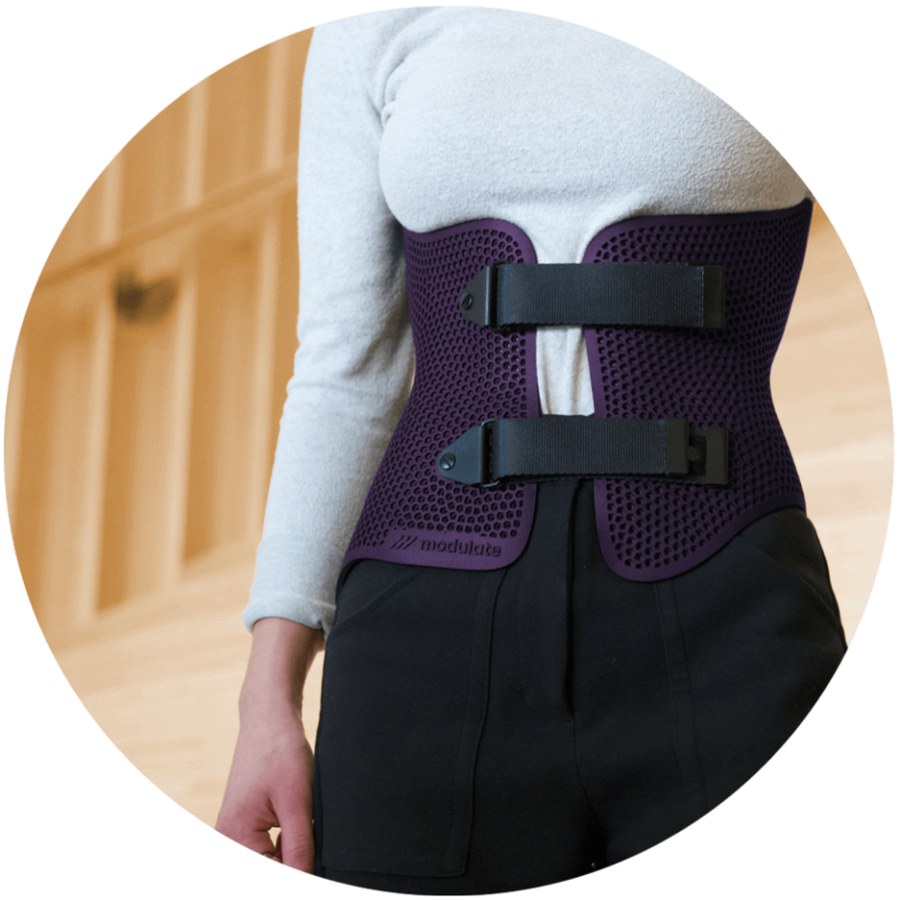
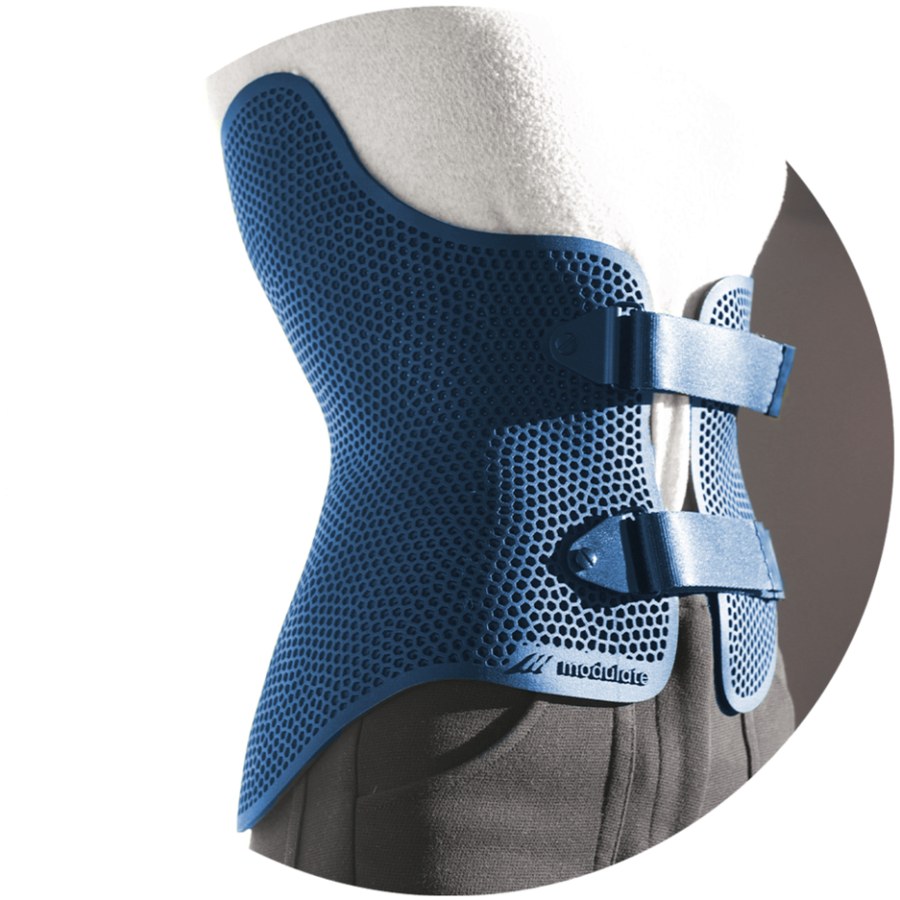
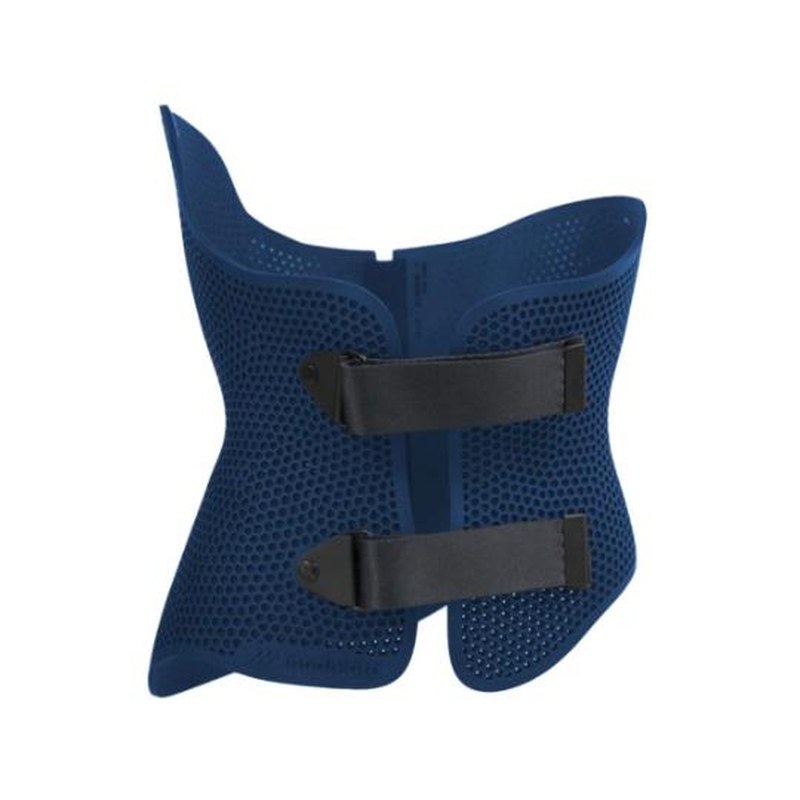
Example photos: Modulate
Kyphosis is when the upper back curves forward more than usual. It can cause back pain and tiredness, and make it harder to stand tall and keep your balance. It can come from posture, from wedge-shaped bones that form in the teen years (Scheuermann’s kyphosis), or from weak bones and compression fractures with osteoporosis.
In studies, people with osteoporosis who wore this kind of brace for several months had better back strength, posture and balance, and less pain.
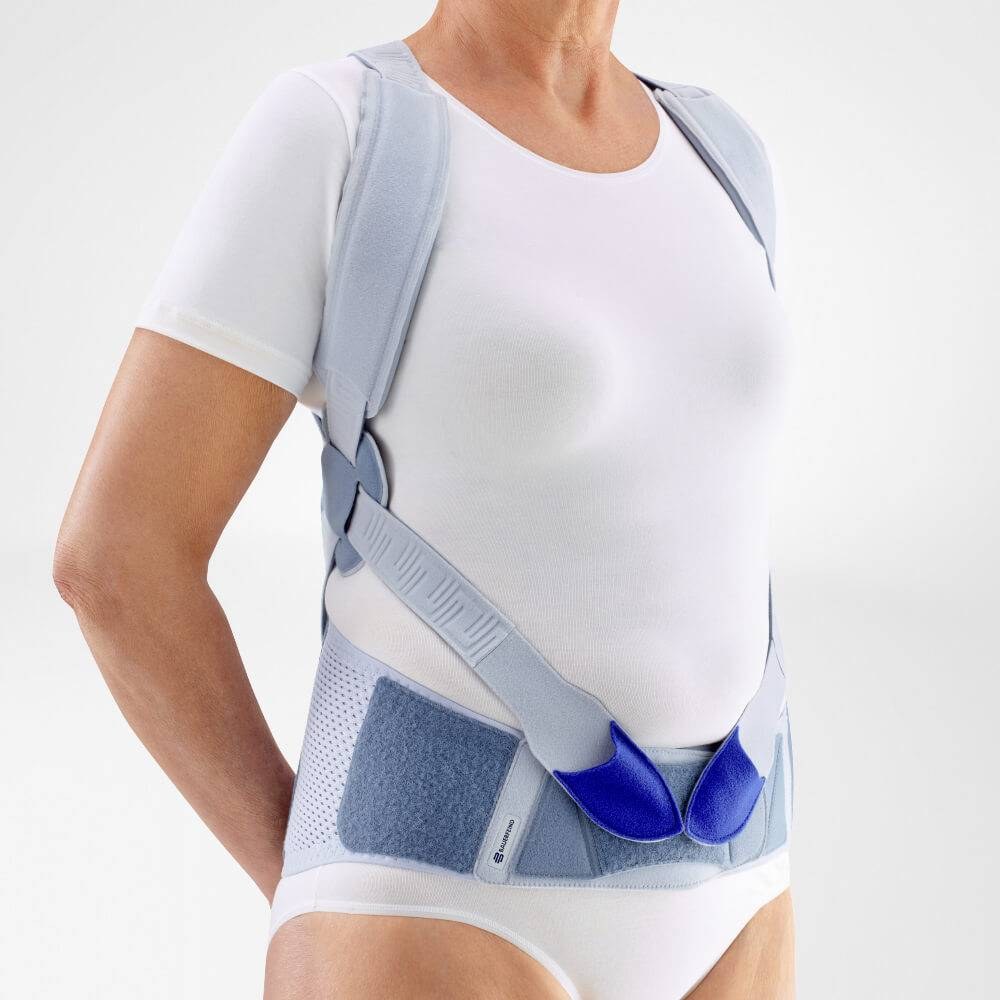
Example photo: Bauerfeind Spinova Osteo
Most spine fractures and surgeries are first treated in hospital. If your surgeon wants a brace, it limits bending and twisting while the spine heals. Your surgeon decides how long you wear it.
A soft or firm belt can support the lower back and pelvis for pain, arthritis or stenosis. In pregnancy, a support belt under the belly can ease low back and pelvic (SI joint) pain.
Back braces range from soft belts to firm custom shells. The right one depends on your condition, your body and your goals.
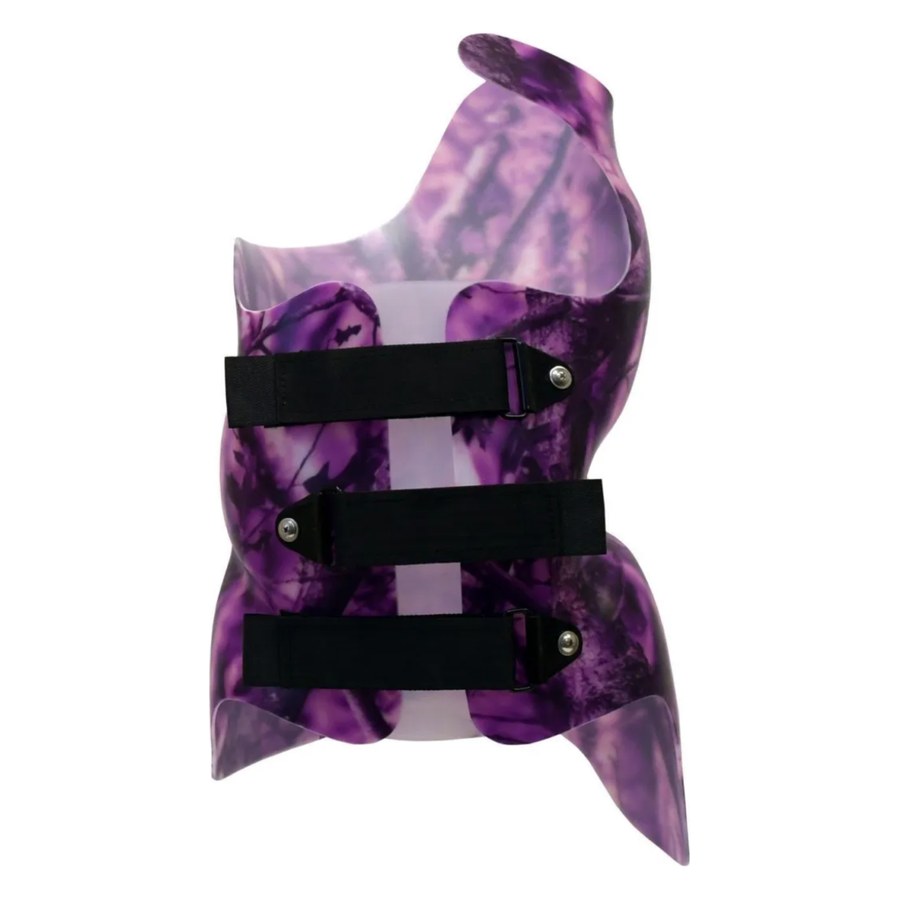
Worn most of the day and night, under clothes. Pads press on the curve to hold it while a child grows. Boston and Chêneau are common styles.
Example photo: Spinal Technology
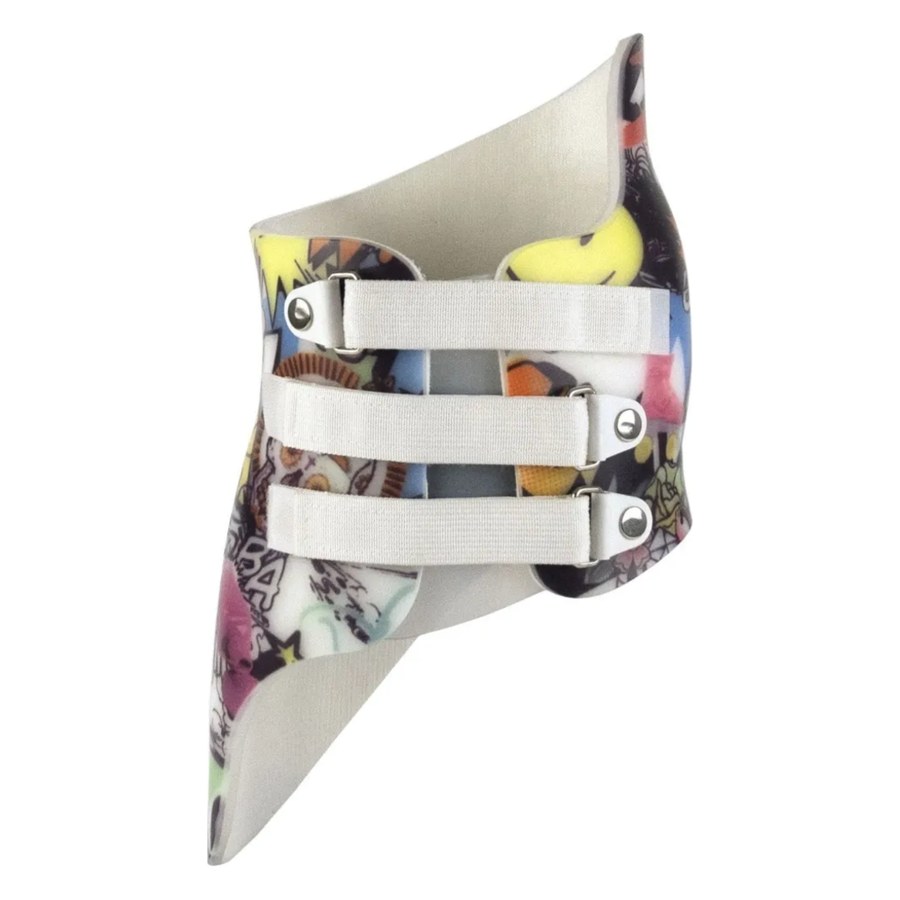
Worn only while you sleep. Lying down lets it bend the spine more than a daytime brace. An option for some curves. The Providence brace is one example.
Example photo: Spinal Technology
Designed from your X-rays and a 3D scan, then printed with a honeycomb pattern that is light and breathable.
Example photo: Modulate
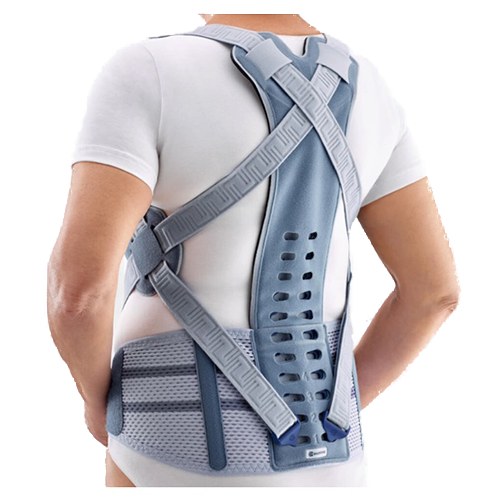
A light brace with a shaped back frame and crossed straps. It gently straightens the upper back and gets the back muscles working.
Example photo: Bauerfeind Spinova Osteo
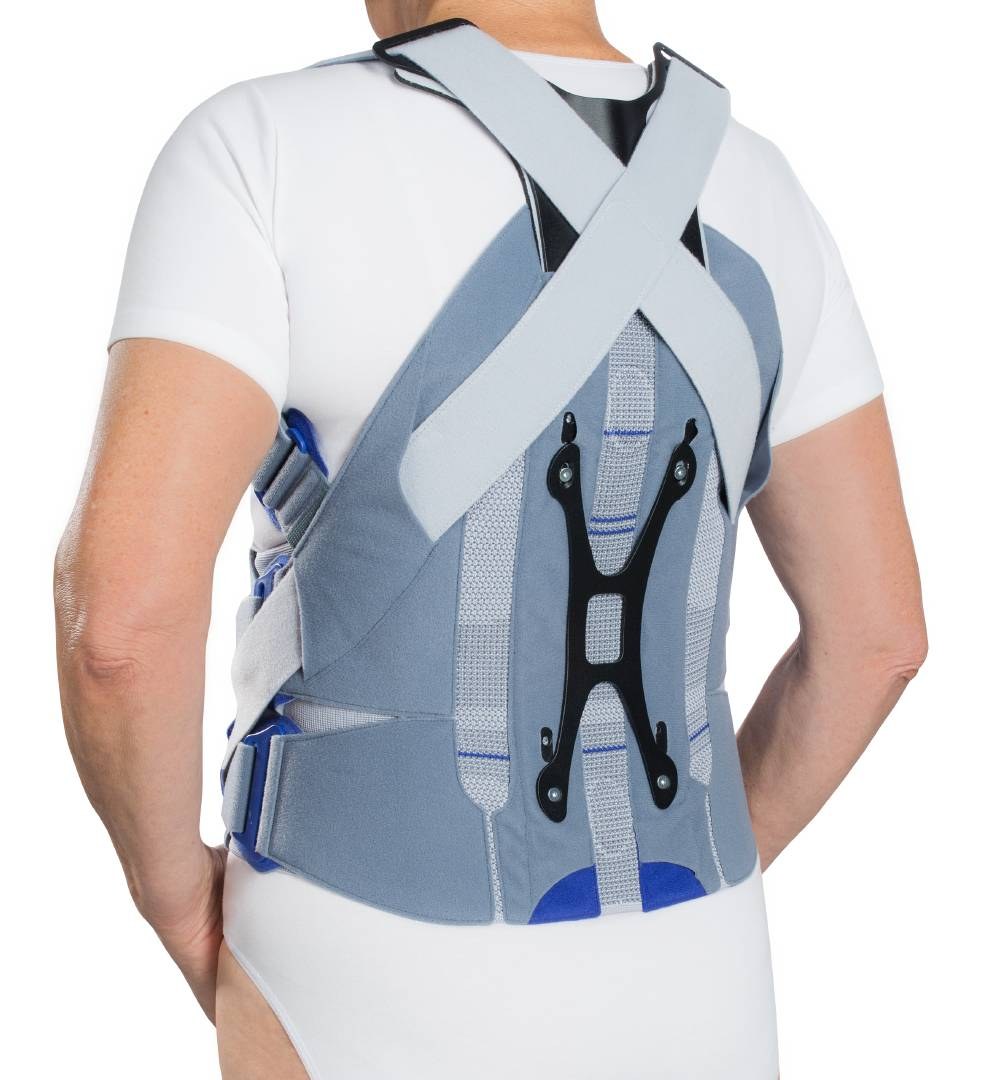
More support for the middle and lower back, with a firm back frame and shoulder straps. Often used for osteoporosis and painful kyphosis.
Example photo: Bauerfeind SofTec Dorso
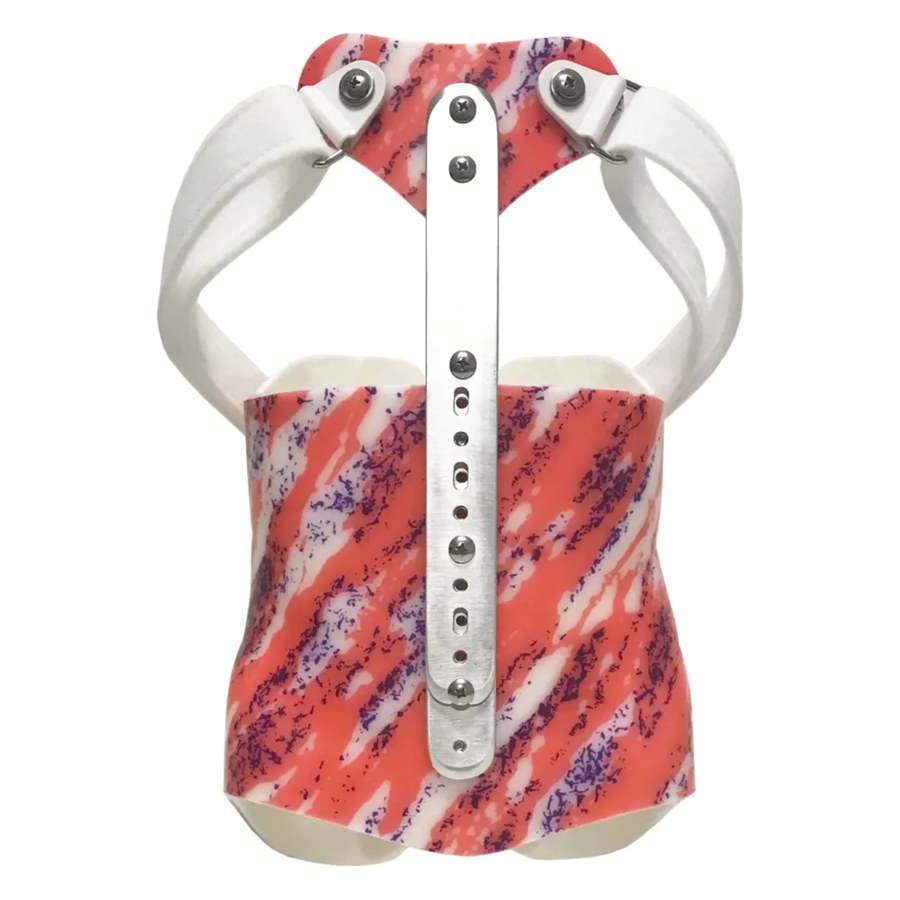
A firm custom brace for a stiff or growing kyphosis, such as Scheuermann’s kyphosis. Pads and shoulder straps help the upper back stand taller.
Example photo: Spinal Technology
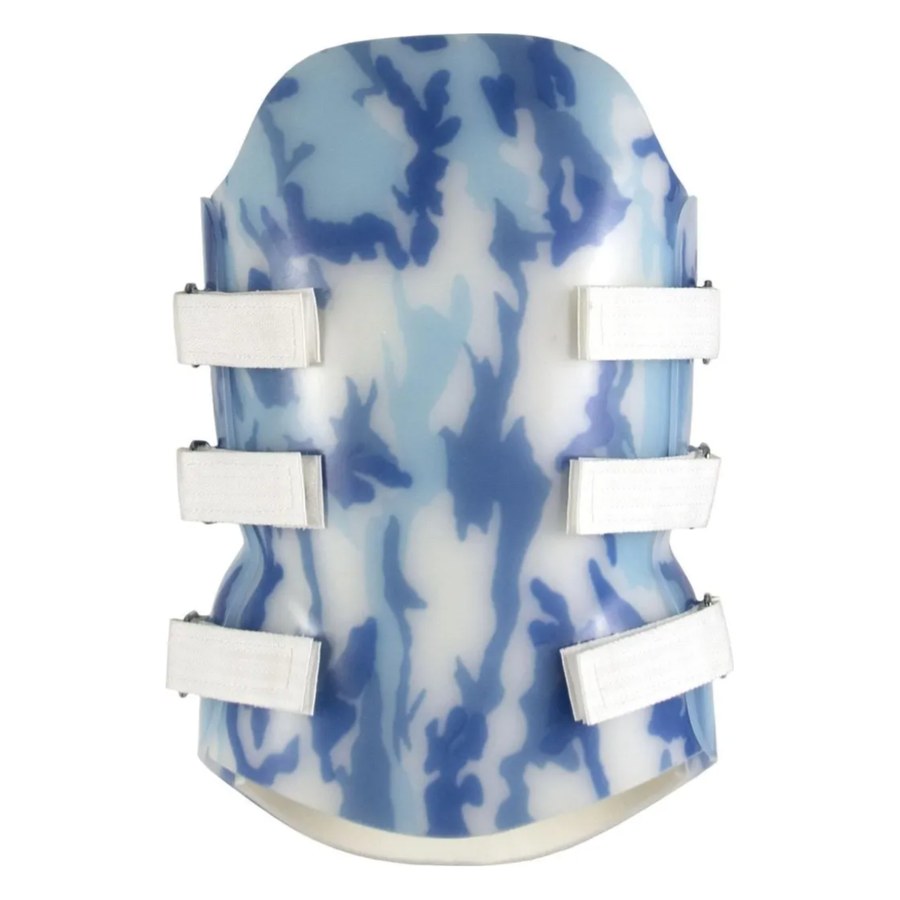
A firm plastic shell made from a scan of your body. It wraps the trunk and limits bending and twisting, for example after a fracture or surgery.
Example photo: Spinal Technology
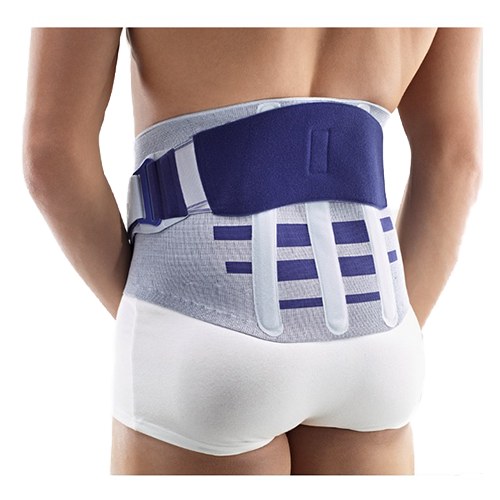
Wraps the lower back and hips with soft or firm panels. For back pain, arthritis or stenosis. Many are ready-made and fitted to you.
Example photo: Bauerfeind LumboLoc Forte
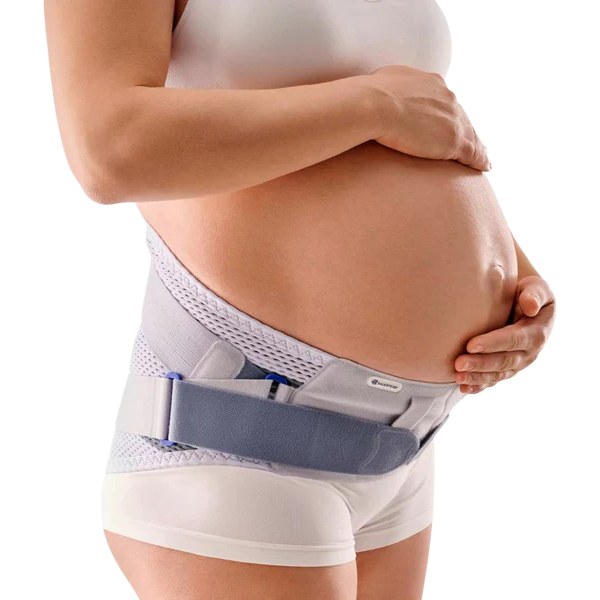
A soft belt that sits low around the pelvis. It supports the belly in pregnancy and steadies the sacroiliac (SI) joints to ease low back and pelvic pain.
Example photo: Bauerfeind Spinova Mum
Our clinicians help you find the right amount of bracing. You get the support you need, and your muscles still do as much work as they can.
Your spinal bracing journey, step by step.
A custom spinal brace needs a prescription from your doctor. Bring recent X-rays, or tell us where they were taken. You can book your consultation and assessment before you have a prescription.
We talk about your condition, daily life and goals. With your consent, we review your X-rays with you in clinic, check your posture and take measurements or a 3D scan.
We choose the best brace with you, based on your assessment and funding. Custom braces are made from your scan. For some needs, we fit a ready-made brace and adjust it to you.
We fit the brace, check comfort and pressure, and show you how to put it on and take it off. You get a wearing schedule. For scoliosis, your spine doctor may order an X-ray in the brace.
Build up your wearing time a little each day and check your skin daily. We adjust the brace as needed, and growing children need regular fit checks.
We work with orthopedic and spine surgeons, physiatrists, pediatricians, neurologists, oncologists and family doctors.
To refer, use your own prescription pad or our online referral, and fax to 1 (306) 912-7807. Include the diagnosis, the spinal levels and what you would like the brace to do. For scoliosis and kyphosis, please send recent standing X-rays and the Cobb angle if you have it.
A prescription is required before a custom spinal brace is made and dispensed. For SAIL funding, the prescription must come from a specialist. Oncologists can also prescribe back braces for SAIL.
It depends on why you need it. Full-time scoliosis braces are often worn 18 to 23 hours a day, because more hours work better. Night-time braces are worn only while you sleep. Posture braces are often worn for a few hours at a time, during activities.
Wear a thin, snug cotton t-shirt or tank top under a firm brace. Turning it inside out can stop the seams from rubbing. Many soft and posture braces can be worn over or under clothes.
Posture braces are designed to get your back muscles working. Firm braces are worn for a set time and a set reason. Keep up the exercises from your physiotherapist and stay as active as you can.
Children with scoliosis usually wear a brace until they stop growing. Kyphosis and posture braces are often worn for several months. After a fracture or surgery, your surgeon tells you when to stop.
You can book a consultation and assessment without one. A prescription is needed before a custom brace is made and dispensed. Plans may cover all or part of the cost, and the rest is your responsibility. WingTek direct bills SAIL, NIHB, MN-S, SGI, VAC and WCB when you are eligible. Payment or funding approval is needed before we make your brace.
A Certified Orthotist is a clinician trained in bracing. We find the support that fits your spine, your body and your goals.
Call 306-566-4666, email [email protected], or request an appointment online.