
For patients, families and care teams

Diabetic Foot and Wound Offloading

Most diabetic foot wounds are caused by pressure. Offloading takes that pressure off so a wound can heal, then protects the foot so it stays healed.

We work with your doctor, nurse practitioner and wound care nurse at every step, from an open wound to life-long protection.
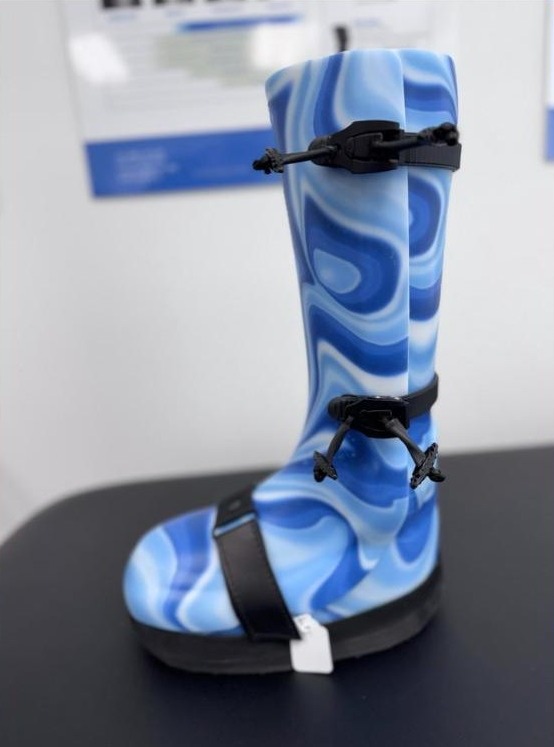
Custom CROW walker boot in a blue swirl pattern with a rocker sole, made by WingTek for offloading the diabetic foot

Why diabetic foot care matters

Diabetes can quietly damage the nerves and blood flow in the feet. A small sore can become a serious wound before anyone notices. Knowing the risk is the first step to preventing it.

29%

of people in Saskatchewan live with diabetes or prediabetes

Diabetes Canada

Up to 25%

of people with diabetes will have a foot ulcer in their lifetime

Diabetes Canada

85%

of diabetes-related amputations start with a foot ulcer

Diabetes Canada

80%

of diabetes-related leg amputations can be prevented with timely care

Diabetes Canada

The cost of a wound

20 times

more likely to have a lower limb amputation than people without diabetes

Diabetes Canada

7,720

hospital stays each year in Canada are linked to diabetes-related amputations

Diabetes Canada

19 days

is the average hospital stay for a leg amputation

Diabetes Canada

$21,371

average health system cost of one diabetic foot ulcer, rising to $52,360 over 3 years if it becomes chronic

Wounds Canada

Wounds Canada reports that when a diabetic foot ulcer leads to an amputation, about half of people die within five years. Early care changes that path.

How high blood sugar affects the whole body

Diabetes is more than a number on a meter. Over time, high blood sugar damages blood vessels all through the body. That is why it affects the feet, and also the brain, eyes, heart and kidneys.

Healthy blood vesselSmooth and wide open. Blood carries oxygen and nutrients to every part of the body.
Too much sugarExtra sugar in the blood sticks to the vessel wall. Over time the wall gets inflamed, thick and stiff.
Narrow, stiff vesselThe opening gets smaller. Less blood gets through, so nerves and skin get less oxygen and heal slowly.

Sugar does this by sticking to proteins in the vessel walls, a process called glycation. It forms stiff cross-links that harden the vessels. It builds up slowly over years, which is why steady blood sugar control matters.

Why the feet are hit hard

Nerves are fed by tiny blood vessels. When those vessels narrow, and high sugar harms the nerves directly, the nerves stop working well. The longest nerves are often affected first, and the longest nerves in the body go to the feet. This is called diabetic neuropathy. In people with diabetes, narrowed arteries are most common below the knee, so blood flow to the feet often drops first.

BrainAbout 2.3 times more likely to be in hospital for a stroke, and about 73% higher risk of dementia.
EyesAbout 2 times more likely to have vision loss. Tiny vessels at the back of the eye are damaged.
HeartAbout 3 times more likely to be in hospital for heart disease or heart failure.
KidneysAbout 4 times more likely to be in hospital for end-stage kidney disease.
NervesOne-third to one-half of people with diabetes have nerve damage. Feeling in the feet fades first.
FeetLost feeling plus poor blood flow lets a small sore turn into a serious wound.

Hospital rates are for adults with diabetes compared with adults without diabetes in Canada (Public Health Agency of Canada, 2023 to 2024). Keeping blood sugar, blood pressure and cholesterol in your target range lowers the risk of all of these.

How a small wound becomes an amputation

Offloading breaks the chain at step 3. When the pressure comes off, the wound has a chance to heal.
A wound hiding under a callusHard callus presses down from above while the bone presses up from below. The skin in between breaks down.

Callus is a warning sign

A thick callus on the bottom of the foot means that spot is taking too much pressure. The callus is hard, so it adds even more pressure, like walking on a stone.

The skin under a callus can break down and bleed before you see a wound. In one study, foot ulcers were 11 times more likely to form under a callus.

  • Dark, red or bloody spots in a callus mean the skin underneath is breaking down. Get it checked right away.
  • Don’t cut or file calluses yourself. See a foot care nurse or foot specialist.
  • Ask about orthotics that take pressure off the area so the callus doesn’t come back.

Healing takes a team

A diabetic foot ulcer heals best when all four parts of care happen together.

Blood sugarYour doctor, nurse practitioner and diabetes educator
Infection careYour doctor or nurse practitioner
Wound careYour wound care nurse and doctor
OffloadingA Certified Orthotist takes the pressure off the wound

How offloading works: total contact, then relief

A wound on the bottom of the foot heals when it stops carrying weight. We do this in two steps.

Without offloadingOn a flat insole or regular shoe, weight lands on the heel and the ball of the foot. The wound takes a big share of every step.
Step 1: Total contactThe device is shaped to touch the whole bottom of the foot. Weight spreads over the largest area, so no single spot takes too much.
Step 2: ReliefWe then make the area under the wound softer, often by filling it with silicone or a gel-like material. The wound carries much less weight while the rest of the foot takes the load. We don’t leave an empty pocket, because the edges of a hole press into the skin around the wound and can cause new problems.
Wound Pressure on the foot Soft fill (silicone or gel)

Why knee-high devices come first

A knee-high device does more than an insole. Its rigid shell and rocker sole hold the ankle still, so the front of the foot is not pushed into the ground at each step. Part of the load is also carried by the lower leg. This is why international guidelines list a knee-high device as the first choice for an open wound on the bottom of the foot.

Spread the pressure. A shoe is often not enough. Regular shoes, even good therapeutic shoes, do not take enough pressure off an open wound. Shoes and orthotics are for after the wound has closed and matured.

Keep moving, but walk protected

to the heart
Your foot and calf are pumpsEach step squeezes the veins in the foot and calf and pushes blood back up to the heart.

Your foot and calf are pumps. Each step and each ankle movement squeezes the veins and pushes blood back up to the heart. This makes room for fresh blood with oxygen and helps keep swelling down.

While a wound is open, the guidelines say less weight on the foot helps it heal. So the goal is to move safely, not to walk more:

  • Walk protected. Every step, even to the bathroom at night, is in your offloading device.
  • Keep the pump working. Seated exercises such as ankle pumps and leg lifts keep blood moving without loading the wound. Studies of non-weight-bearing exercise showed some reduction in wound size and no harm.
  • Don’t sit still for hours. Ask your team how much walking is right for you, and build up slowly once the wound has closed.

The offloading care pathway

This path follows the International Working Group on the Diabetic Foot (IWGDF) 2023 guidelines and the Wounds Canada Wound Prevention and Management Cycle: find the at-risk foot, treat the cause, offload until the wound closes, protect the new skin, then keep the foot in remission.

  1. Step 1Screen and protect
  2. Step 2Find the cause
  3. Step 3Offload until closed
  4. Step 4Protect while it matures
  5. Step 5Stay in remission
  1. 1

    Screen and protect

    Who helps: You, your family, foot care nurses and doctors

    • Find the at-risk foot: loss of feeling, poor blood flow, deformity, callus or a past ulcer.
    • Check both feet every day. Take your socks off at every visit, and have a full foot exam at least once a year.
    • Treat warning signs early: callus, blisters, corns and nail problems. Wear the right footwear.
  2. 2

    Find the cause

    Who helps: Your doctor or nurse practitioner, wound care nurse and a Certified Orthotist

    • Your doctor or nurse practitioner sends a prescription for offloading.
    • We look at what caused the wound: pressure, footwear, foot shape and how you walk.
    • Your care team checks blood flow and infection. Both must be treated for the wound to heal.
  3. 3

    Offload until closed

    Who helps: Your wound care team and a Certified Orthotist

    • First choice: a knee-high device that can’t be taken off, such as a total contact cast or a VACOped locked closed.
    • If that is not safe or possible: a removable knee-high walker, worn for every step.
    • If a knee-high device can’t be used: an ankle-high offloading device.
    • Refits as the wound and swelling change. Your team handles infection, blood flow and wound care at the same time.

    VACOpedKnee-high walkersTotal contact insoles

  4. 4

    Protect while it matures

    Who helps: Your care team and a Certified Orthotist

    • Closed is not the same as healed. The new skin and the tissue under it are still weak.
    • Step down in stages, often from a knee-high device to an ankle-high device to shoes and orthotics.
    • Your orthotics and shoes are ready before the device comes off. Wearing time and walking are built up slowly, with skin checks.

    Custom orthoticsExtra depth shoes

  5. 5

    Stay in remission

    Who helps: You, a Certified Orthotist and your care team

    • A healed foot is in remission, not cured. About 40% of foot ulcers come back within a year.
    • Wear custom orthotics and footwear that take pressure off the old wound site, indoors and out.
    • An AFO or CROW boot may be needed when there is deformity or an unstable ankle.
    • At the first sign of a sore, go back to your offloading device and call your care team.

    Multilayer orthoticsCustom shoesAFOsCROW boots

Closed on top, still healing insideNew skin covers the wound first. The tissue underneath keeps rebuilding for months.

Closed is not the same as healed

When the skin closes, the work isn’t done. The new skin is thin, and the tissue underneath keeps rebuilding for up to a year. Even then, scar tissue only gets back about 80% of its original strength.

The first weeks and months after closing are the riskiest time for a wound to open again. There is no set number of weeks in the guidelines, so we step down in stages and check your skin at each step. Coming out of the device too early is a common reason a wound comes back.
What the research says about timing

About 90%of wounds healed within 12 weeks in a total contact cast, compared with 65% in a removable walker.Armstrong et al., 2001
About 6 weeksaverage time to heal when the walker was locked on (42 days), compared with 58 days when it could come off.Armstrong et al., 2005
2 weeksa wound is usually counted as healed only once the skin has stayed closed for about 2 weeks.Shakir et al., 2025
Up to 12 monthsthe tissue under new skin keeps remodelling. Scar tissue reaches only about 80% of its original strength.StatPearls, Wound Healing Phases
40% / 60% / 65%of healed foot ulcers come back within 1, 3 and 5 years. A healed foot is in remission, not cured.Armstrong, Boulton and Bus, 2017
Up to 3 stepsa common step-down is knee-high device, then ankle-high device, then therapeutic shoes and orthotics, with activity built up slowly.Lazzarini and van Netten, 2025

Long-term protection

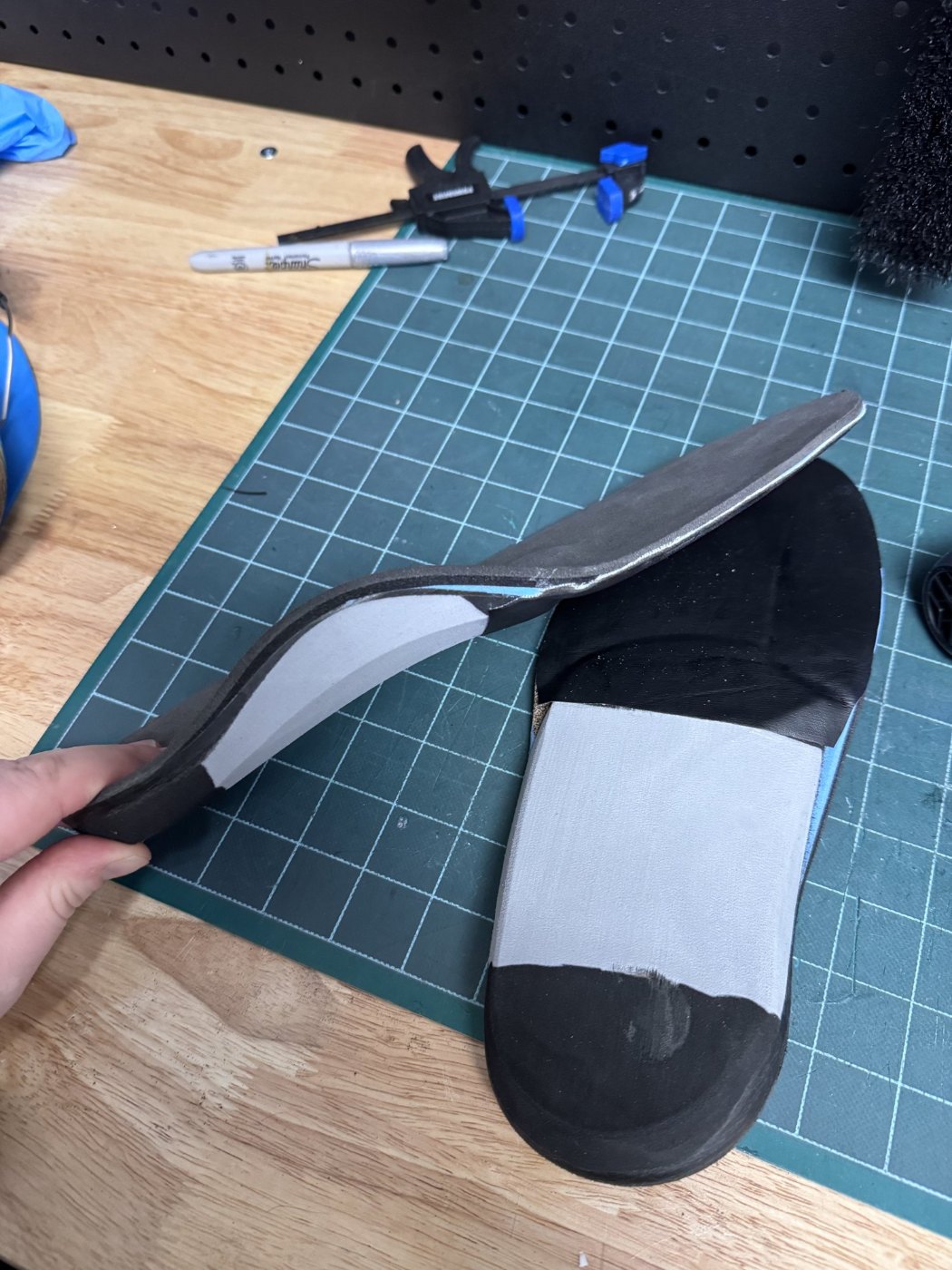
Custom multilayer diabetic foot orthotic being finished in the WingTek lab

Multilayer orthotics

Custom orthotics built in layers to spread pressure and protect healed skin.
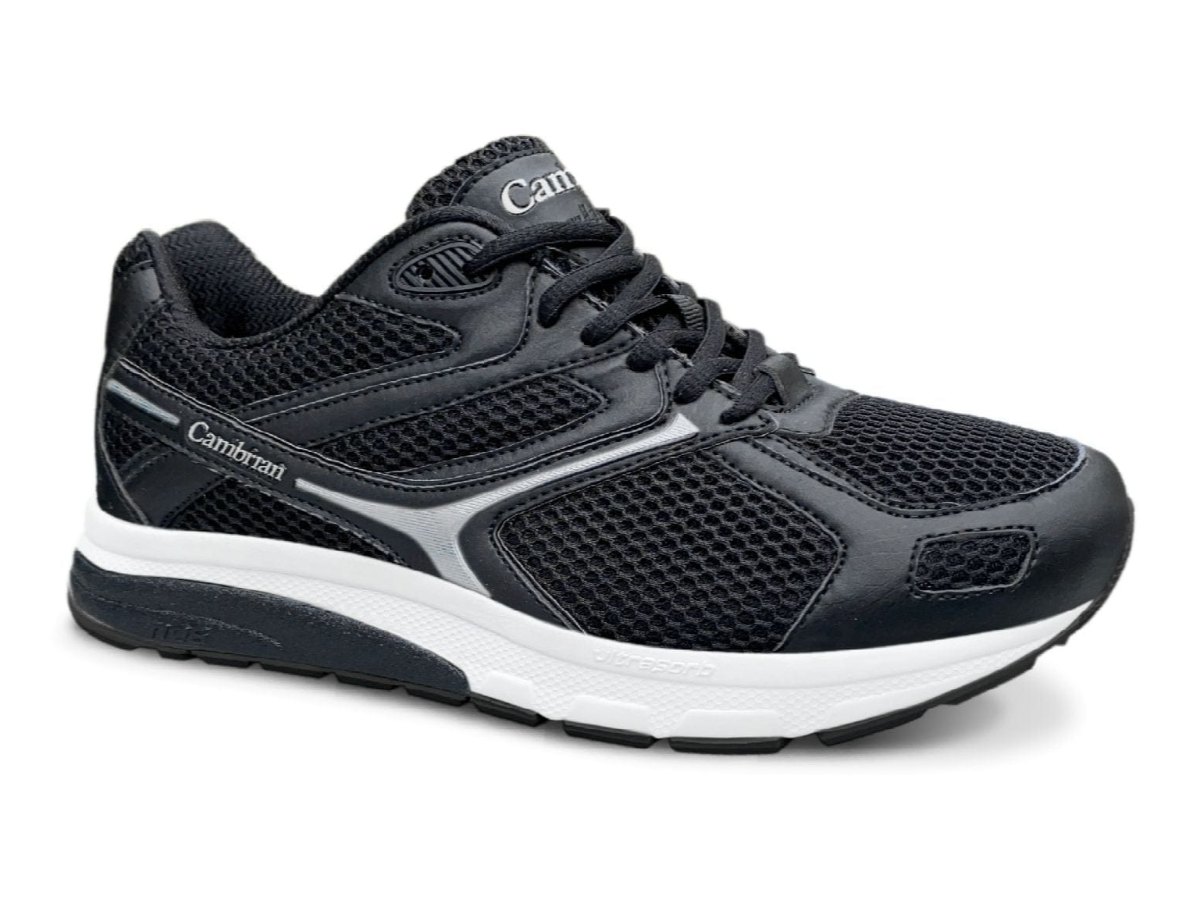
Cambrian Ultra Mesh extra depth walking shoe in black and white

Extra depth and custom shoes

Enough length, width and depth for the foot and the orthotic. Custom shoes when needed.
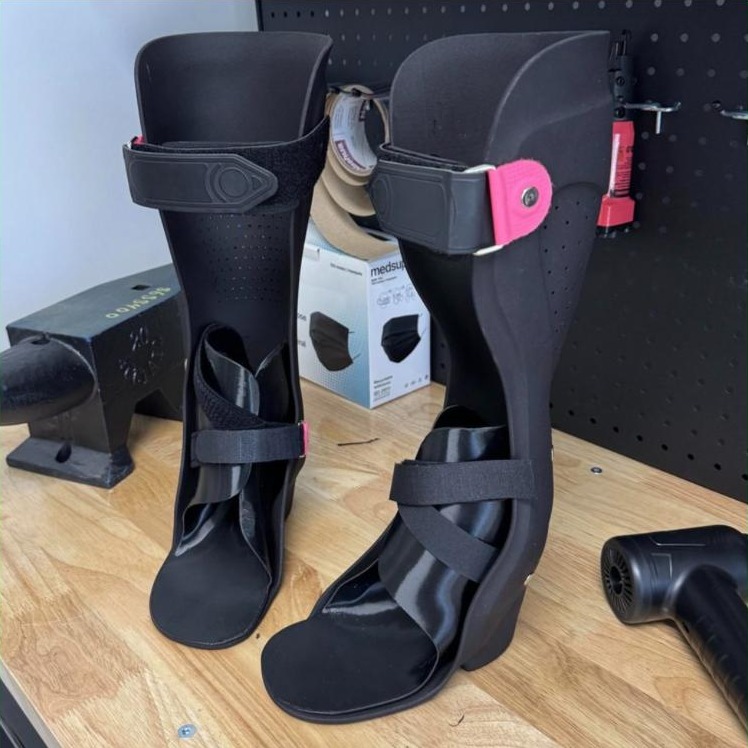
Black custom solid ankle foot orthoses made by WingTek

AFOs

Support the foot and ankle when there is deformity or an unstable joint.
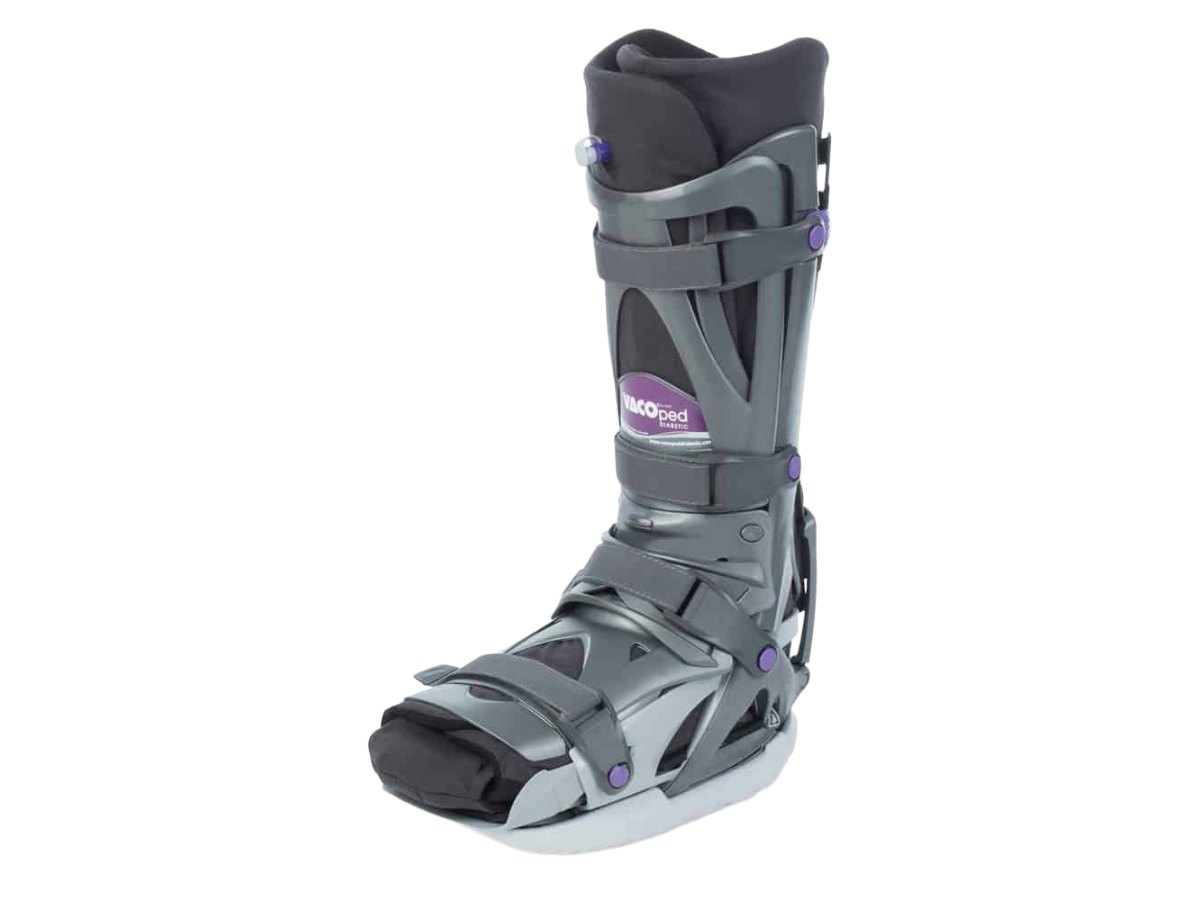
VACOped diabetic offloading boot with vacuum cushion and rocker sole
Product photo: VACOped by OPED
How the vacuum cushion works (video by OPED)

Featured: the VACOped offloading boot

The VACOped Diabetic is a knee-high walker built for offloading the diabetic foot. A cushion filled with small beads moulds to the foot and leg. When the air is pumped out, the beads lock into a firm shape that touches the whole foot and leg, like a cast.

  • Total contact. The vacuum cushion shapes to the foot and lower leg.
  • Relief. The cushion and footbed are set up to take load off the wound.
  • Rocker sole. Helps you walk more naturally while staying offloaded.
  • Adjustable. Re-shaped at each visit as swelling goes down.
  • Can be locked so it can’t be taken off, when the care team wants cast-like wear.

It is used for diabetic foot ulcers, after toe and forefoot amputations, and for Charcot foot.

What the research shows

Pressure relief

In 20 people with diabetes and nerve damage, a total contact cast lowered the force under the foot by 75% and the VACO diabetic boot by 64%. The VACO boot spread force the most evenly across the foot.

Götz et al., 2017, International Orthopaedics

Healing

In an NHS evaluation of 20 people who could not use a non-removable device, most with infected wounds, 9 of 17 ulcers healed within 8 weeks. Ulcers still open were about 81% smaller on average.

Bowen and Spruce, 2019, The Diabetic Foot Journal

Even pressure

Vacuum cushioned walkers relieved pressure under the front of the foot as well as post-operative shoes, and spread pressure better across the midfoot.

Gait & Posture, 2009

Wearing it matters

In a randomized trial, 83% of wounds healed in 12 weeks when a walker was made non-removable, compared with 52% when people could take it off.

Armstrong et al., 2005, Diabetes Care

Results vary from person to person. Removable devices work best when they are worn for all standing and walking.

Charcot foot

Charcot foot can happen in feet with nerve damage. The bones get weak and brittle, almost like chalk, so they can crack and crumble during normal walking. Because the foot can’t feel it, the person keeps walking on it, and the joints in the middle of the foot collapse. The high arch on the inside of the foot can drop into a rocker bottom shape that puts high pressure on the middle of the sole.

Watch for a red, hot, swollen foot, often with little or no pain. It is often more than 2°C warmer than the other foot, and can be mistaken for a sprain, gout or infection. If Charcot foot is suspected, protect and offload the foot right away while the doctor confirms it.

High arch
Typical footSeen from the inside. The heel and the ball of the foot carry the weight, and the arch is high.
High pressure
Charcot rocker bottomThe weakened bones collapse. The middle of the sole takes the load and can break down.

Charcot care by phase

  1. Phase 1ActiveThe foot is hot and swollen. It is held still and offloaded in a knee-high cast or device, with regular checks as swelling and heat change.
  2. Phase 2SettlingHeat and swelling go down as the bones heal. A CROW boot or custom brace protects the foot through this long phase.
  3. Phase 3StableThe foot has healed in its new shape. Custom shoes, often with a rocker sole, and custom orthotics protect it for life. Some people also need an AFO.

The CROW boot

A CROW (Charcot Restraint Orthotic Walker) is a custom boot made from a scan or cast of your leg. It holds the foot and ankle still, spreads pressure over the whole foot and lower leg, and has a rocker sole to help you walk. We make them in clinic, in plain colours or fun patterns.

Preventing foot wounds

Most foot wounds can be prevented. These everyday habits follow Diabetes Canada and Wounds Canada advice.

Every day

  • Check your feet and legs for cuts, cracks, blisters, redness or colour changes.
  • Use a hand mirror, or ask for help, to see the bottom of your feet.
  • Wash with mild soap and water. Don’t soak your feet, as it dries the skin.
  • Dry well, especially between the toes.
  • Moisturize dry skin, but not between the toes.
  • Check your shoes for stones or debris before you put them on.
  • Don’t walk barefoot if you have lost feeling in your feet.

Ongoing care

  • Take your socks off and ask your provider to check your feet at every visit.
  • Have a full foot exam at least once a year, or more often if you are at high risk.
  • Trim toenails straight across and file the edges. Don’t cut them too short.
  • See a foot care nurse or foot specialist for corns, calluses, warts and nails.
  • Wear well-fitted shoes with enough length, width and depth.
  • Wiggle your toes and move your ankles a few times a day.

See your doctor right away for swelling, warmth, redness or pain in your legs or feet, or any open sore. Don’t wait.

For doctors, nurses and wound care teams

We work with family physicians, nurse practitioners, wound care and foot care nurses, home care, vascular and orthopedic surgeons, infectious disease and endocrinology. Patients are seen by a Certified Orthotist, CO(c). You manage the wound. We manage the pressure and keep you updated.

When to refer

  • Loss of protective sensation
  • Peripheral arterial disease
  • Foot deformity or heavy callus
  • An active ulcer, or one that is slow to heal
  • Suspected Charcot foot (a hot, swollen foot)
  • A past ulcer or amputation

What we provide

  • VACOped and other knee-high walkers
  • Total contact insoles with relief
  • CROW boots for Charcot foot
  • Custom multilayer diabetic orthotics
  • Extra depth and custom footwear
  • AFOs for deformity or an unstable ankle
  • Refits as the wound and swelling change

How to refer

  • Use your prescription pad or our online prescription form
  • Fax 1 (306) 912-7807
  • Include the diagnosis, the wound location and “offloading”
  • Note infection, blood flow concerns or suspected Charcot foot
  • For a time-sensitive wound, call 306-566-4666 after you send it

Watch: how total contact offloading works

This short video from OPED shows how a vacuum cushion forms a total contact shell around the foot and leg, much like a cast, with a rocker sole for walking. We assess each patient to choose the right offloading device.

Video: OPED

Education for your team. We can present on offloading, Charcot foot and footwear for your clinic, home care or long-term care team. Call 306-566-4666 or email [email protected].

Common questions

Why can’t I just wear good shoes while my wound heals?

Shoes do not take enough pressure off an open wound on the bottom of the foot. The guidelines say to use an offloading device, not regular or therapeutic shoes, until the wound closes.

Do I have to wear the boot all the time?

Wear it for all standing and walking, indoors and out, including short trips at night. Even a few steps without it press on the wound. Healing is better when the device is worn as directed.

Should I stop walking while my wound heals?

Less weight on the foot helps an open wound heal, so walk only as much as your team advises, and always in your device. Keep moving in safe ways, such as seated ankle pumps, to keep blood flowing and swelling down.

How long will I need offloading?

It depends on the wound, blood flow, infection and how closely the device is worn. Many wounds take weeks to a few months to close. Then you step down to orthotics and shoes with your care team.

Do I need a prescription?

Yes. A prescription from your doctor or nurse practitioner is needed before a device is made and dispensed. You can book a consultation and assessment before you have one.

Will my insurance or program pay?

Many plans and programs cover offloading devices, orthotics and footwear, in full or in part. Any amount not covered is your responsibility, and our price is the same no matter who is paying. We direct bill SAIL, NIHB, Métis Nation-Saskatchewan, SGI, Veterans Affairs Canada and WCB when you are eligible.

How long will I stay in the boot after my wound closes?

There is no set number of weeks in the guidelines. The new skin is weakest right after it closes and keeps strengthening for up to a year. We step you down in stages, often from a knee-high device to an ankle-high device to shoes and orthotics, and check your skin at each step.

What happens after my wound heals?

Your foot is in remission, not cured. About 40% of healed ulcers come back within a year, so you wear custom orthotics and supportive shoes for all standing and walking. If a sore returns, go back to your offloading device and call your care team.

Start offloading early

Early pressure relief gives a wound the best chance to heal.

Call 306-566-4666, email [email protected], or send a prescription online.

Learn more

Sources

Foot and leg illustrations adapted from Servier Medical Art (smart.servier.com), CC BY 4.0. Icons from Health Icons (healthicons.org).