Custom knee bracing
Custom and off-the-shelf knee braces for knee osteoarthritis, ligament injuries and meniscus tears. We also brace knees after surgery and for contact sport.
We brace knees for:
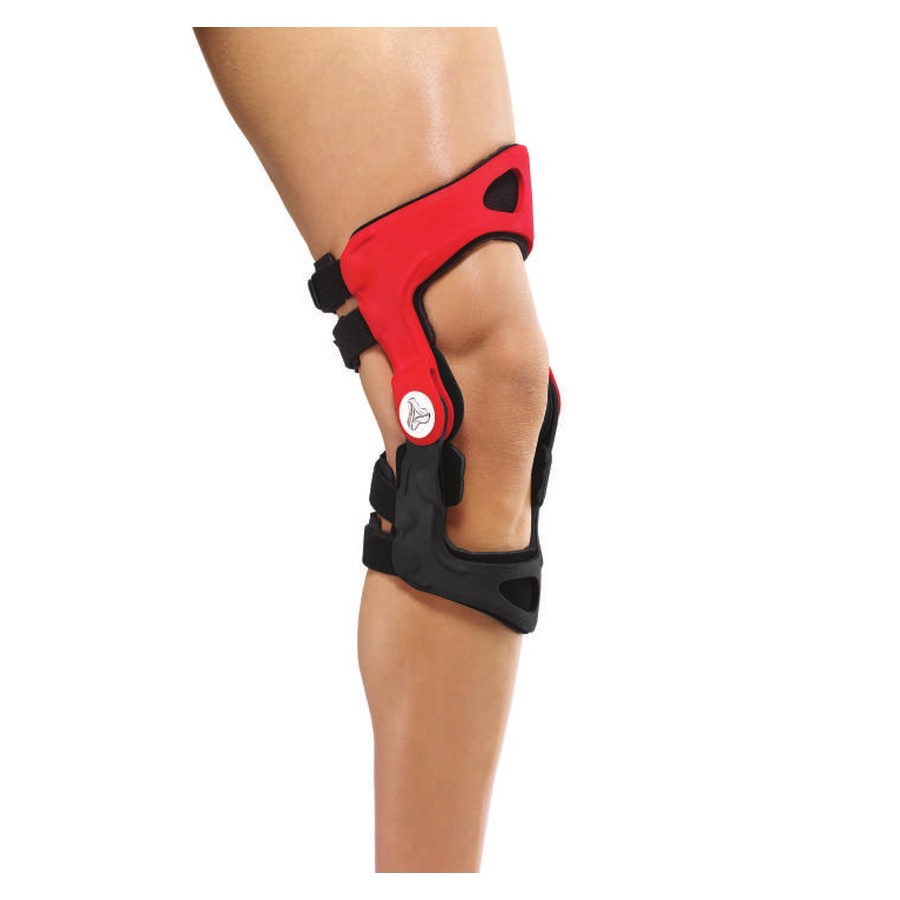
Your knee is where your thigh bone meets your shin bone. Knowing the parts helps you understand your knee problem and how a brace can help.
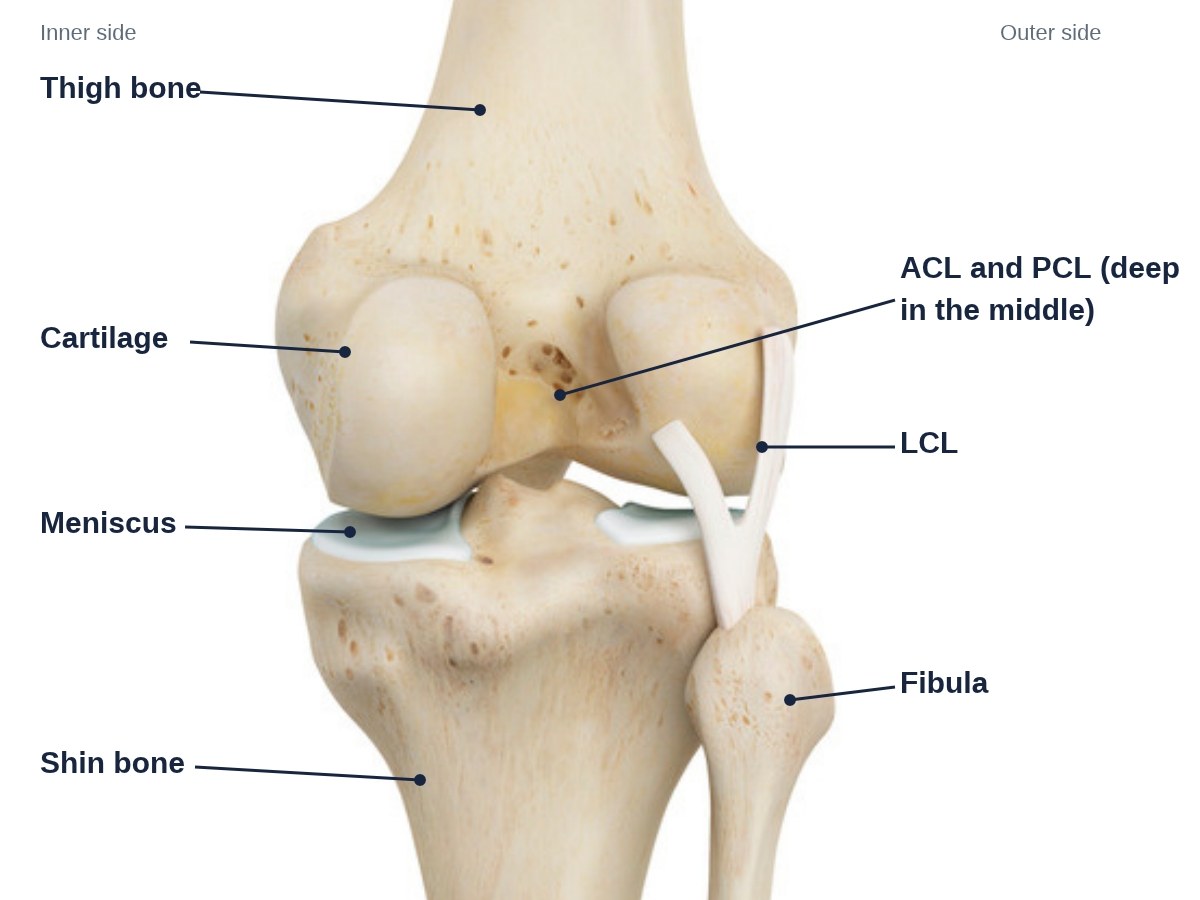
Front view. The kneecap is not shown so you can see inside. The MCL runs down the inner side.
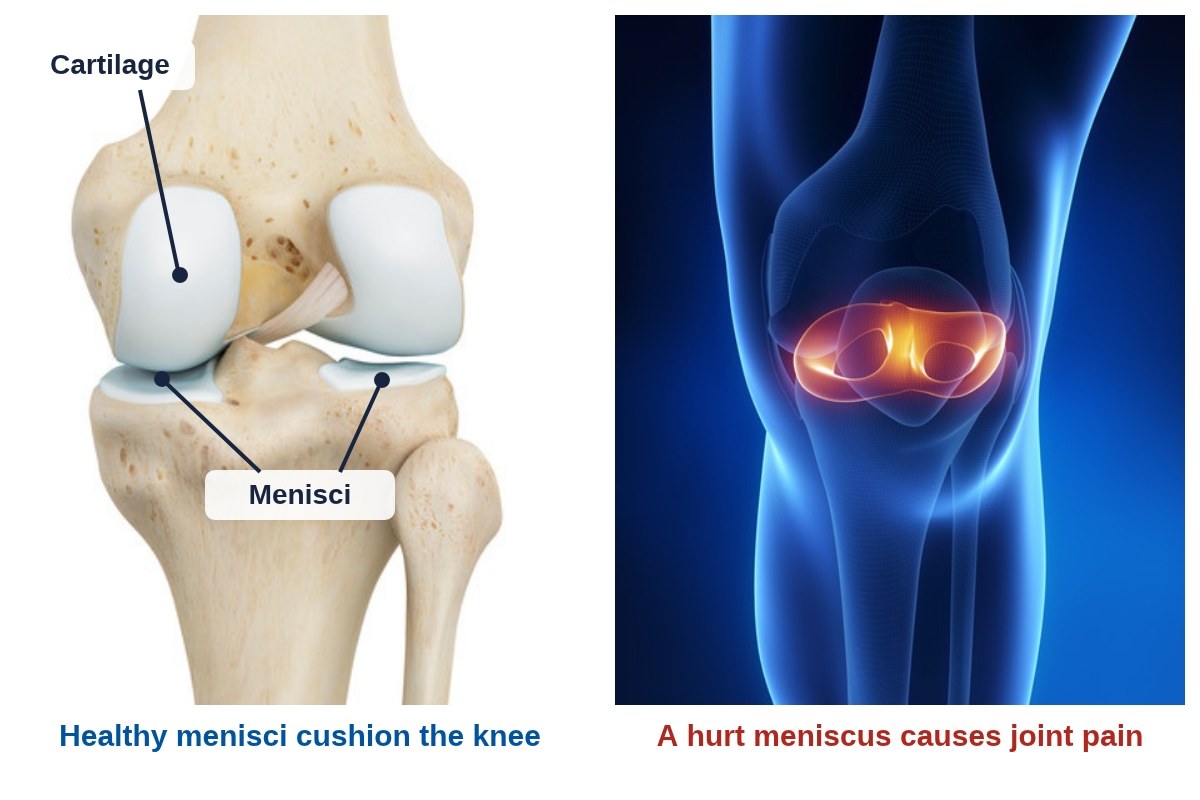
With osteoarthritis, the cartilage in the knee slowly wears thin and rough. The space in the joint gets smaller, and bone can rub on bone.
It often wears one side of the knee more than the other. This is common with bowed legs or knock knees. It can also affect the joint behind the kneecap.
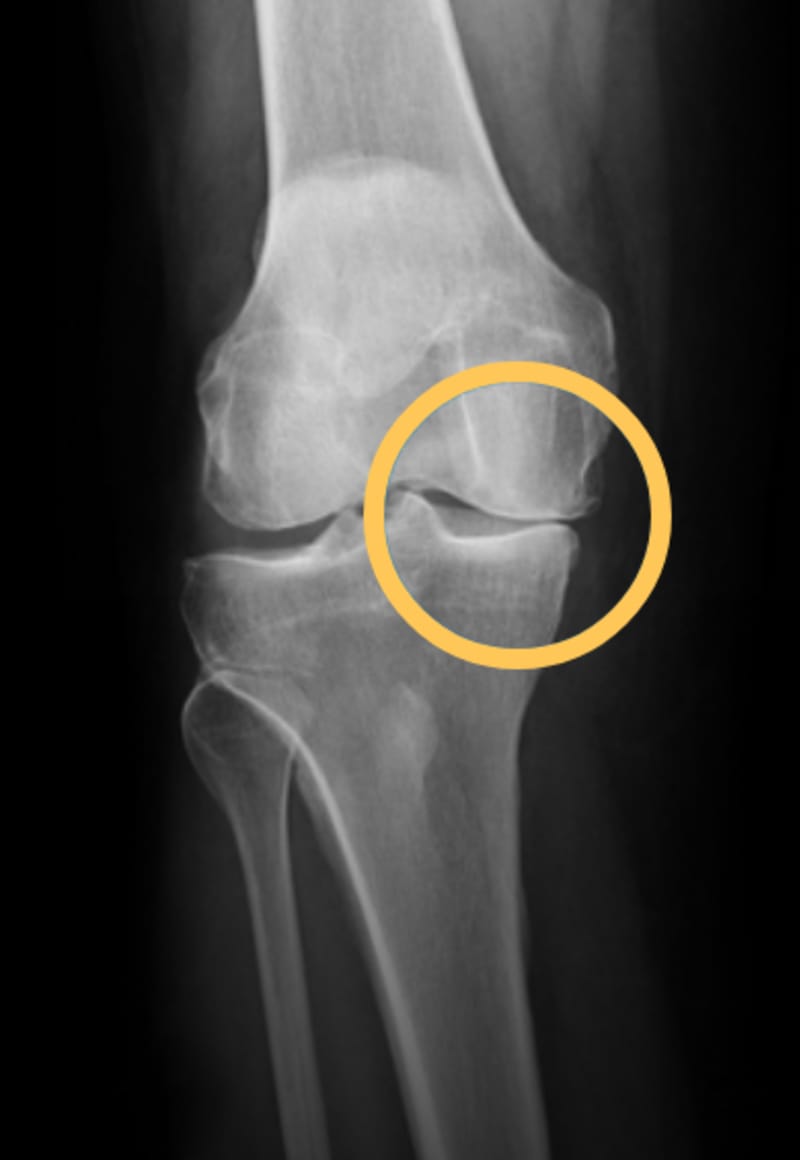
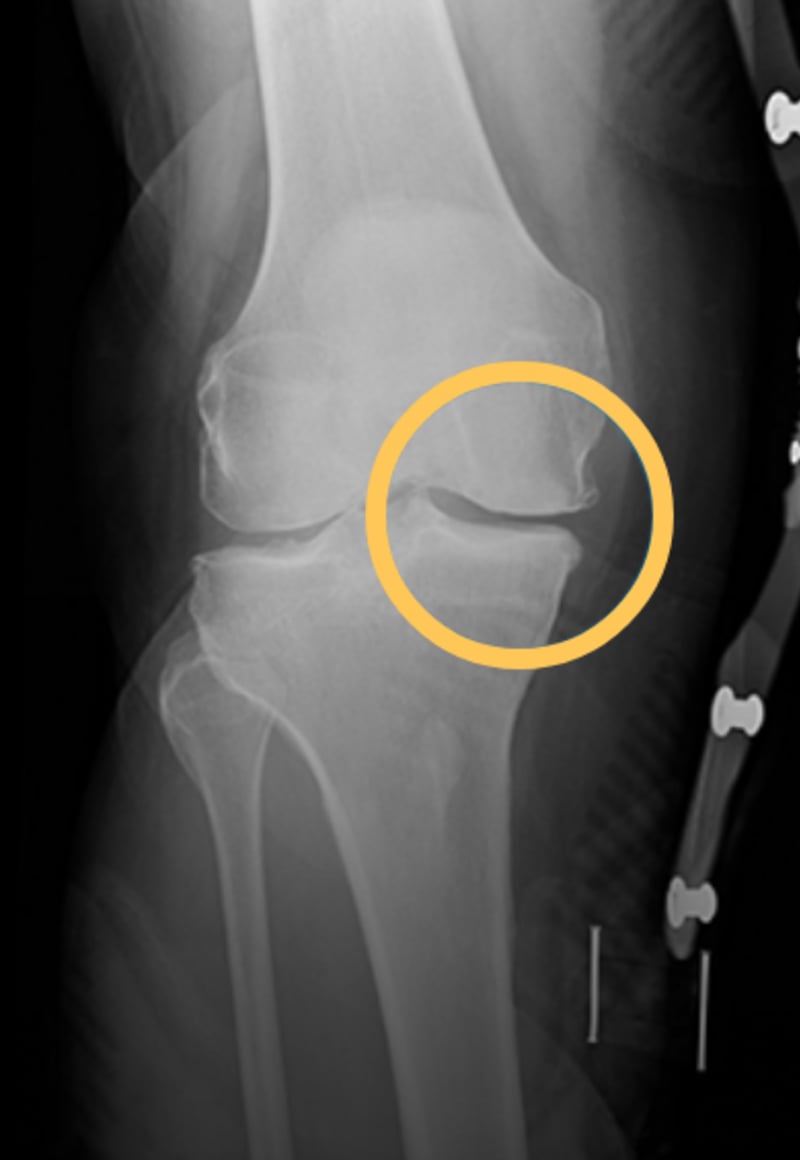
The circle shows the worn side of the knee. In the brace, the space opens up. Images: Össur
An unloader brace presses on three points of the leg. This gently shifts weight away from the worn side of the knee and onto the healthier side.
This can ease pain and help you walk farther. It works best when osteoarthritis is mostly on one side of the knee.
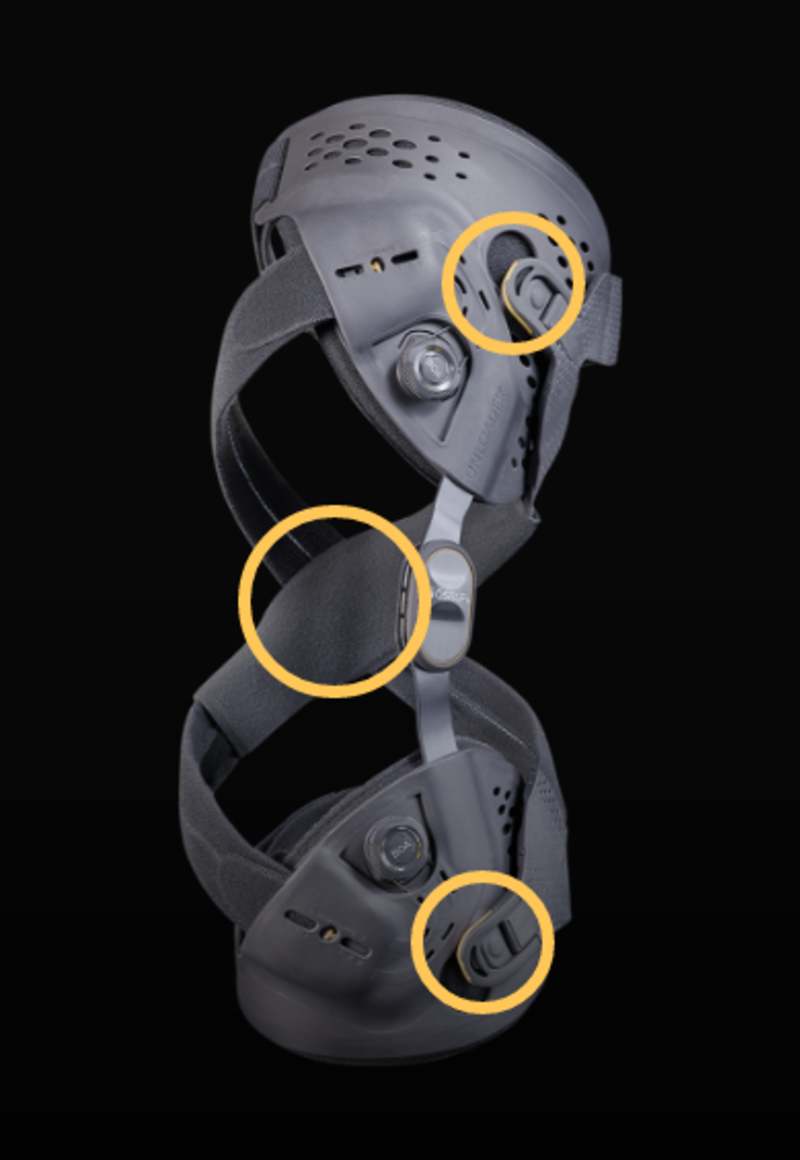
Three points of pressure. Image: Össur
A spring-loaded brace has springs built into the hinge. The springs only work while your knee is bending.
That is why it suits people who walk and move a lot, and people with quad weakness. It helps less if you stand in one spot most of the day.
A ligament injury is called a sprain. A mild sprain stretches the ligament. A bad sprain tears it. A torn ligament can make the knee feel loose or give way.
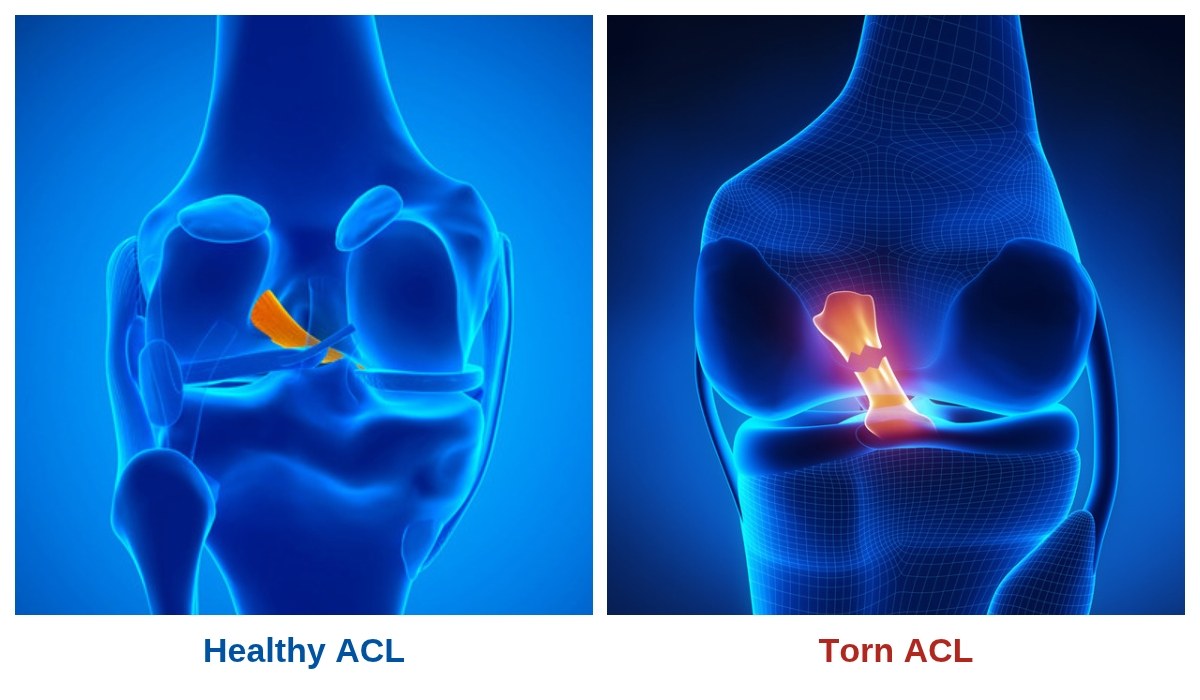
A ligament brace helps do the job of the hurt ligament. Where the brace pushes depends on which ligament is hurt.
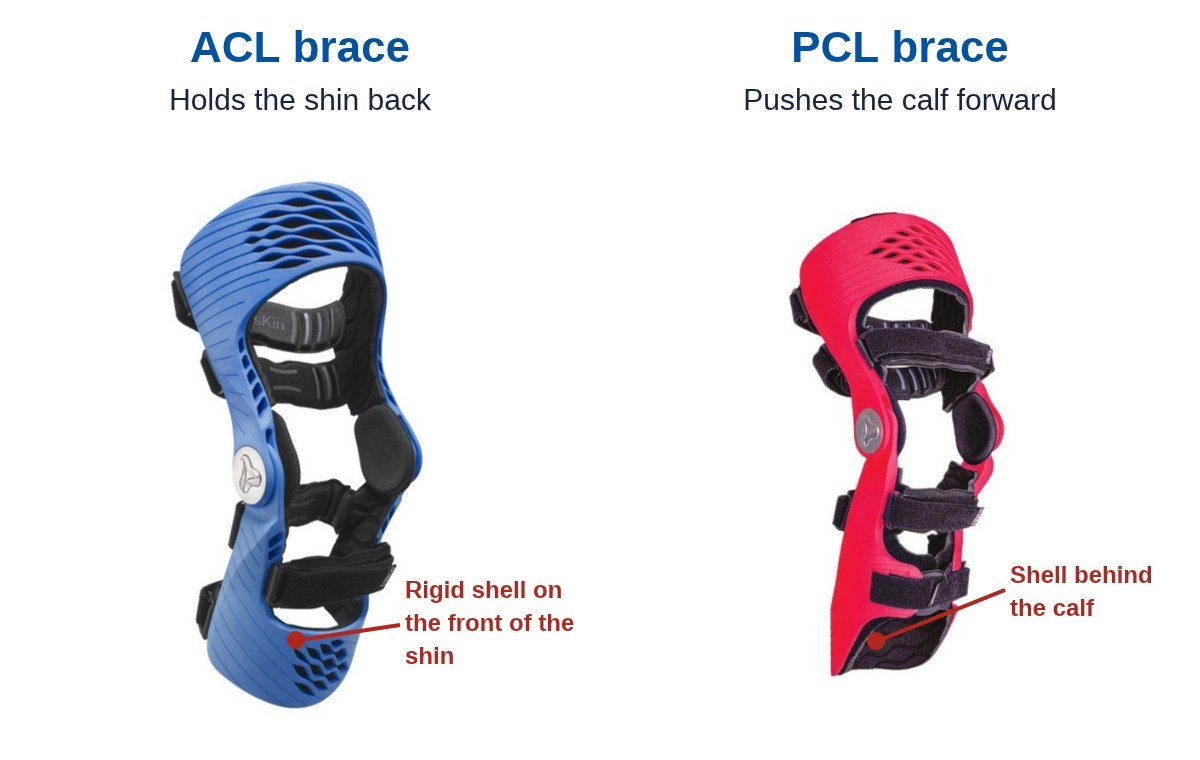
OssKin Provoke ACL (left) and Provoke PCL (right). Images: OssKin
The meniscus can tear in two main ways.
Signs include pain, swelling, a catching or locking feeling, and trouble bending or straightening the knee.
Football, hockey, rugby and other contact sports put the knee at risk. So do sports with quick stops and turns, like soccer, basketball and skiing.
Research is mixed on whether a brace prevents injury. A brace works best with strength and balance training. We talk through the choice with you and your care team.
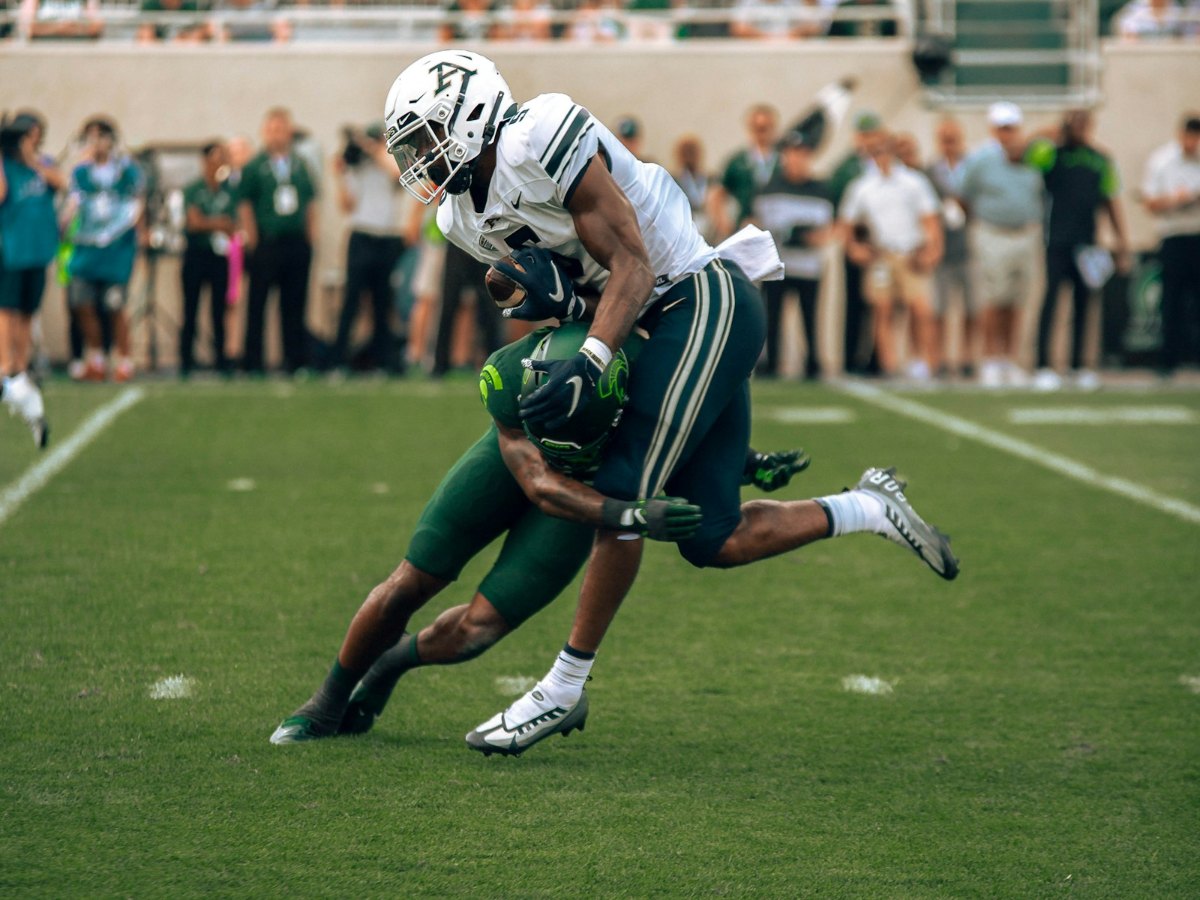
Photo: Makai Conner on Unsplash
We fit custom and off-the-shelf braces. The right one depends on your knee problem, your leg shape and what you want to do. Here are some we often use.
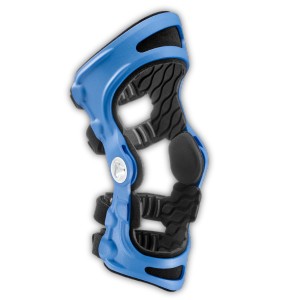
A custom unloader for osteoarthritis on the inner or outer side of the knee. Most unloader braces only push on the knee. The Evoke also moves the thigh bone back toward its natural spot, then takes weight off the worn side. It is 3D printed from a scan of your leg and is thin enough to wear under pants.
Example photo: OssKin
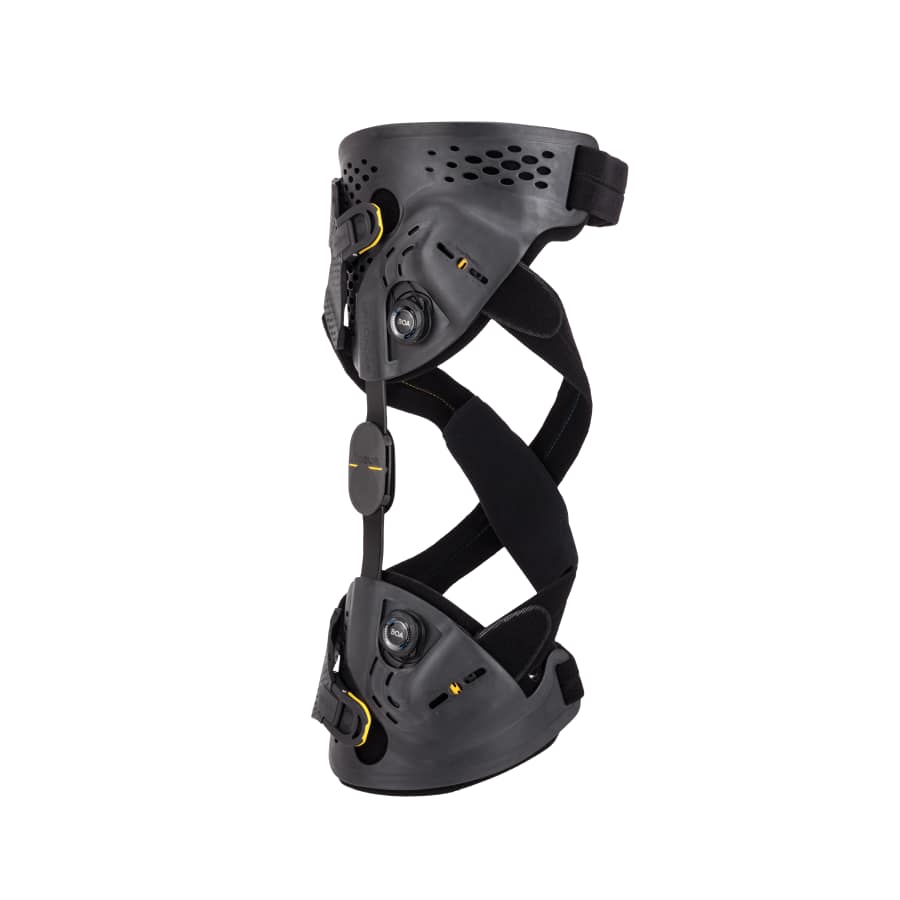
A light, slim unloader for osteoarthritis on one side of the knee. Two straps wrap around the knee and shift weight off the worn side. It comes off-the-shelf or custom.
Learn more about the Unloader One X
Example photo: Össur
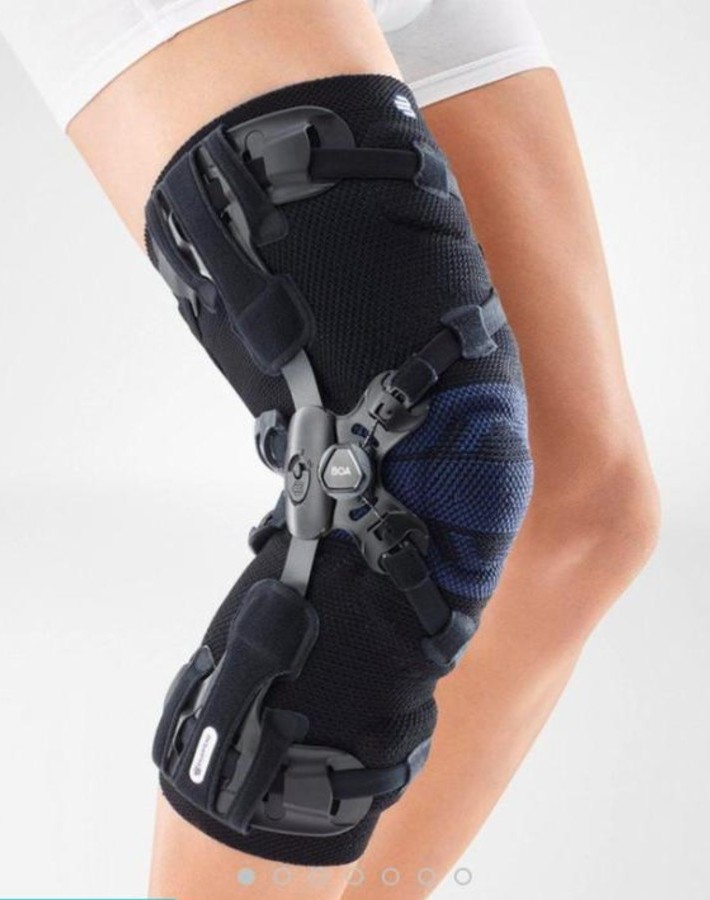
A soft knit unloader for osteoarthritis on the inner or outer side of the knee. It uses three points of pressure, like a hinged unloader, with a BOA dial to adjust how much it unloads. A good choice if you want a softer, low-profile brace.
Learn more about the GenuTrain OA
Example photo: Bauerfeind
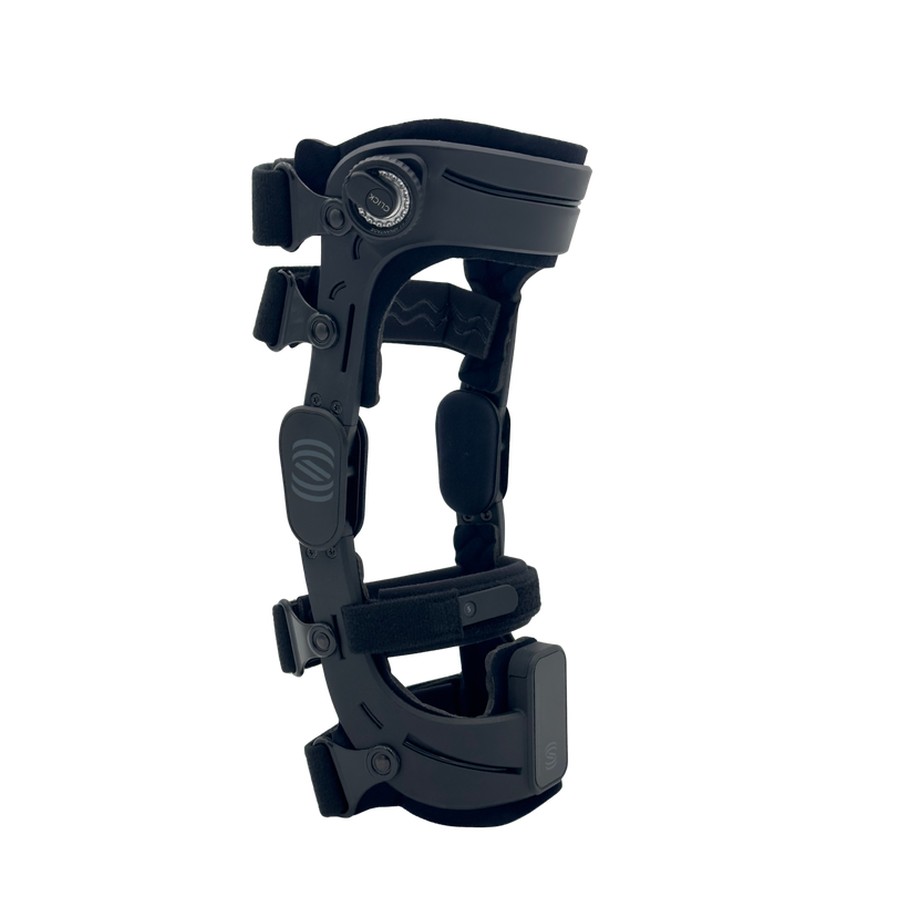
For osteoarthritis in any part of the knee, including behind the kneecap. Springs in the hinge take load off the knee as it bends, then help power your leg as you straighten. It works while the knee bends, not when you stand still. It is a good fit for quad weakness, such as after a knee replacement or with some nerve and muscle conditions. Made in Canada.
Learn more about Spring Loaded
Example photo: Spring Loaded Technology
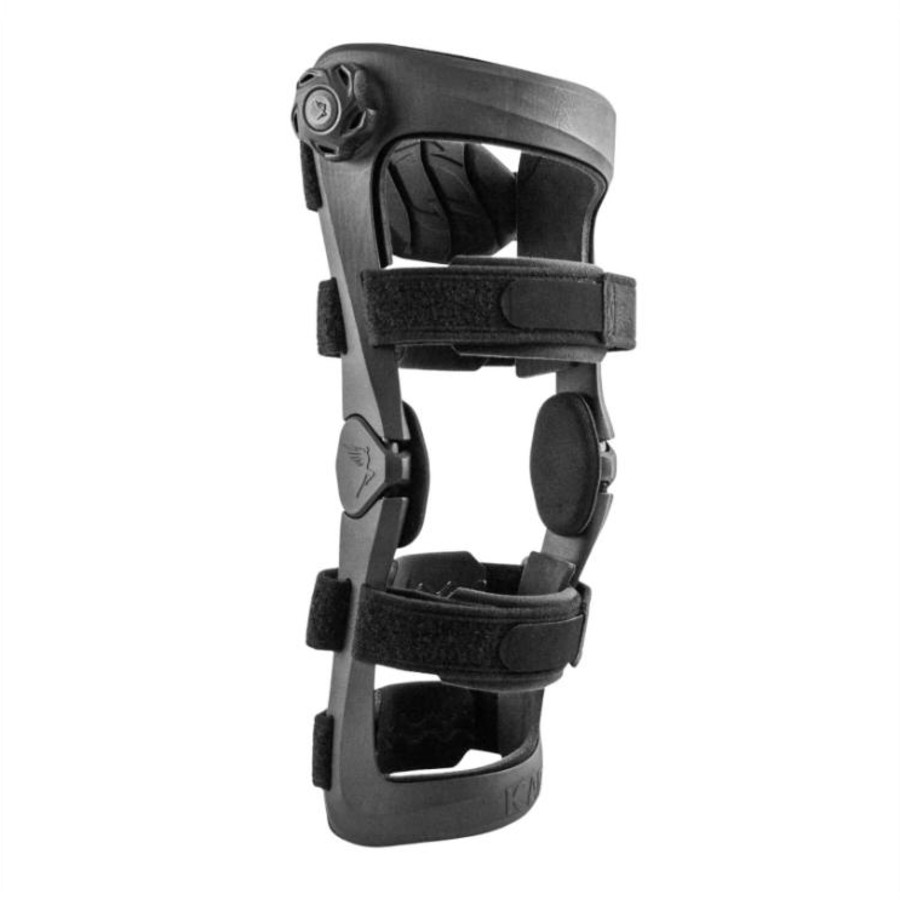
A whole-knee unloader for osteoarthritis behind the kneecap or in more than one part of the knee. An adjustable tension system takes up to 40 pounds of pressure off the joint as you move. It weighs about one pound. In a 2026 study of people with kneecap pain, most had less pain after 4 weeks.
Example photo: Icarus Medical
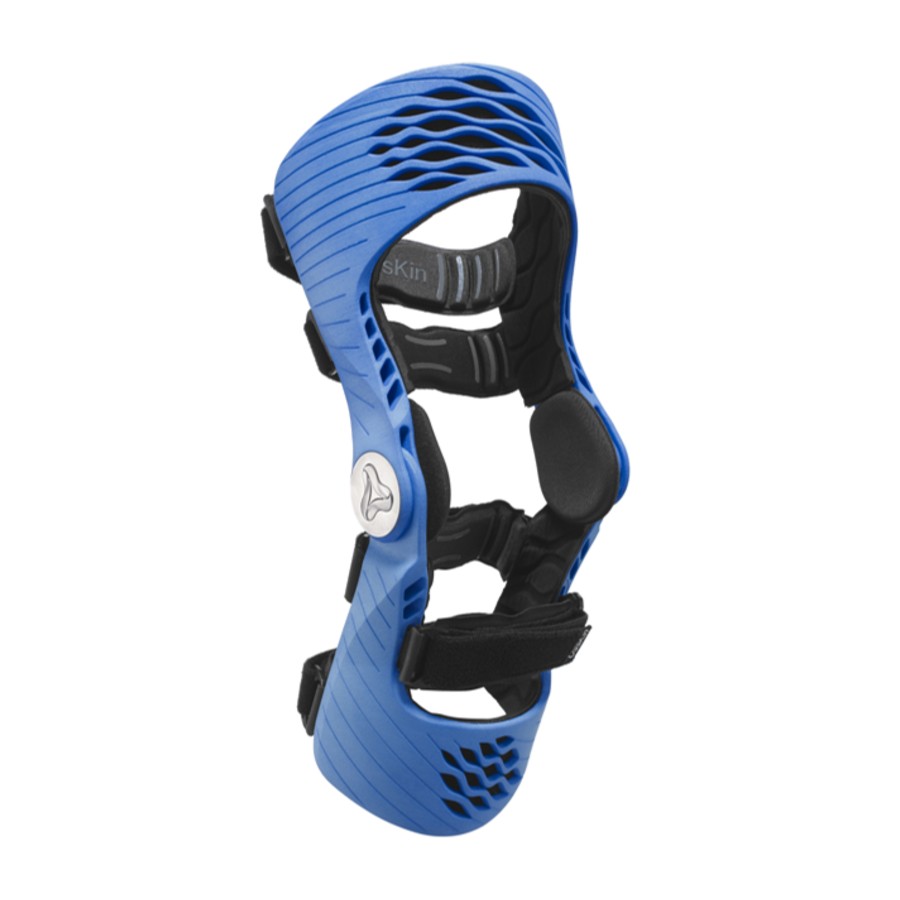
A custom brace for ACL injuries and non-contact sports like skiing, soccer and running. A rigid shell on the front of the shin holds the shin back. The hinge follows the way your knee really moves, and a built-in stop keeps the knee in a safe range while it heals. It weighs about half as much as other ligament braces.
Example photo: OssKin
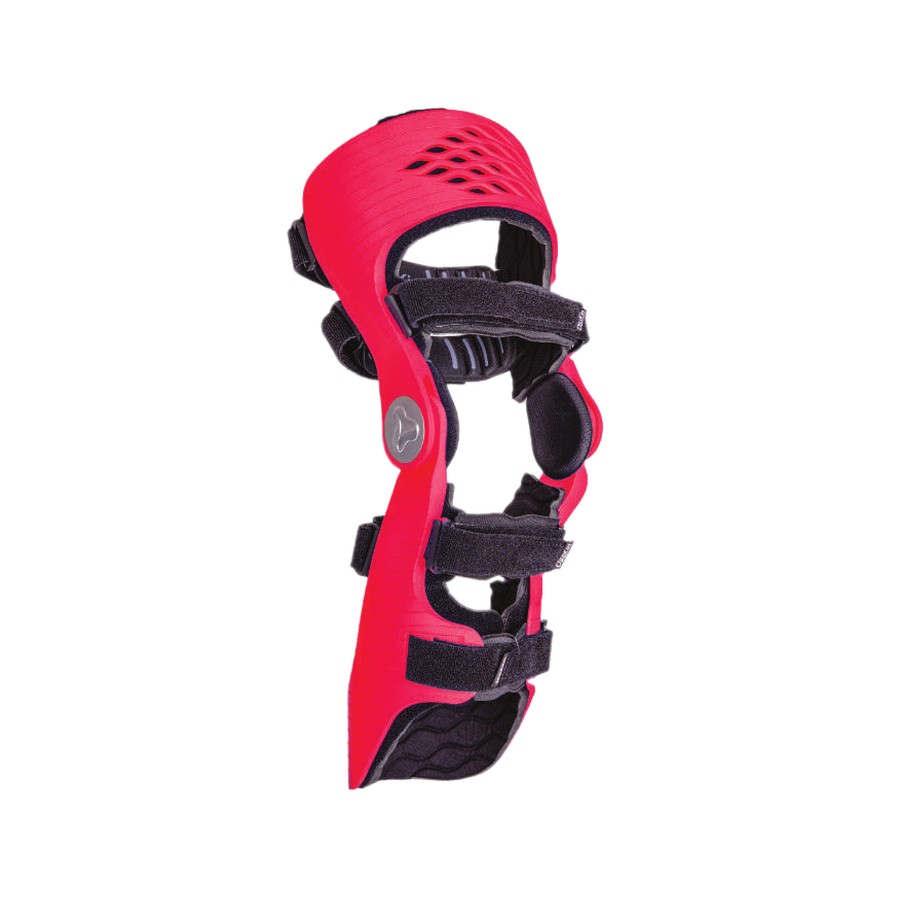
Made for PCL injuries and for knees with more than one hurt ligament. A rigid cuff behind the calf supports the shin from behind. Like the Provoke, it is 3D printed from a scan of your leg.
Learn more about the Provoke PCL
Example photo: OssKin
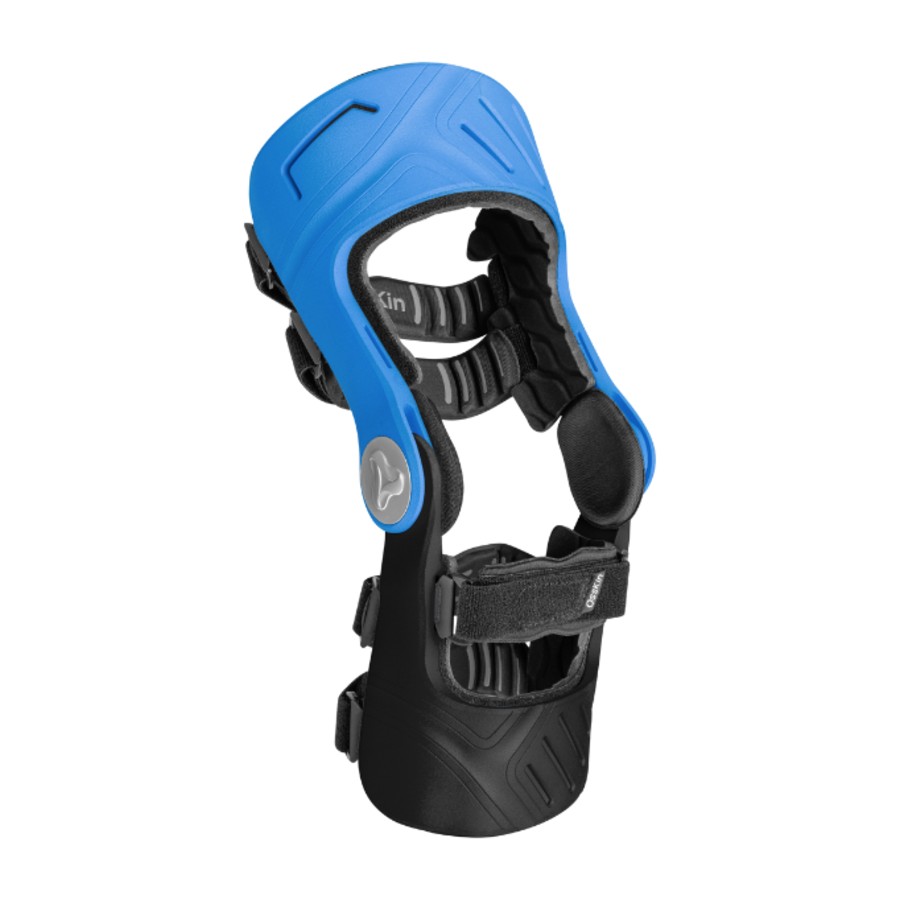
A custom ligament brace made for children under 16. It is used for ligament injuries and osteochondritis dissecans (OCD). It is light and low-profile, so kids can keep playing.
Example photo: OssKin
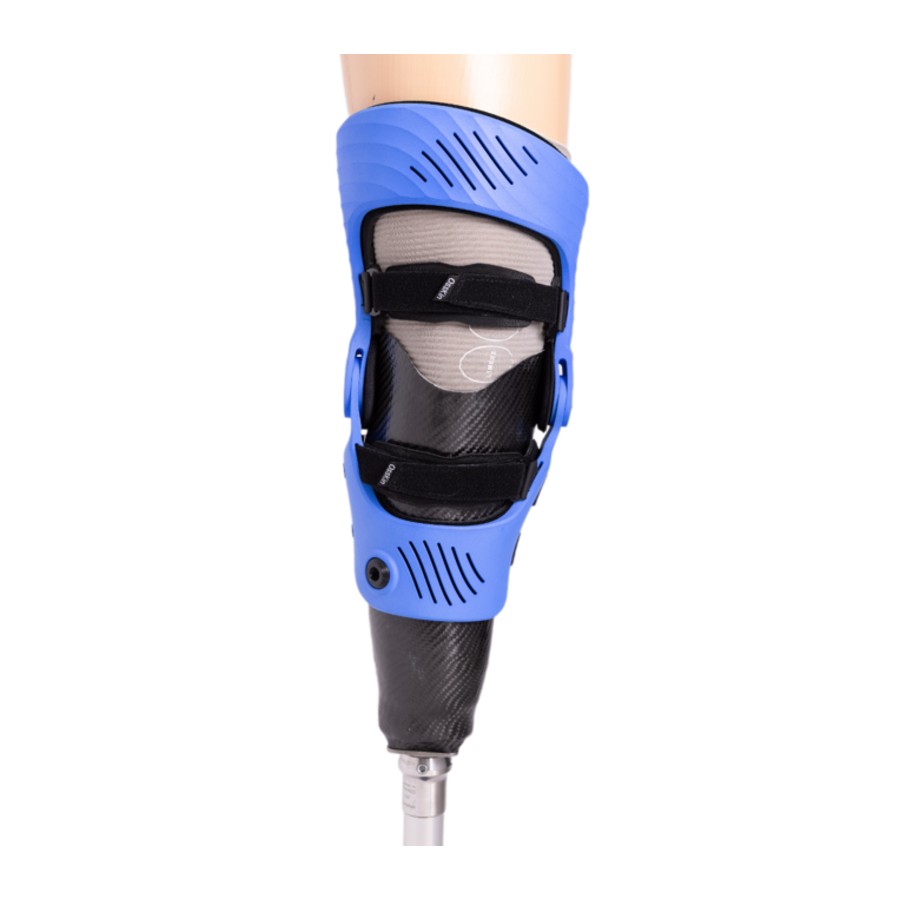
For people who wear a below-knee prosthesis and have a loose or unstable knee, such as after an ACL, MCL or LCL tear. It is made to fit both your thigh and your prosthetic socket.
Example photo: OssKin
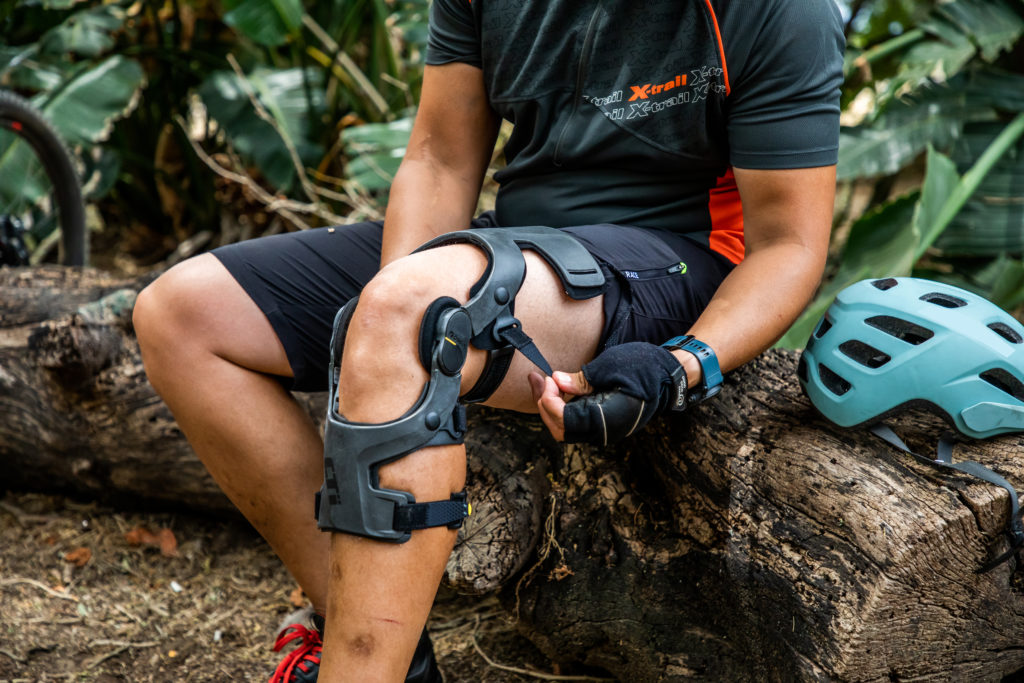
A custom carbon fibre brace for ligament injuries and sport. It is strong and light, with hinges that glide with the knee. It comes in models for everyday wear and for high-level sport.
Example photo: Össur
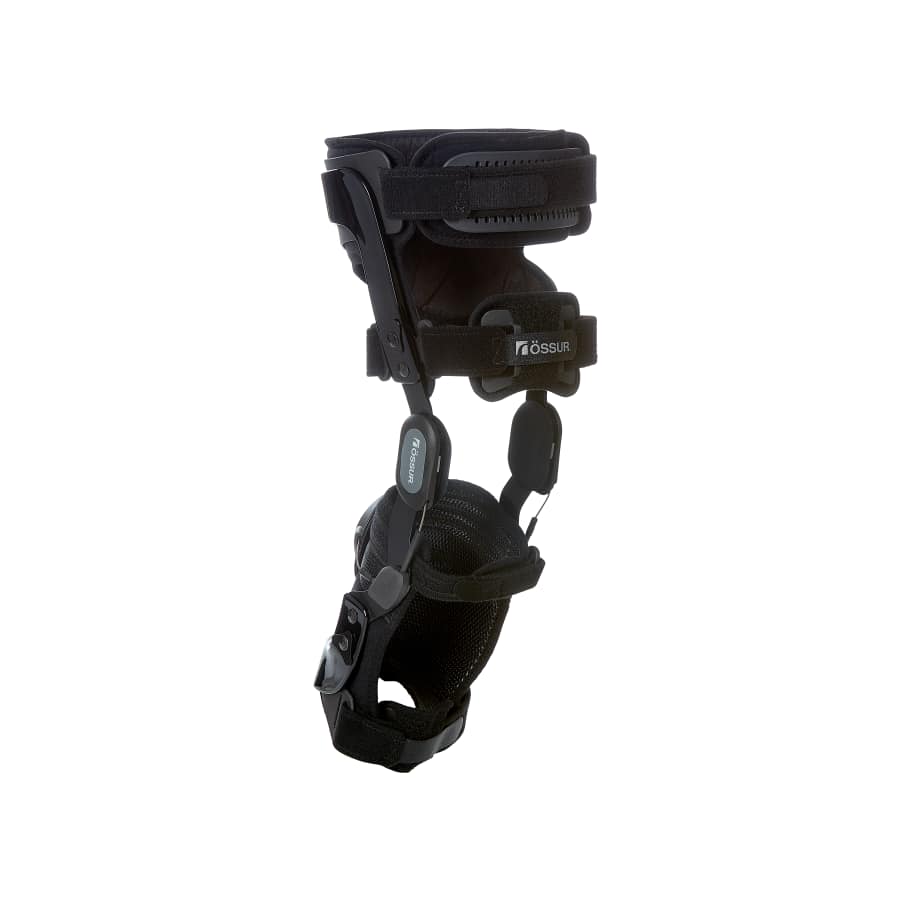
Made for PCL injuries, with or without surgery. A padded shell behind the calf gently pushes the shin forward so the PCL heals at the right length. We can adjust the push as swelling changes.
Learn more about the Rebound PCL
Example photo: Össur
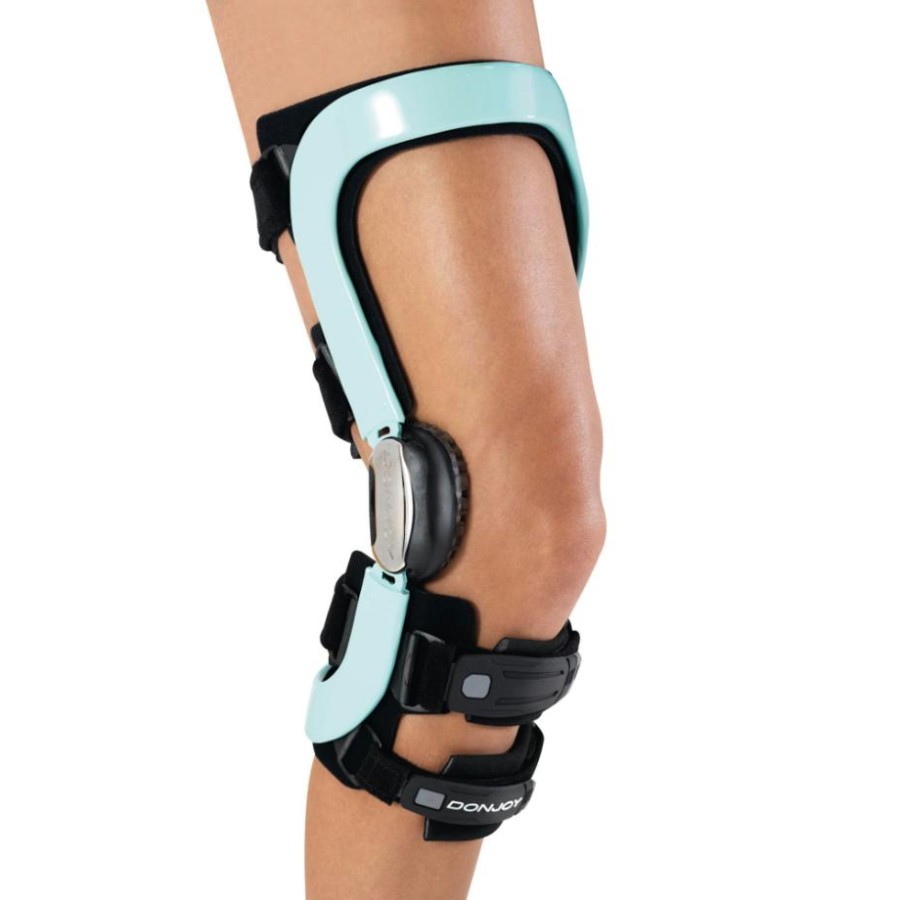
A heavy-duty custom brace for football, hockey and other contact sports. Its strong carbon frame is made to fit your leg. It protects a knee after a ligament injury or surgery, and some athletes wear one to help protect a healthy knee.
Example photo: DonJoy
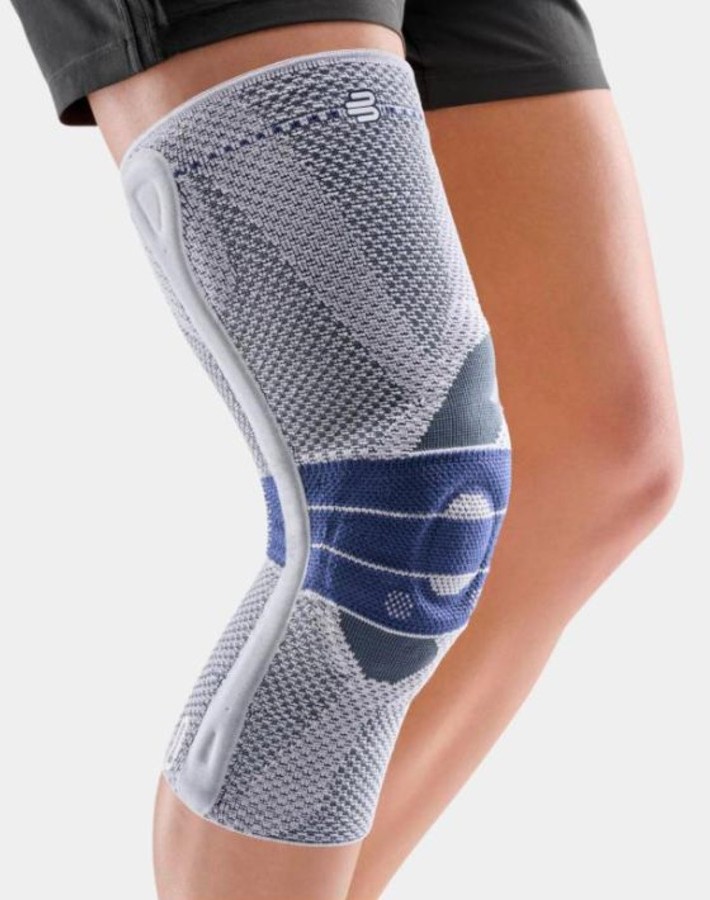
One of our favourites for kneecap pain. A two-part pad and an adjustable strap guide the kneecap back to the centre. Soft knit compression helps with pain and swelling. Good for runner’s knee, jumper’s knee, IT band pain and a kneecap that tracks off centre.
Learn more about the GenuTrain P3
Example photo: Bauerfeind
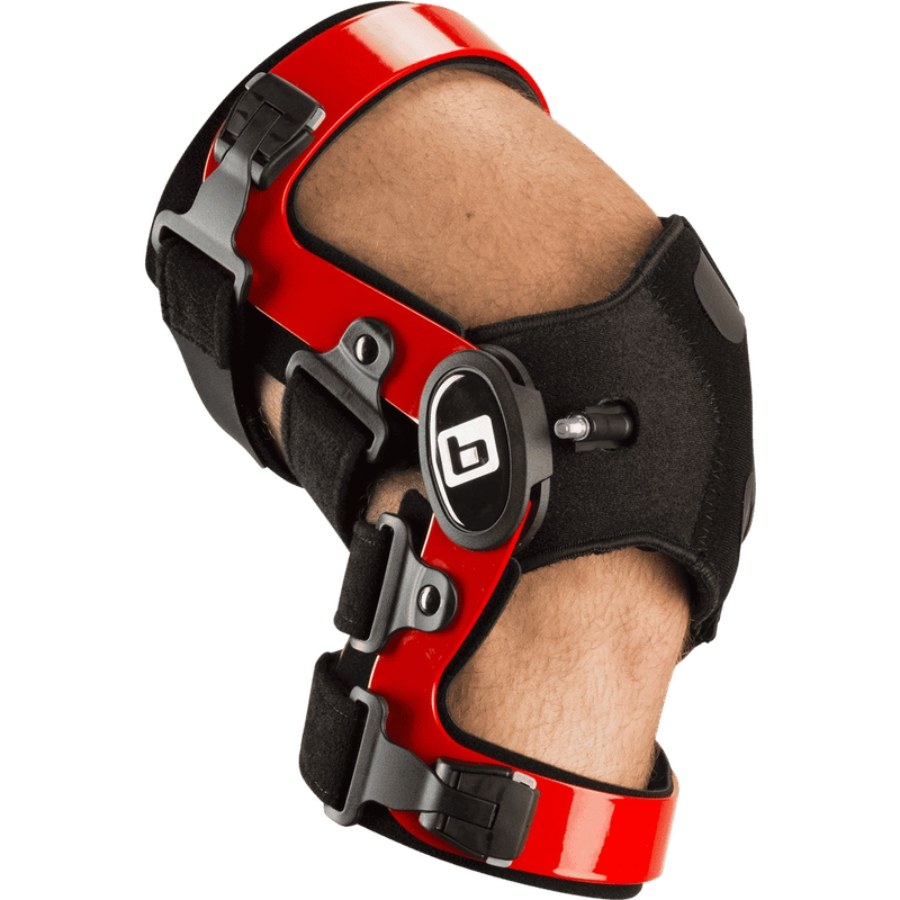
A rigid hinged brace for sport, for a kneecap that slips or dislocates. A firm pad with an air bladder presses on the outer edge of the kneecap. It holds tightest between 20 and 50 degrees of bend, where the kneecap is most likely to slip.
Example photo: Breg
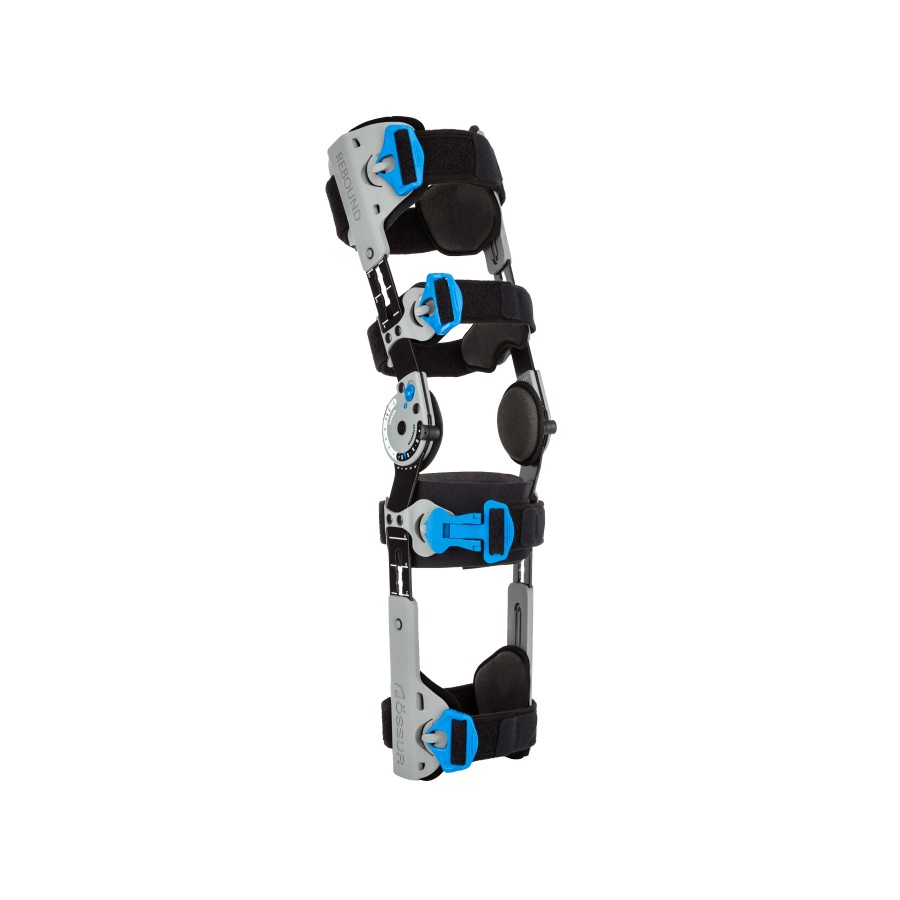
Worn after knee surgery, like ACL surgery or a meniscus repair. Dials on the hinges set how far the knee can bend. The brace is opened up bit by bit as you heal.
Example photo: Össur
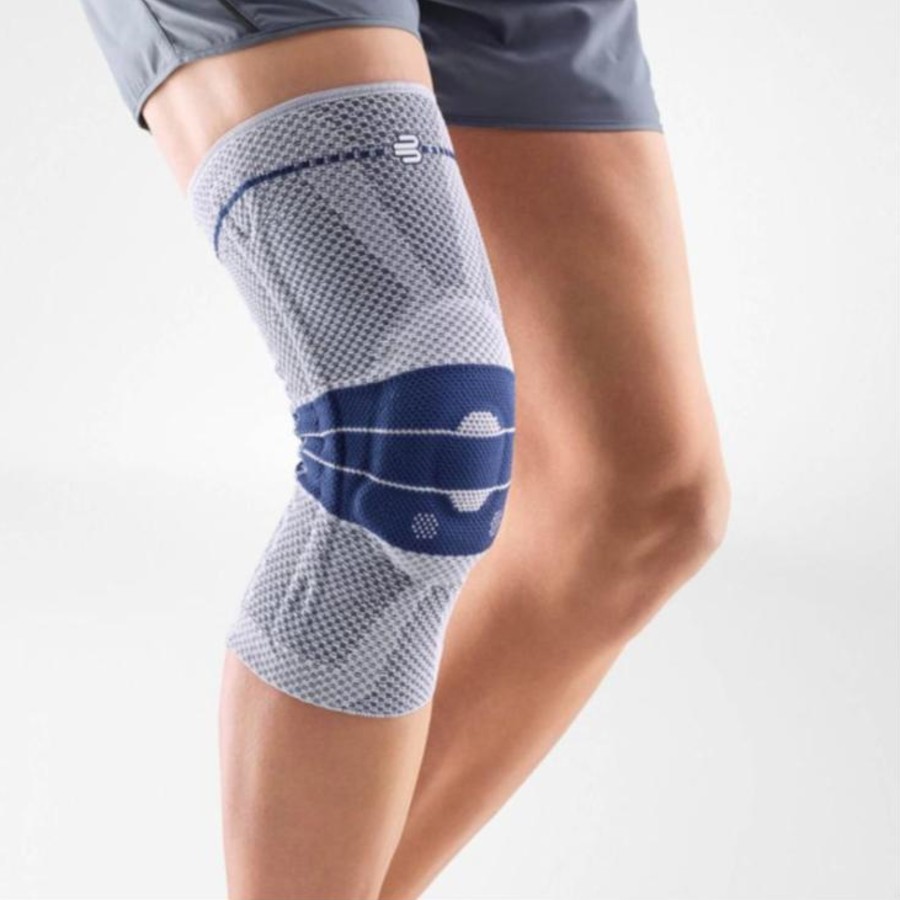
A soft knit sleeve with a cushioned pad around the kneecap. It gives gentle support and squeeze for mild osteoarthritis, swelling and sore tendons. A good choice when you do not need a hinged brace.
Learn more about the GenuTrain
Example photo: Bauerfeind
These are some of the braces we fit most often. We work with many other makers too, so we can match the brace to your knee, your sport and your funding.
Need more support? A KAFO goes from the thigh to the foot. Is the problem lower down? An AFO supports the ankle and foot.
Our clinicians help you find the right amount of bracing. Your knee gets the support it needs, and your muscles still do as much work as they can.
Your knee does more than bend. It also glides and twists a little. The OssKin hinge is built to follow that natural motion. Watch the short hinge animation on the OssKin website. It opens on their website.
A clinician with knee pain tried the Ascender. He rated his pain 4 out of 10 without the brace and 0 with it. This is one person. Results are different for everyone.
Video: Icarus Medical
This 85-year-old still plays hockey with a Spring Loaded knee brace.
Video: Spring Loaded Technology
We are not tied to one company. We choose the brace that fits your knee, your goals and your funding.
Your knee brace journey, step by step.
Many insurance plans need a prescription for a knee brace. You can book your consultation and assessment before you have one.
We talk about your pain, activity and goals. We watch you walk and check how your knee lines up, moves and holds steady. Then we measure or 3D scan your leg. We can also view your knee X-rays through eHealth Saskatchewan.
We choose the brace with you, based on the assessment and your funding. Custom braces are made from your measurements or a 3D scan.
We fit the brace, watch you walk in it and make any changes. We show you how to put it on and take it off.
We set a wear plan with you. Swelling goes down and muscles change, so we check the fit and adjust the straps when needed.
We work with orthopedic surgeons, sports medicine physicians, physiatrists and family doctors.
To refer, use your own prescription pad or our online prescription form, and fax to 1 (306) 912-7807. Include the diagnosis, which knee and what you would like the brace to do. We contact the patient to book.
A prescription is required before a custom knee brace is made and dispensed. For SAIL funding, the prescription must come from a specialist, such as a sports medicine physician or a clinician in the hip and knee pathway. SAIL may cover up to $500 of a knee brace. The rest is paid by the patient or their insurance.
You can book a consultation and assessment without one. A prescription is needed before a custom knee brace is made and dispensed. Many insurance plans also ask for one.
SAIL may cover up to $500 of a knee brace when a specialist writes the prescription. The rest is paid by you or your health plan. Many health plans pay for all or part of a knee brace, and some need a prescription first. Funding may also come from programs like WCB, SGI, NIHB or Veterans Affairs Canada. Call us and we can help you check.
Yes, for many people. An unloader or spring-loaded brace can take weight off the sore part of the knee, ease pain and help you stay active. A brace does not cure osteoarthritis or regrow cartilage. It works best along with exercise and strength work.
It depends on your injury, whether you had surgery and what you want to get back to. After surgery, most people wear a post-op brace first. Later, a custom ligament brace can help when you return to sport. We help you choose at your assessment.
Off-the-shelf braces come in set sizes and suit many people. A custom brace is made from a scan or measurements of your leg. It may be the better choice if a ready-made brace slips, if your leg has an unusual shape, or if your knee needs firm control. We help you decide at your assessment.
Yes. Many people wear a ligament brace for sport after a knee injury, and some wear one to help protect a healthy knee in contact sport. Research is mixed on whether a brace lowers the risk of injury or of hurting the knee again. A brace does not replace strength training. We talk it through with you and your care team.
It depends on why you need it. A post-op brace is often worn for a few weeks after surgery. An osteoarthritis brace may be worn for walks and activity for years. We set a plan with you and your doctor.
A Certified Orthotist is a clinician trained in bracing. We find the support that fits your knee and your goals.
Call 306-566-4666, email [email protected], or request an appointment online.