

Hand and Arm Prostheses
A hand or arm prosthesis replaces part of a finger, hand or arm. This page explains the options for babies, children and adults, from soft sleeves you can wear within days of surgery to finger prostheses, body powered arms and bionic hands.
Common reasons people need a hand or arm prosthesis:
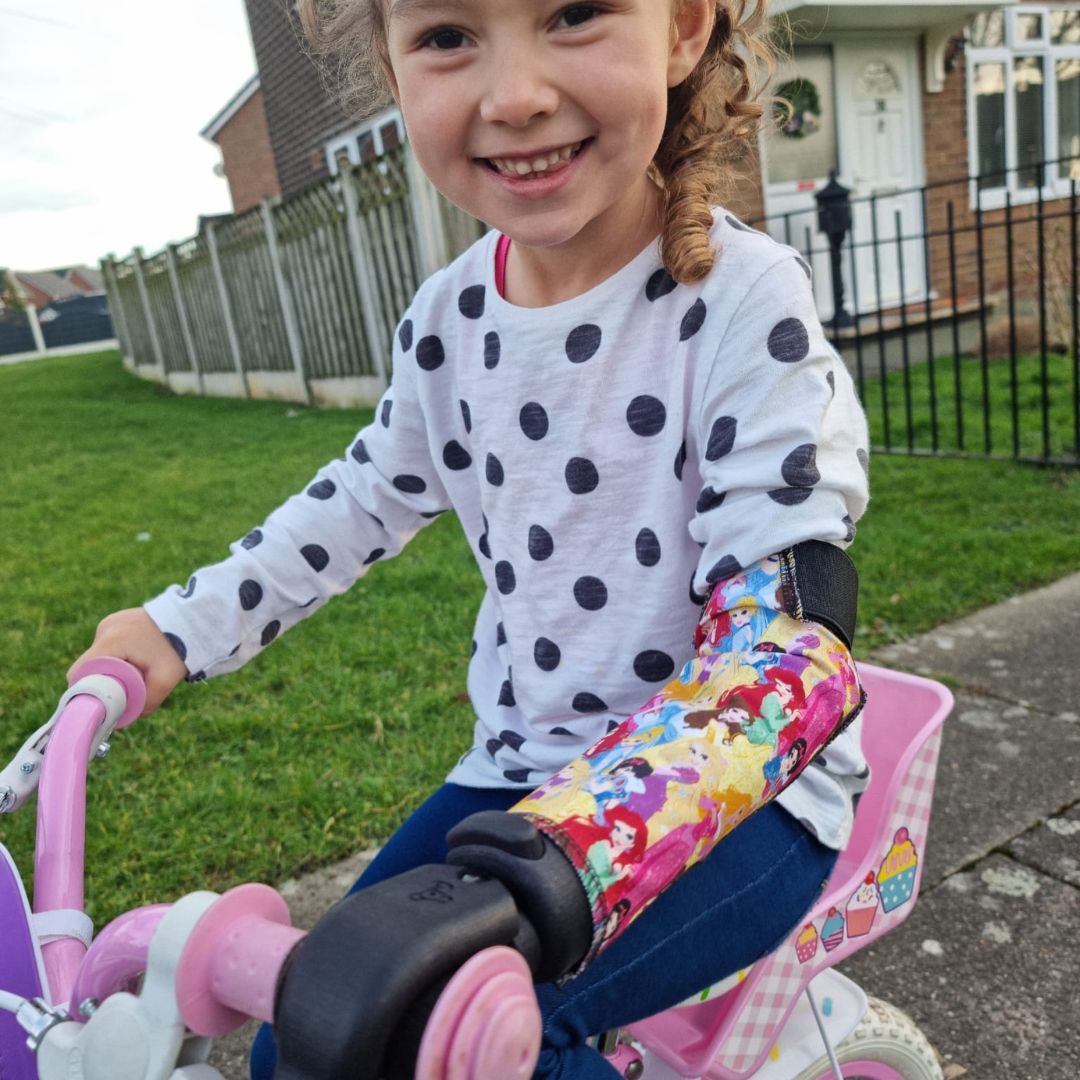
A hand or arm prosthesis is a device made to fit your limb. A socket or sleeve holds it on. The hand, hook or tool on the end does the work. Some are soft and simple. Some have motors and many grips. The best one is the one you will wear.
A prosthetist is trained to assess, design, make and fit prostheses. For leg prostheses, see the prosthetics page.
Needs change with age, so the devices do too.
Most children with a hand or arm prosthesis were born with a limb difference. Others lost part of a hand or arm to an injury or illness.
Some adults are new to limb loss. Others have worn a prosthesis for years, or lived without one and now want to try.
Koalaa makes soft prosthetic arms from fabric, not hard plastic. Each one is a sleeve that slips on, with tools that clip on and off for different tasks. Koalaa sleeves are available through prosthetic clinics in Canada.
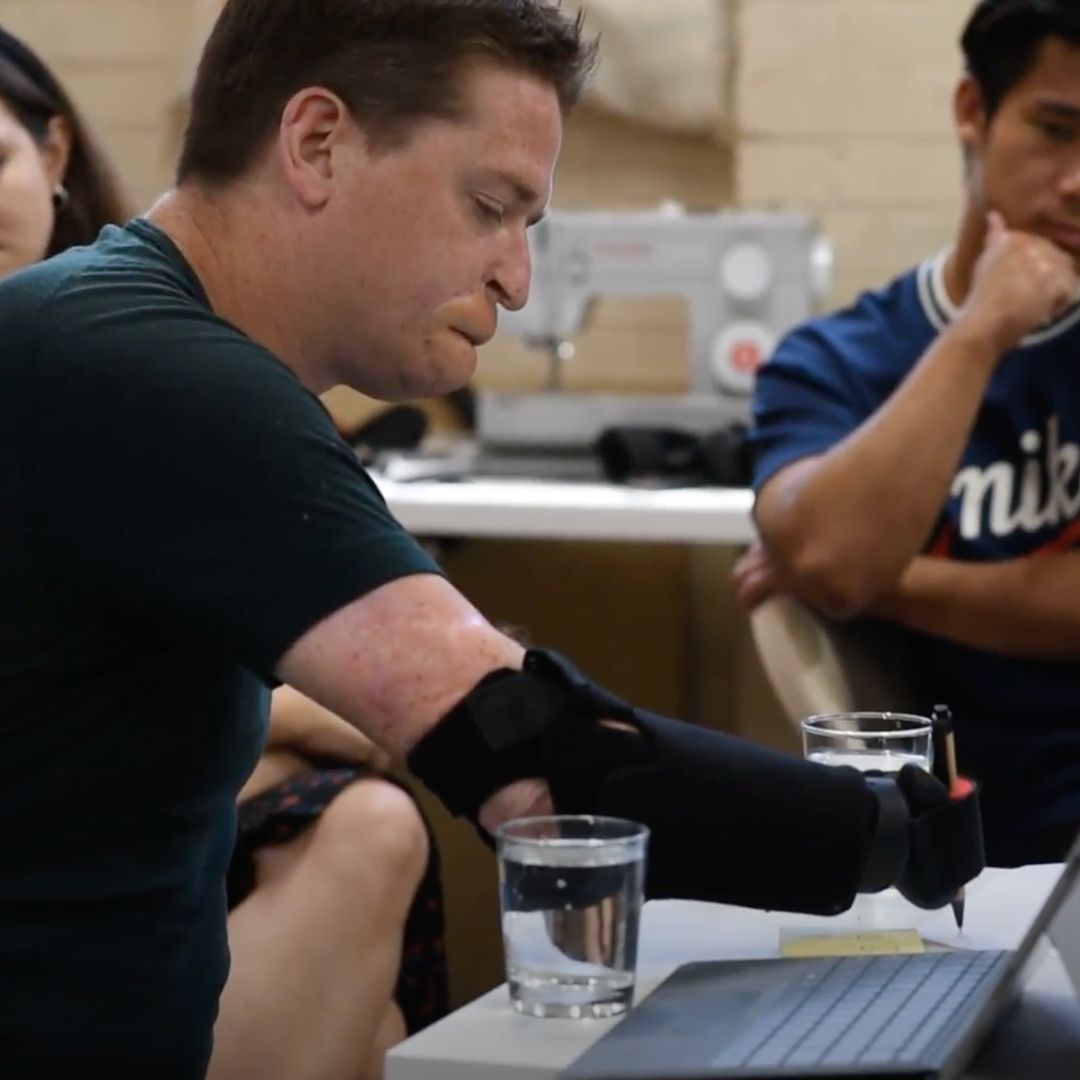
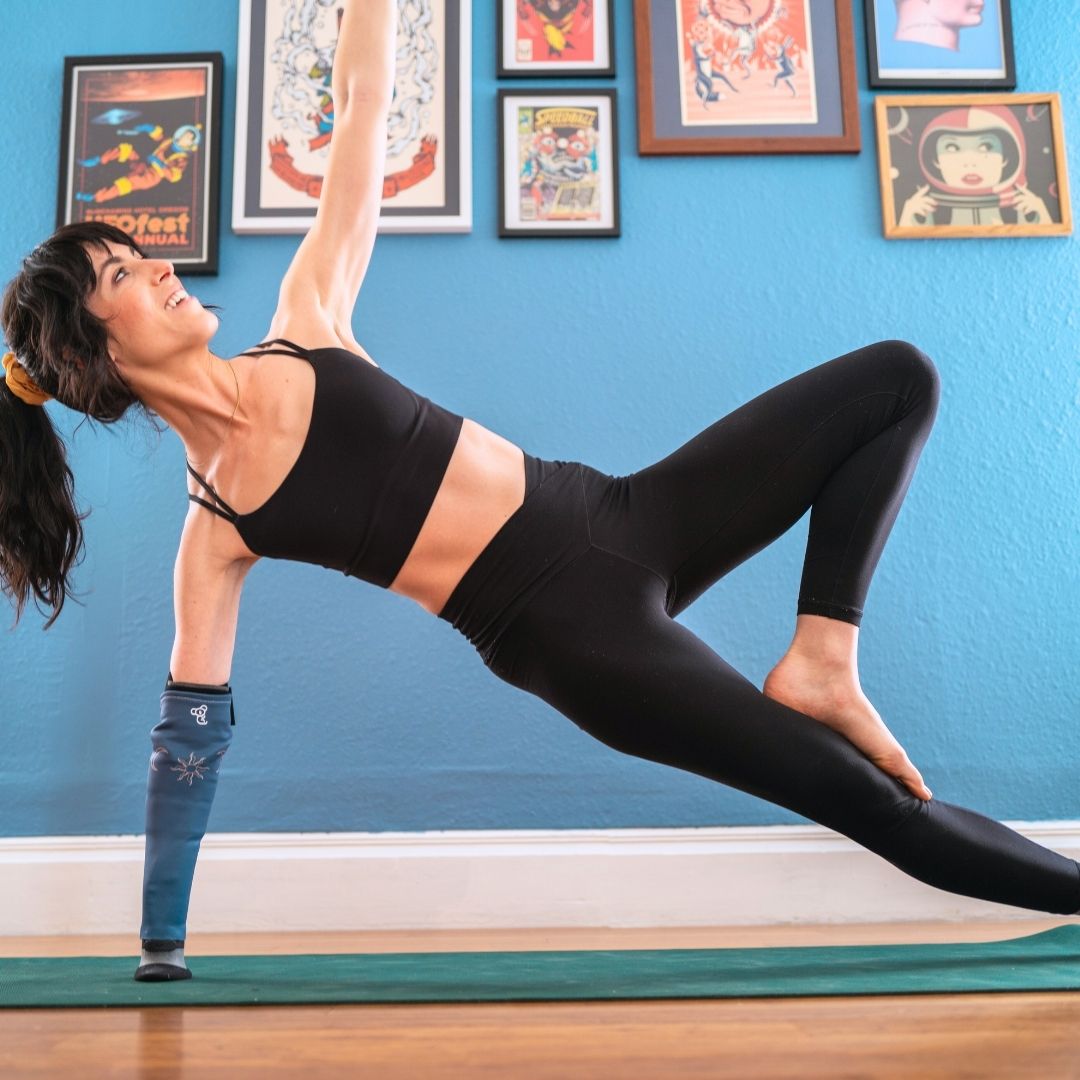
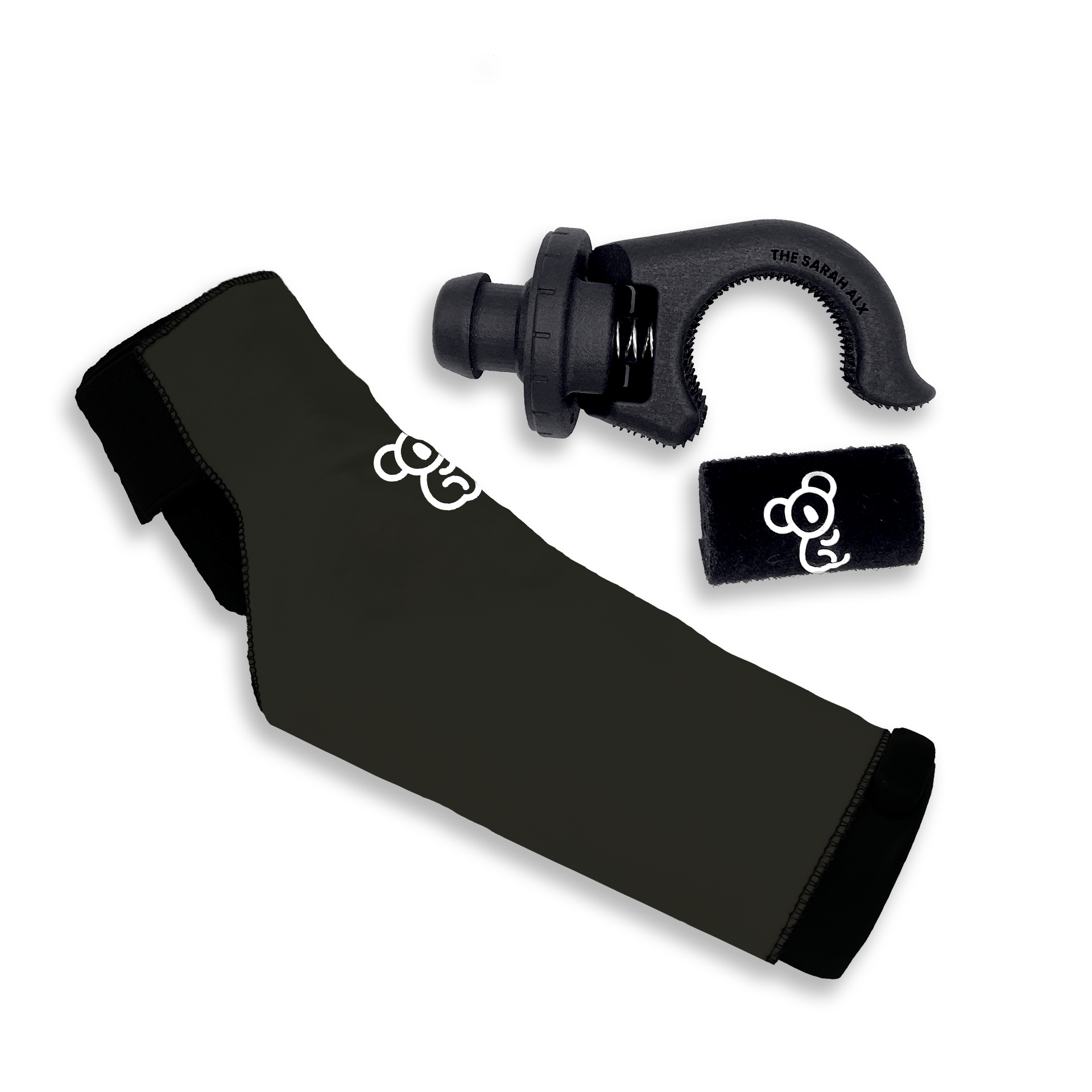
For below elbow and through wrist limb differences, age 3 and up. A soft sleeve with an X shaped support that grips around the elbow. The wrist dock holds the clip-on tools. Four sizes.
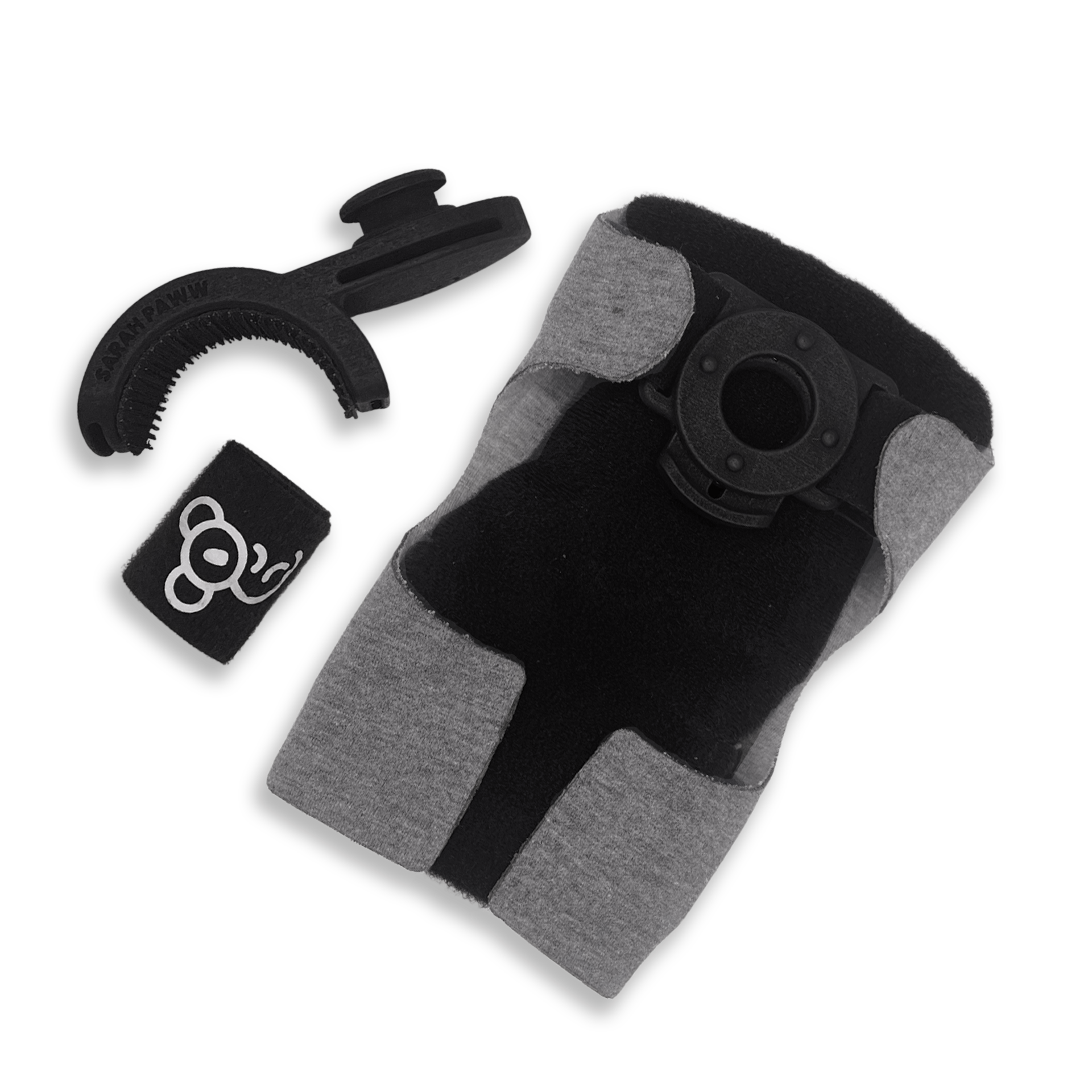
For partial hand and finger limb differences, age 3 and up. A short, glove-like sleeve that leaves the wrist free to move and lets you use any fingers you have. Three sizes.
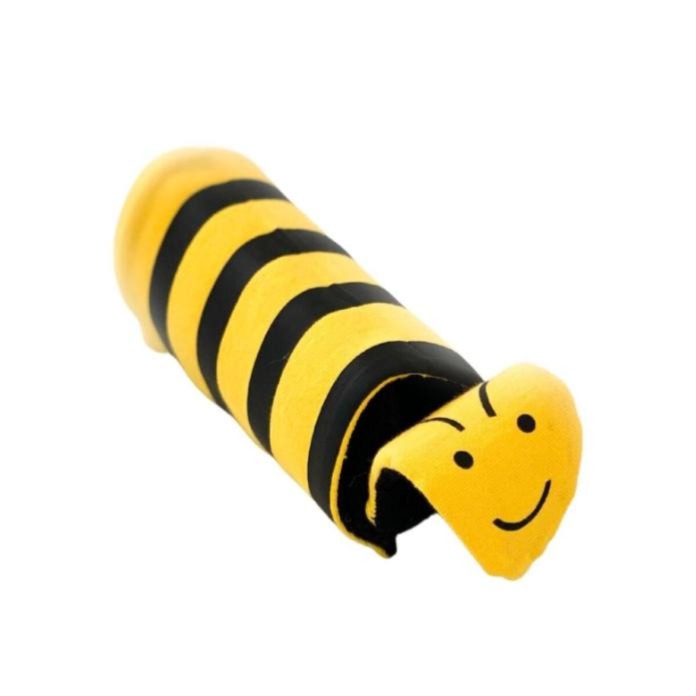
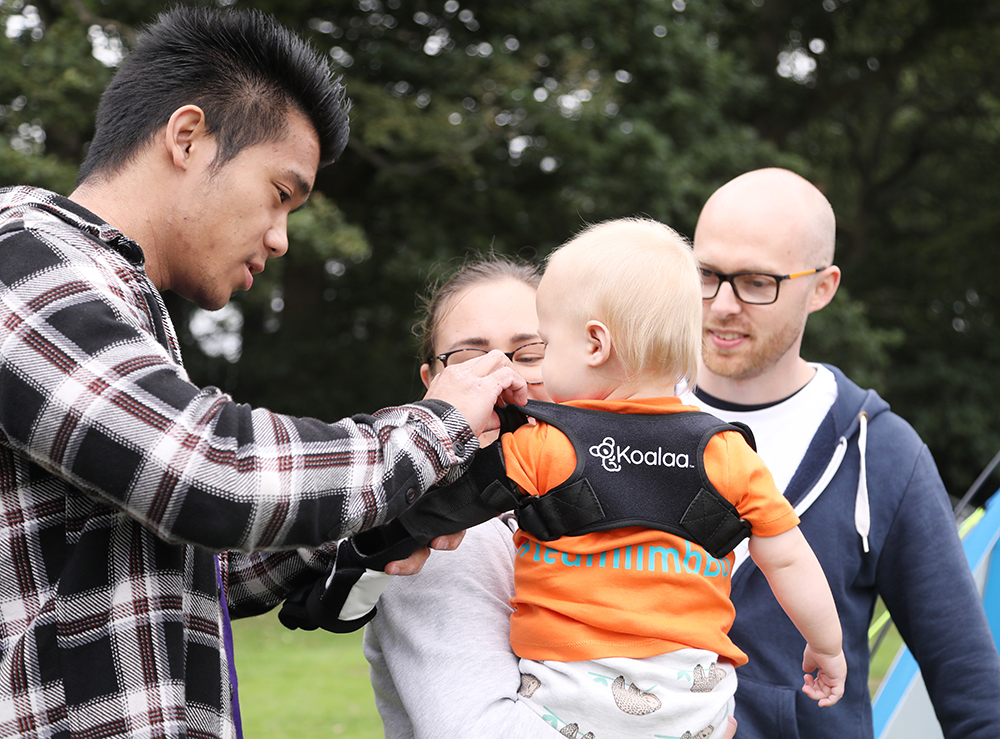
For babies and toddlers under 3. A soft, cuddly sleeve with a built-in handlebar for ride-on toys, scooters and push toys. No small parts. Machine washable, because babies chew.
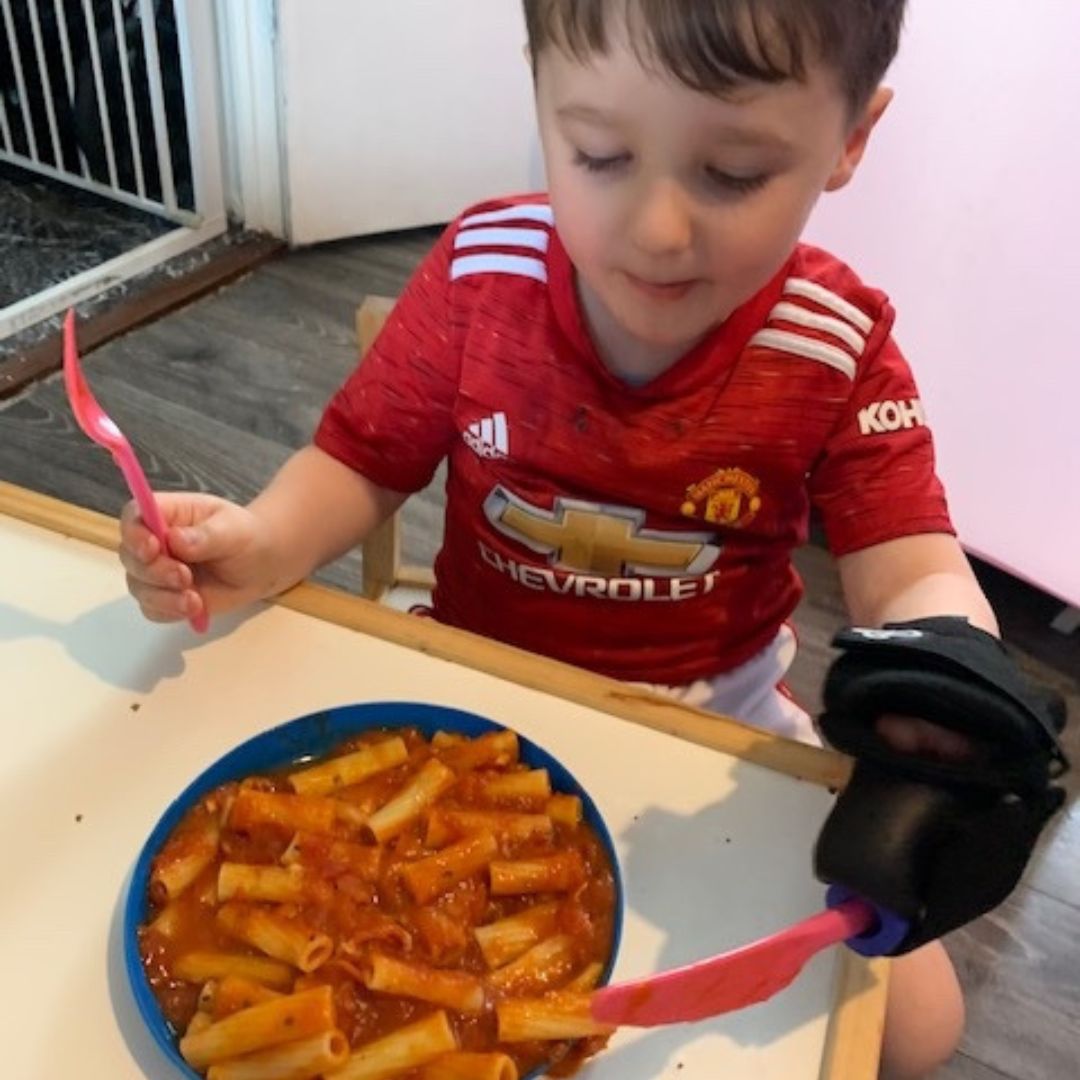
The Janet wraps around a fork, pen, toothbrush or instrument. The Amy and Rushton are small and large grippers for carrying and holding.
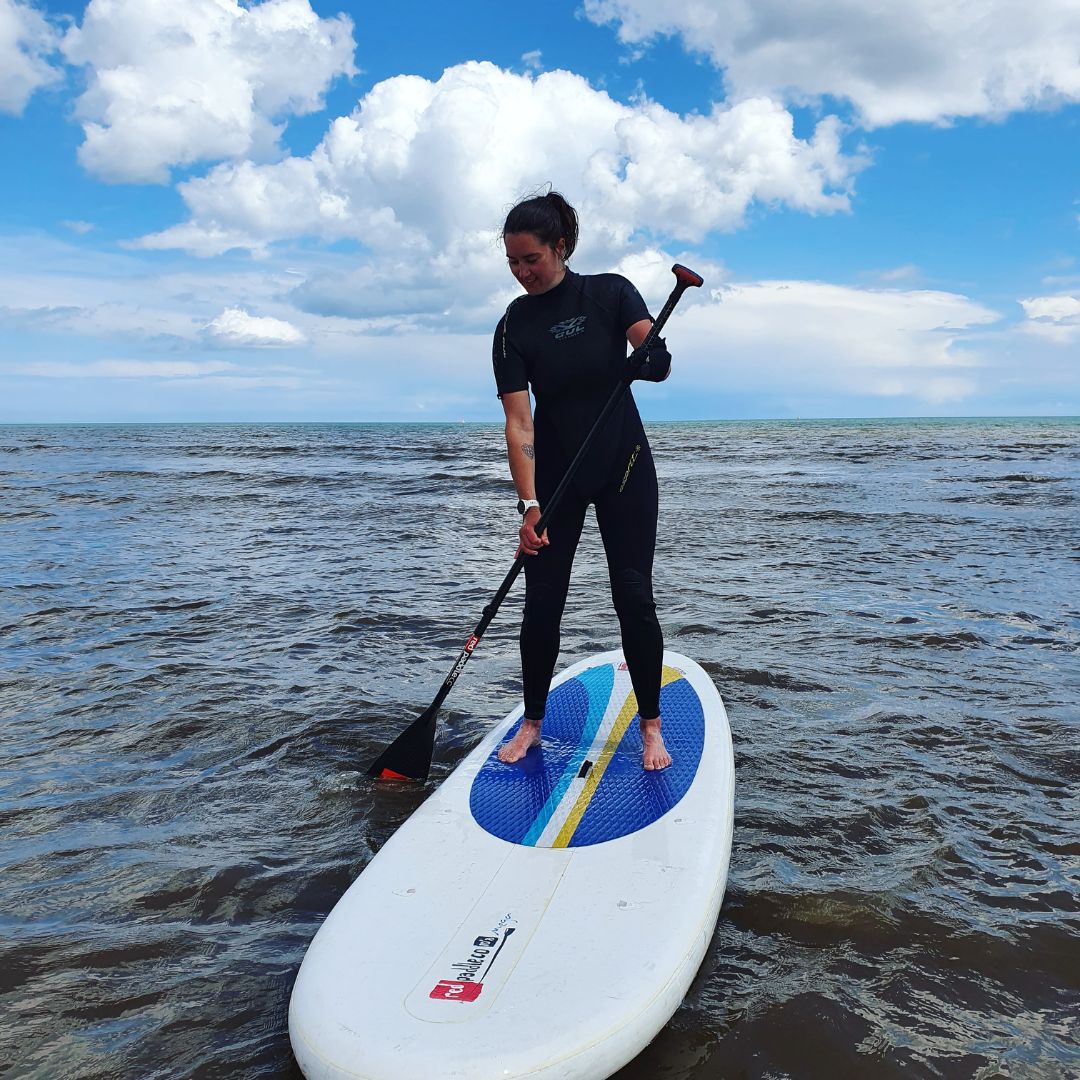
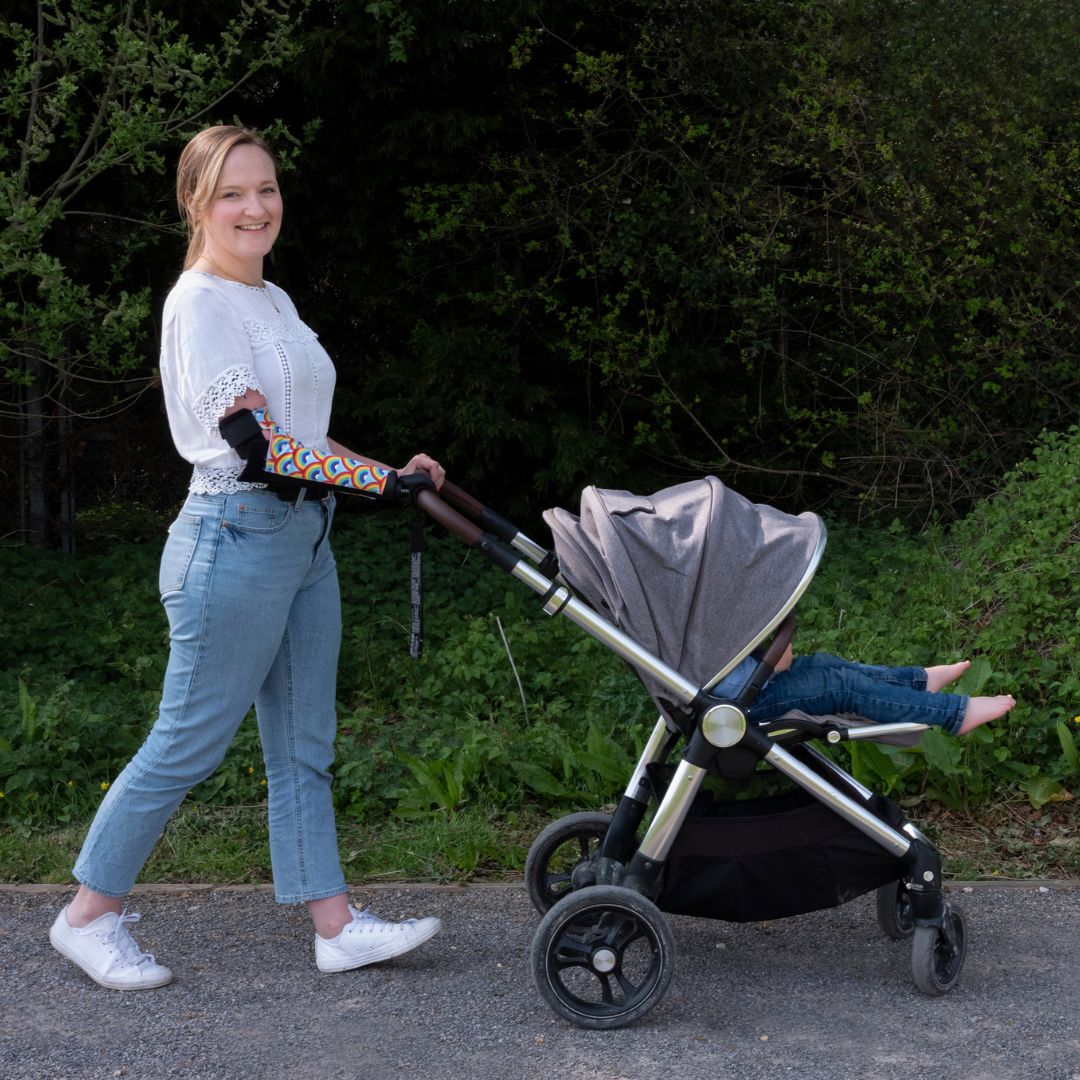
The Sarah clips onto bike, scooter and paddle handles. The Nicole is a weight bearing pad for yoga, the gym and push-ups. The Joanie throws a tennis ball. The Gwen attaches a swim float for toddlers.
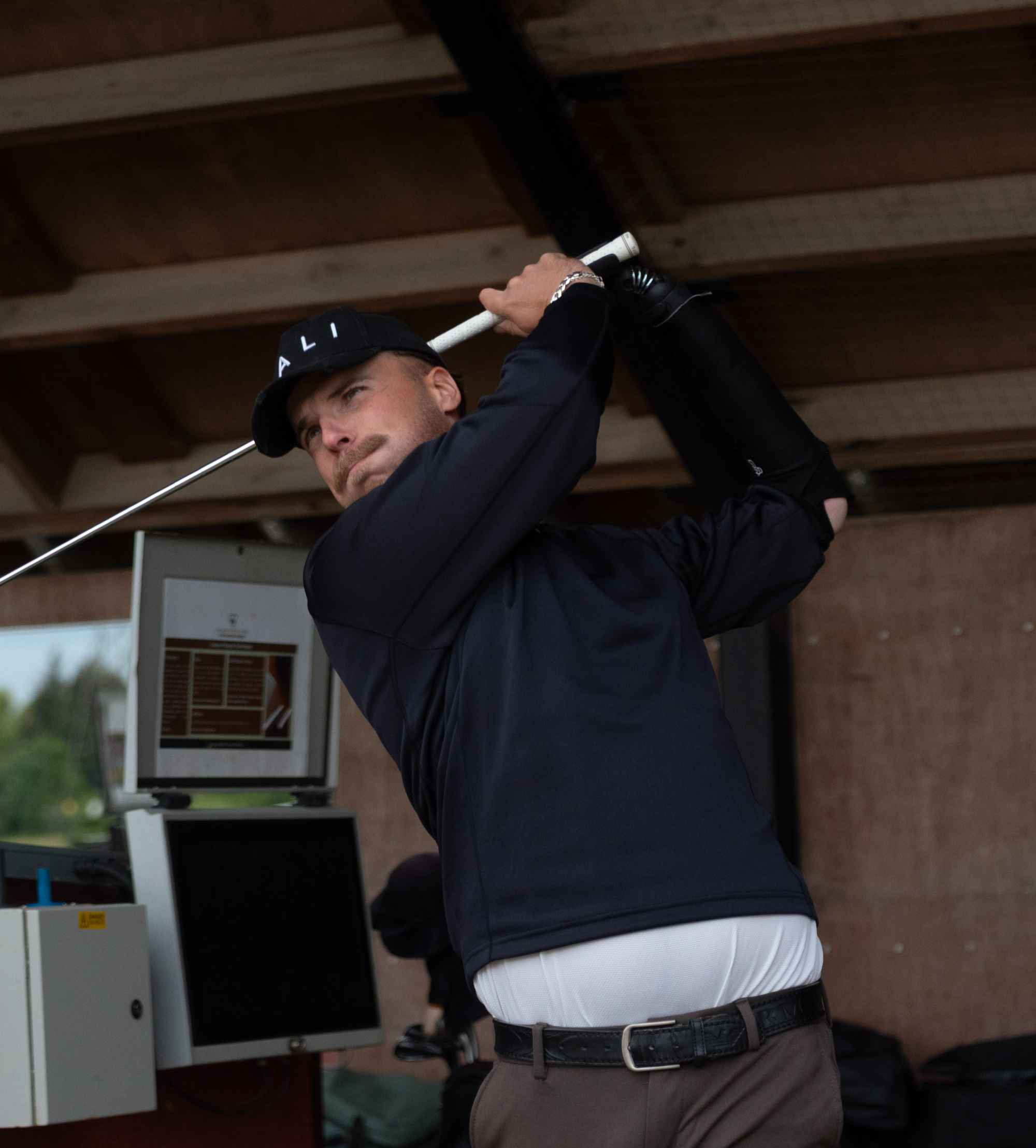
The EDGA golf tool holds and swings a club. The Grace holds a pick for guitar and ukulele. New tools are added as users ask for them.
Learn more on the Koalaa website and the Koalaa YouTube channel.
A sleeve that leaves red marks should fade within 30 minutes. If not, it is too tight and needs loosening.
Short videos from Koalaa for patients, parents, doctors and physiotherapists: how the sleeves go on, how the tools work, and what children do with them. More user stories are on the Koalaa YouTube channel.
Below elbow sleeve: cover, straps and clipping on a tool.
Partial hand sleeve.
Soft sleeve for babies and toddlers.
Children using their sleeves in play.
The level is where the hand or arm is missing. Each level needs a different design, and the higher the level, the more joints the prosthesis has to replace.
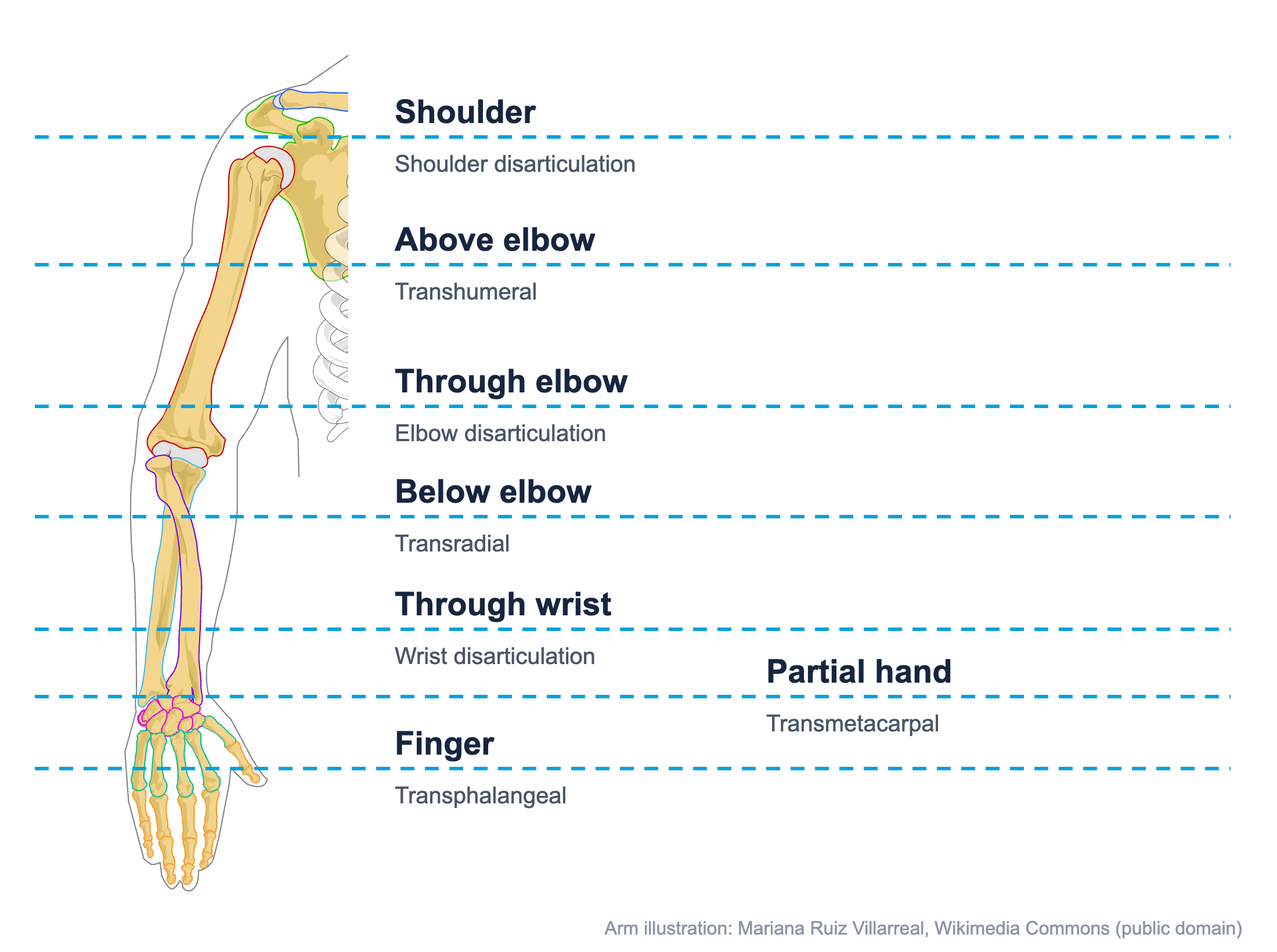
One or more fingers, or part of the thumb. Finger prostheses are driven by the joint you still have, or lock into position for strength.
Part of the hand is missing but the wrist works. Options include soft sleeves with tools, finger prostheses, and electric partial hand devices.
The hand is removed at the wrist joint (wrist disarticulation). The long forearm gives good control of the prosthesis.
Also called transradial. The most common arm level. Your own elbow does the bending. Options range from soft sleeves to bionic hands.
Elbow disarticulation or transhumeral. The prosthesis has an elbow joint as well as a hand. Control takes more training.
The arm is removed at or near the shoulder. The prosthesis has a shoulder, elbow and hand. These are made for each person.
There are a few ways to power a prosthesis. Many people own more than one and switch depending on the task.
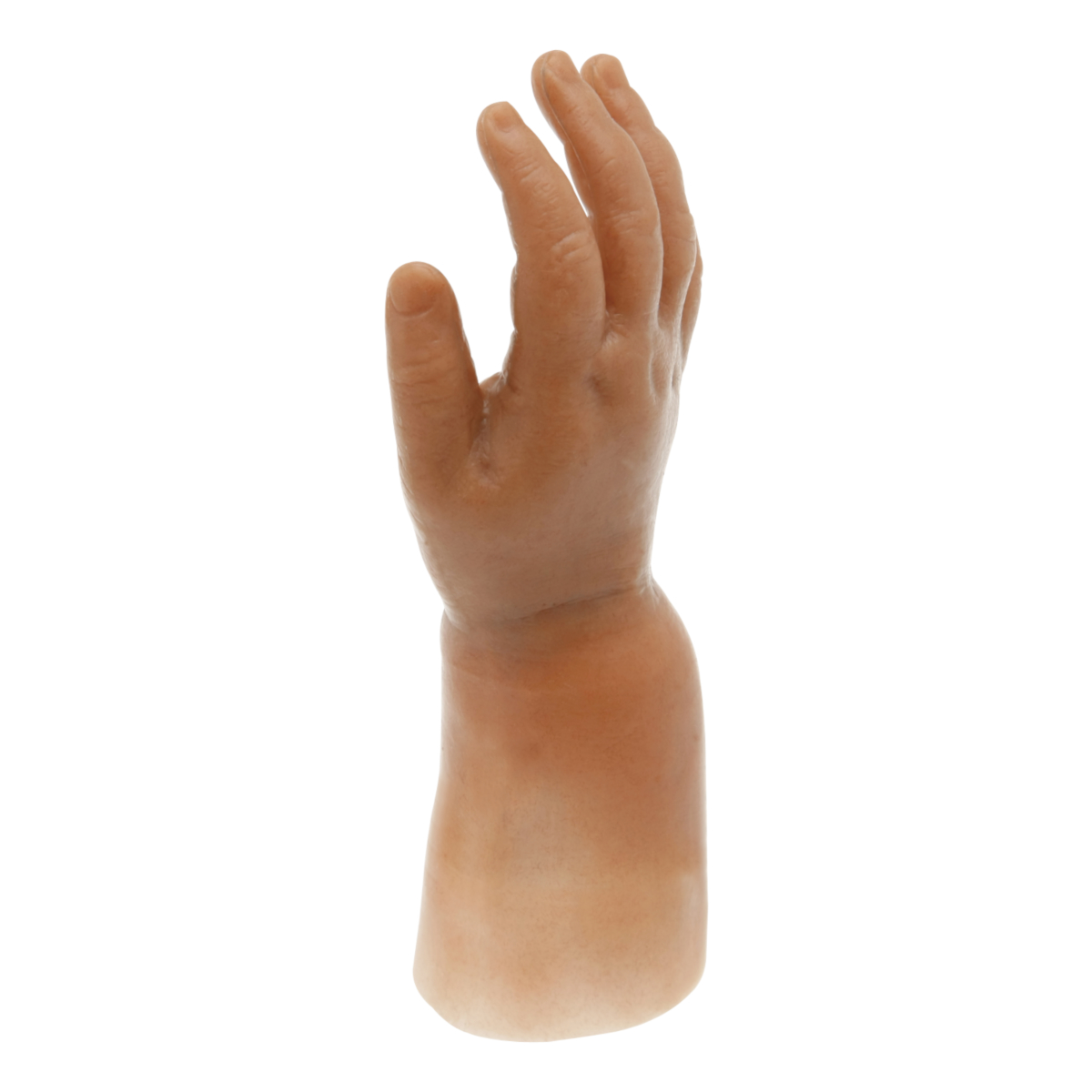
No moving parts. It restores length and shape, and gives you something to push, hold or steady against. Light and simple. Often the first prosthesis for a baby.
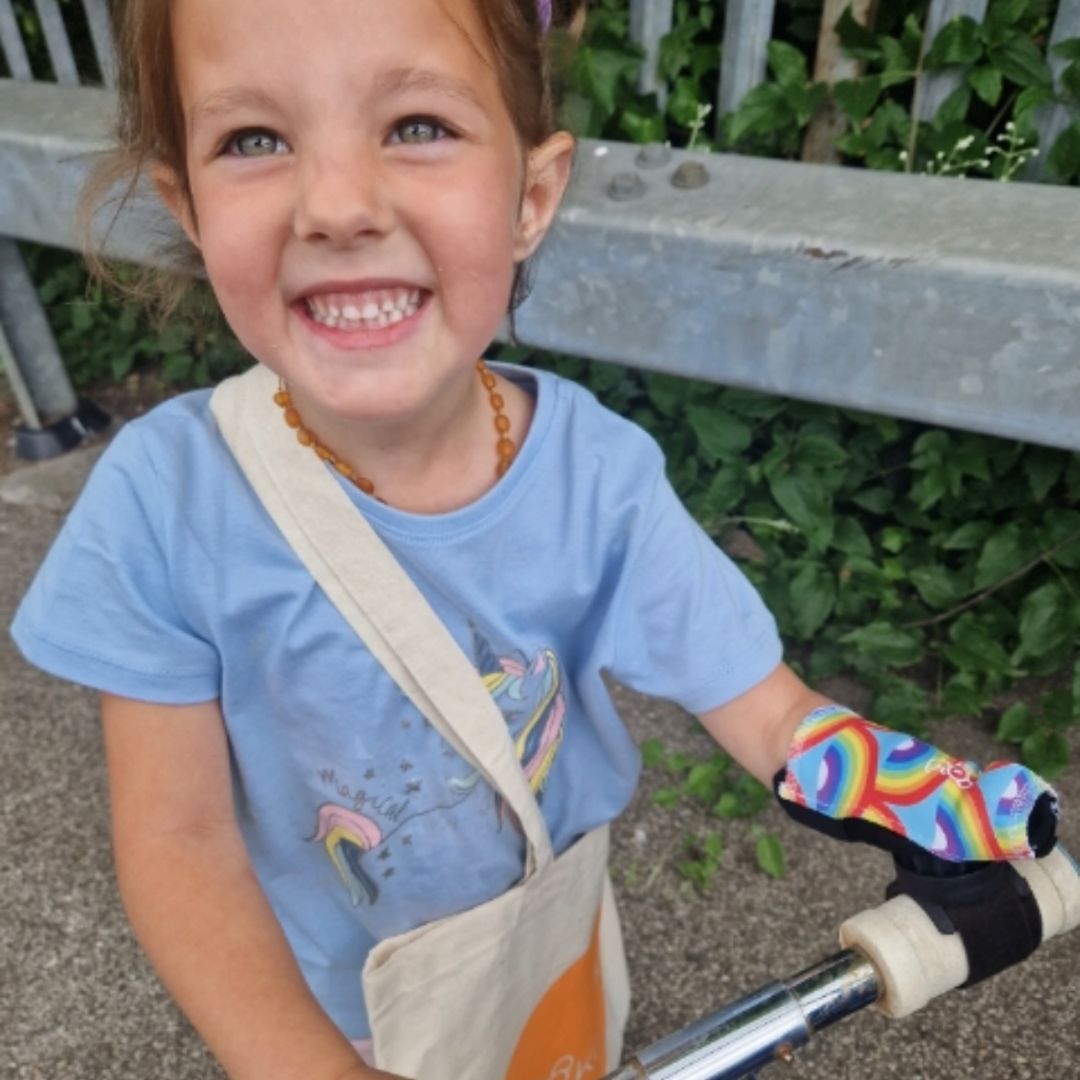
A fabric sleeve with clip-on tools, such as Koalaa. Light, washable and fitted in one visit. Good for children, for early use after surgery, and for everyday tasks and sport.
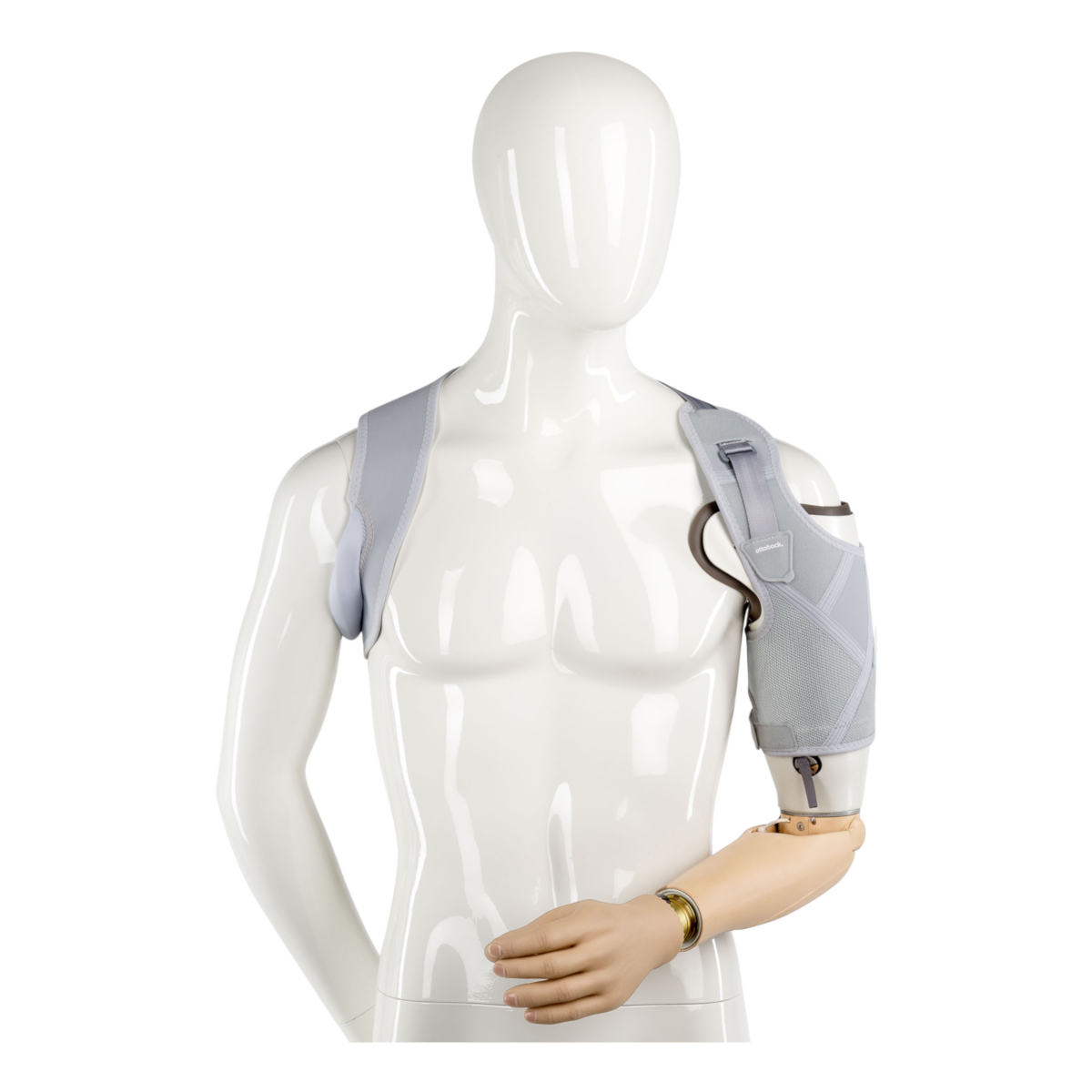
A harness over the shoulders is linked by a cable to the hook or hand. Shrugging or reaching forward pulls the cable to open and close it. Tough, reliable and gives you a feel for what you are holding. No batteries.
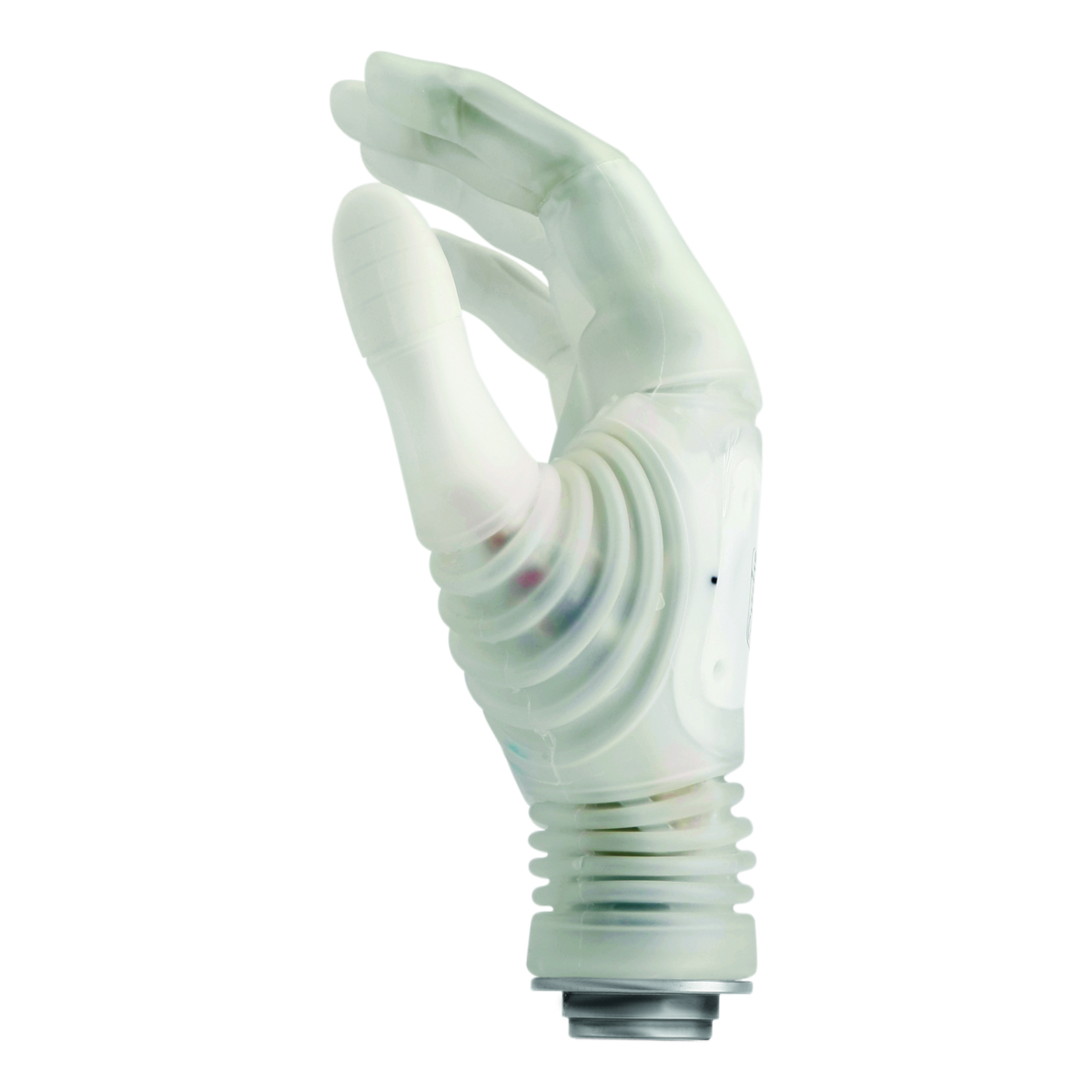
Also called electric or bionic. Sensors in the socket pick up signals from your muscles and move a motorised hand. Some hands have many grips and can be set from a phone app.
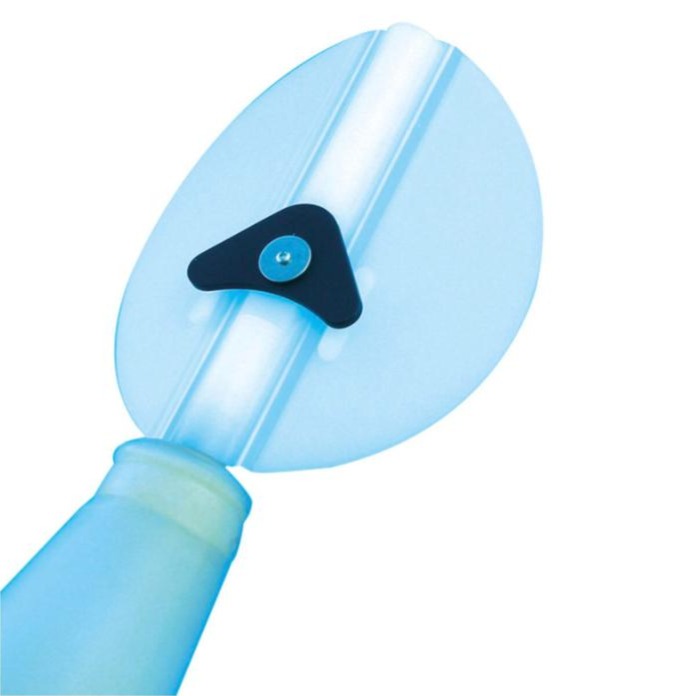
Made for one job: a swimming fin, a cycling tool, a gym attachment, a golf or hockey device. Often used alongside a main prosthesis.
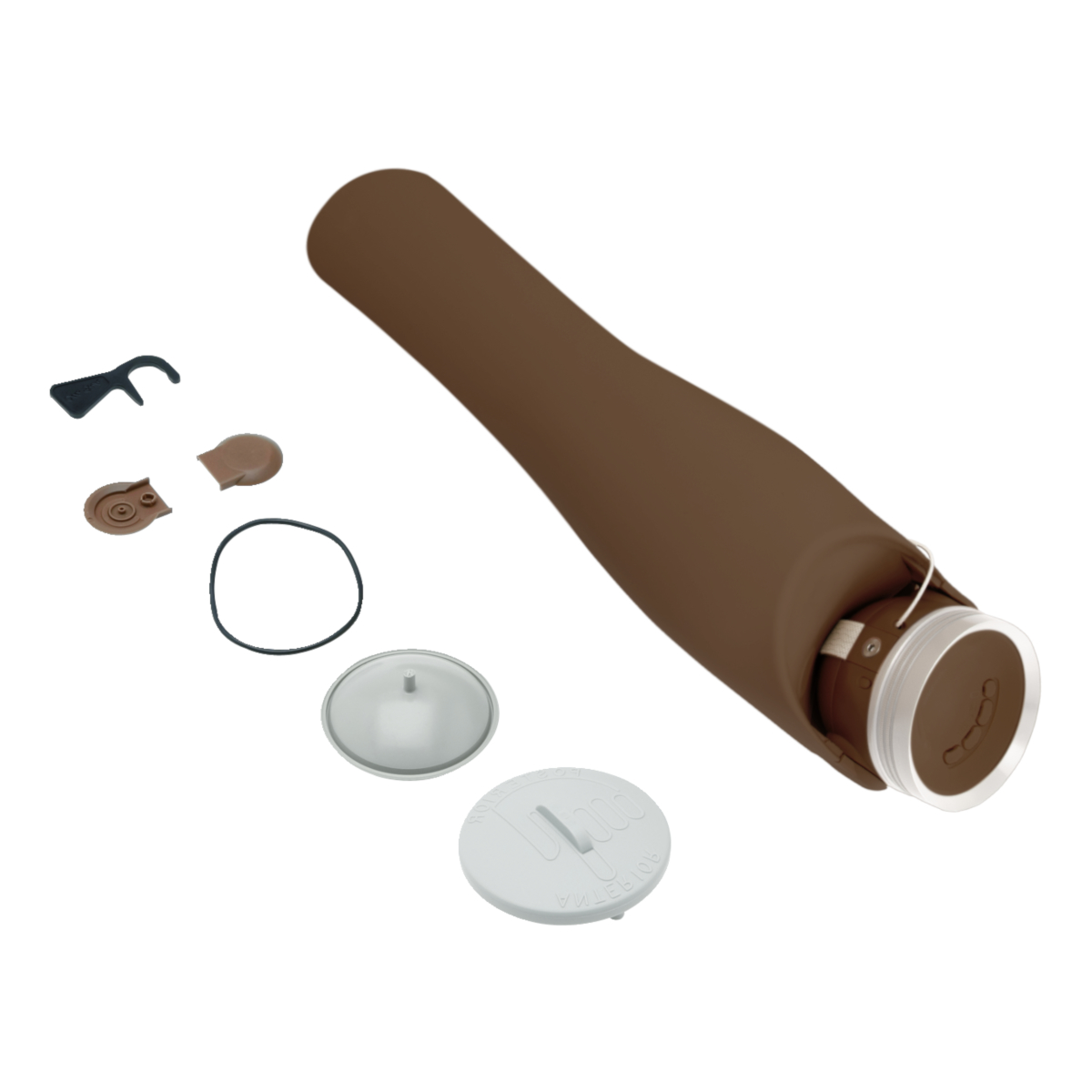
A mix, for example a body powered elbow with an electric hand. Used at higher levels where one system cannot do it all.
Finger and partial hand loss is more common than arm loss, often from work or farm injuries. There are now good options for even one missing finger. Most are custom made to your hand from a scan or cast.
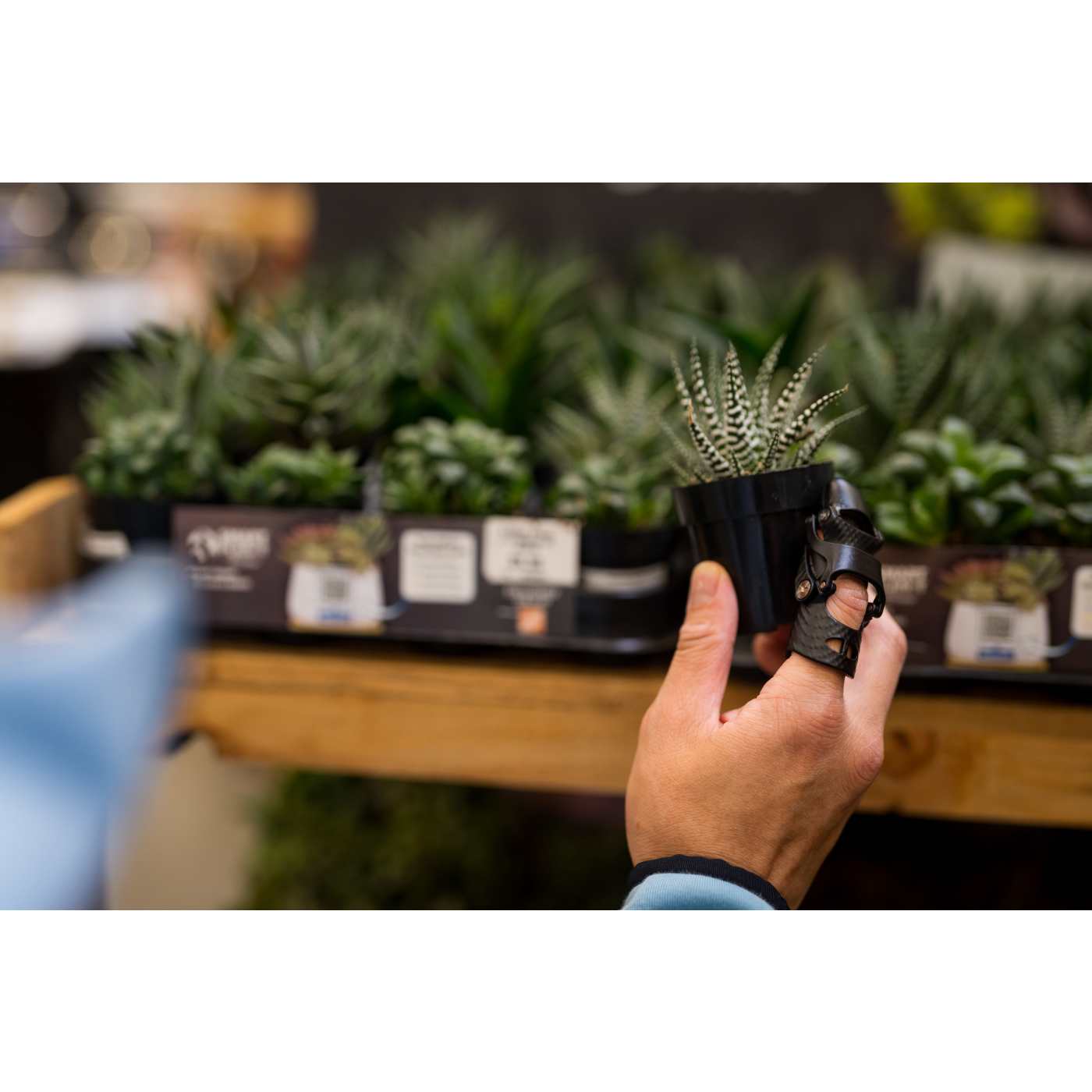
For a finger missing above the middle knuckle. Your own middle joint bends the fingertip, so the movement feels natural. Light nylon, can be made for touchscreens. By Naked Prosthetics.
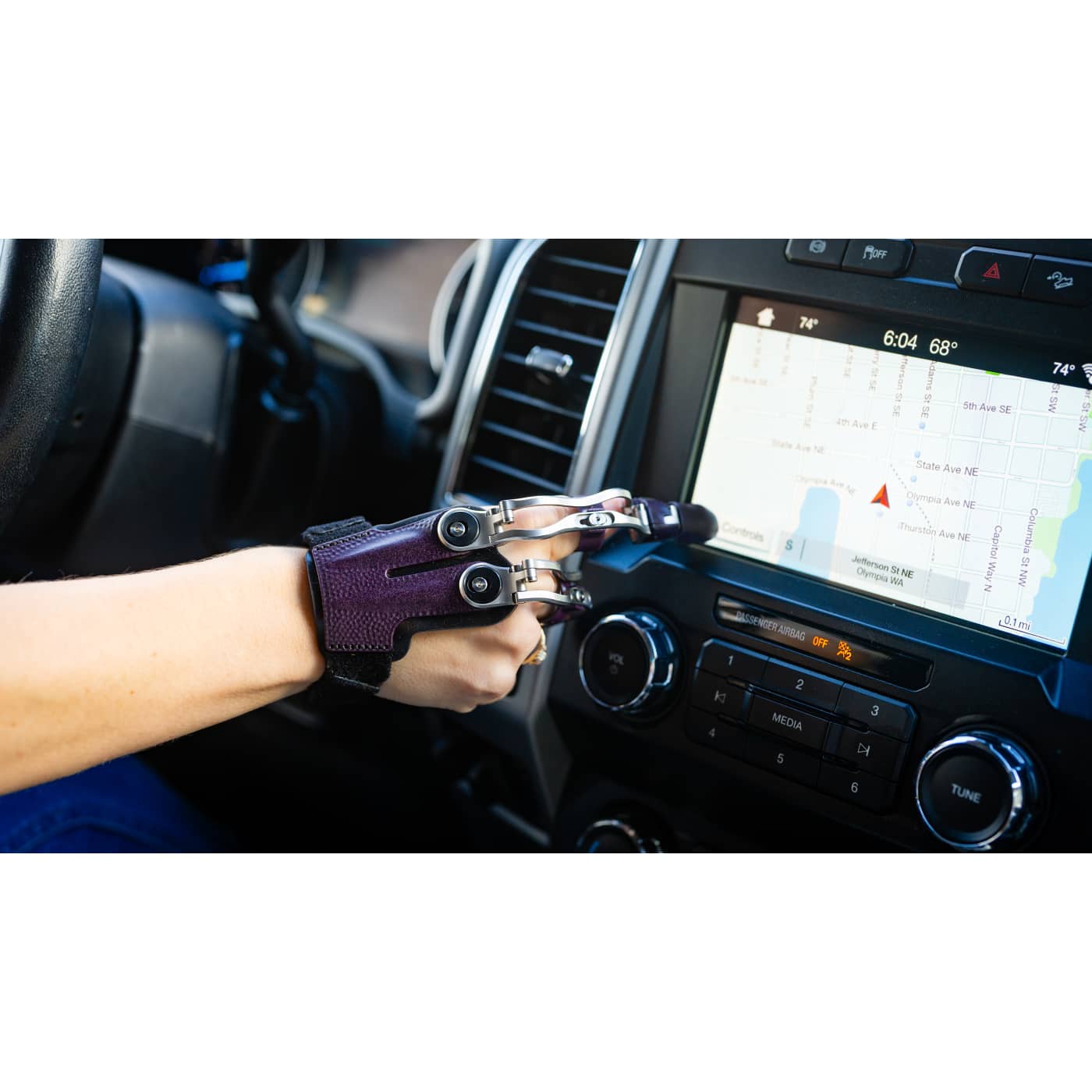
For a finger missing near the base knuckle. Your base joint drives the finger. Restores finger length, pinch and grip strength for active people. Stainless steel. By Naked Prosthetics.
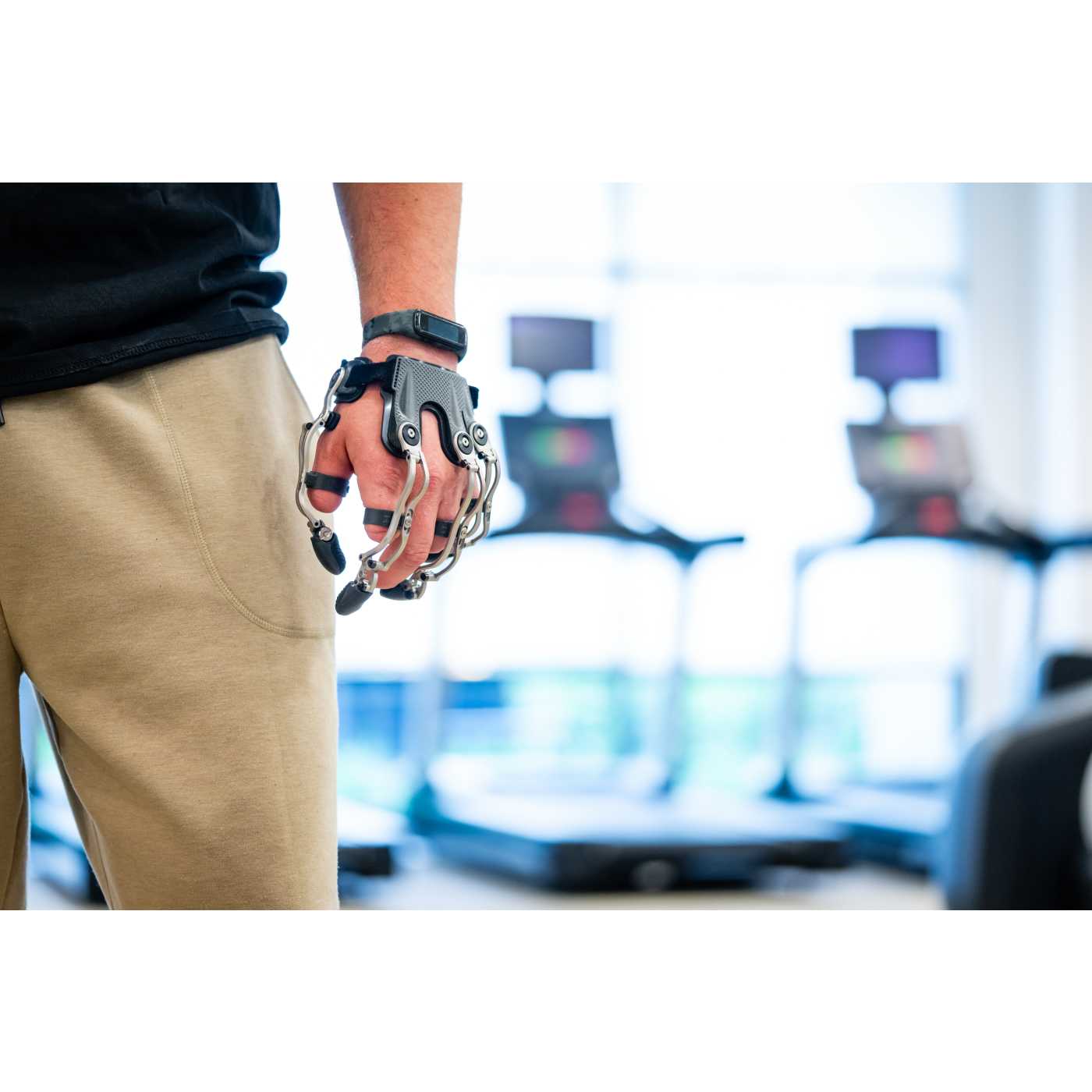
For part of the thumb. Your thumb joint drives it. Restores two and three point pinch and lets you hold medium and large objects. Shown with MCPDrivers. By Naked Prosthetics.
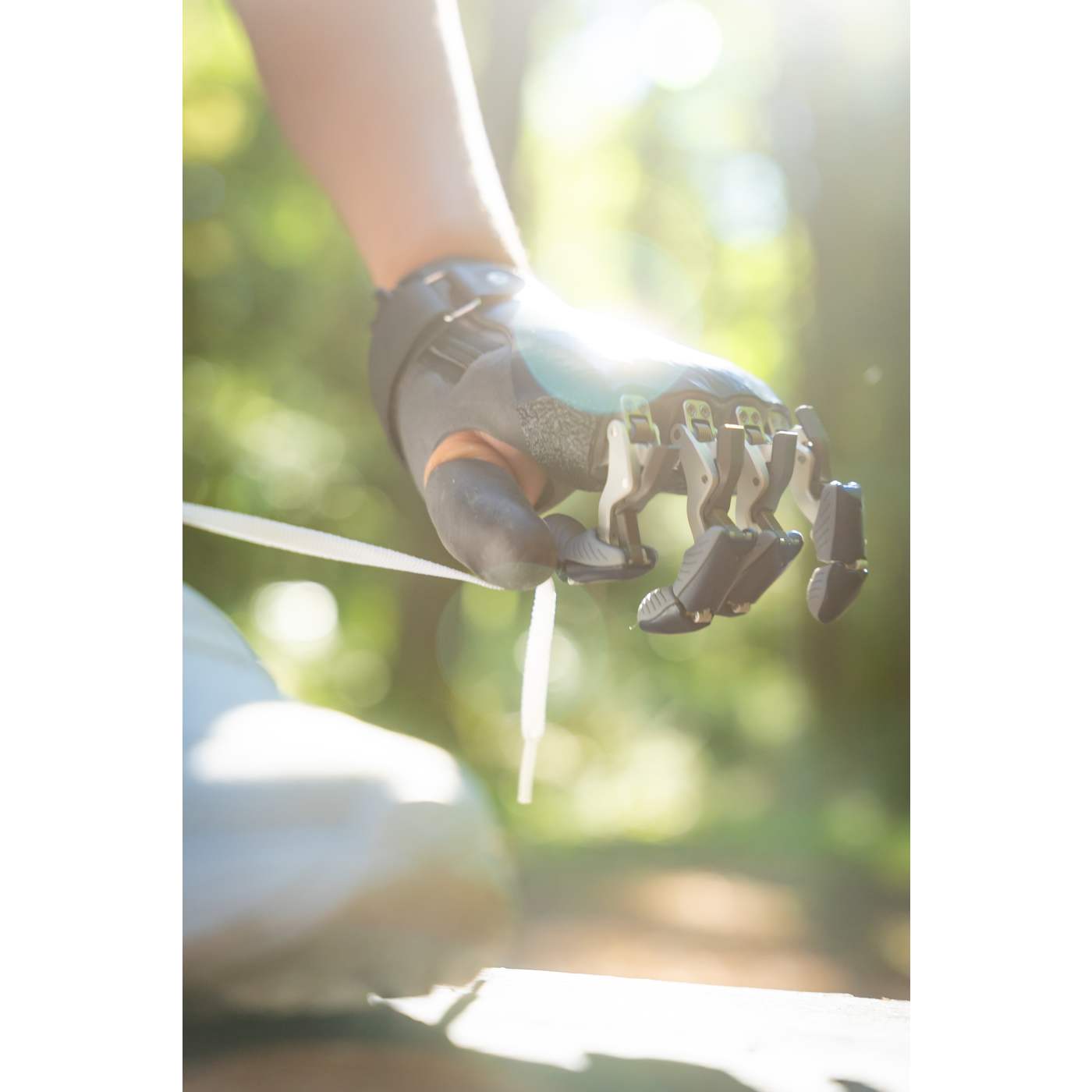
For a finger missing at the base knuckle. You set the finger in a locked position with your other hand or against a surface, then release it. Strong enough to carry heavy loads. By Naked Prosthetics.
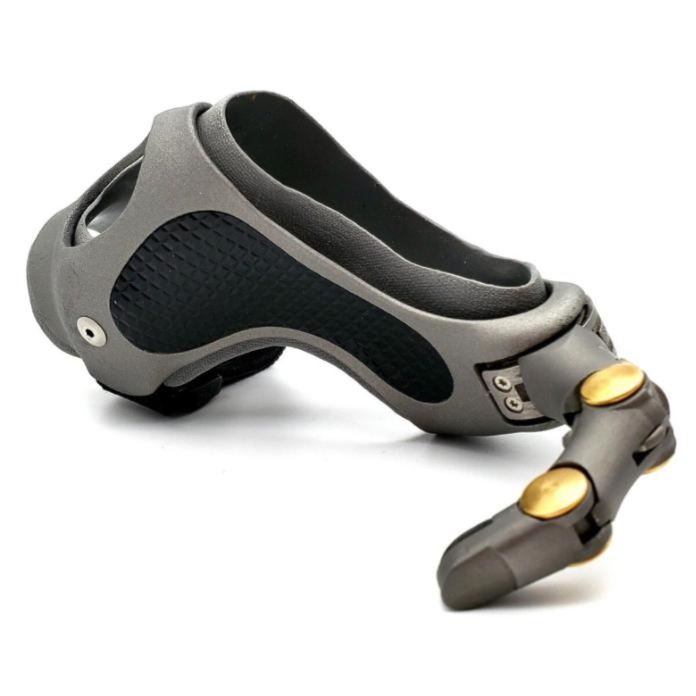
A locking finger with many set positions and a ratchet you release with a push. Made for heavy use. By Point Designs.
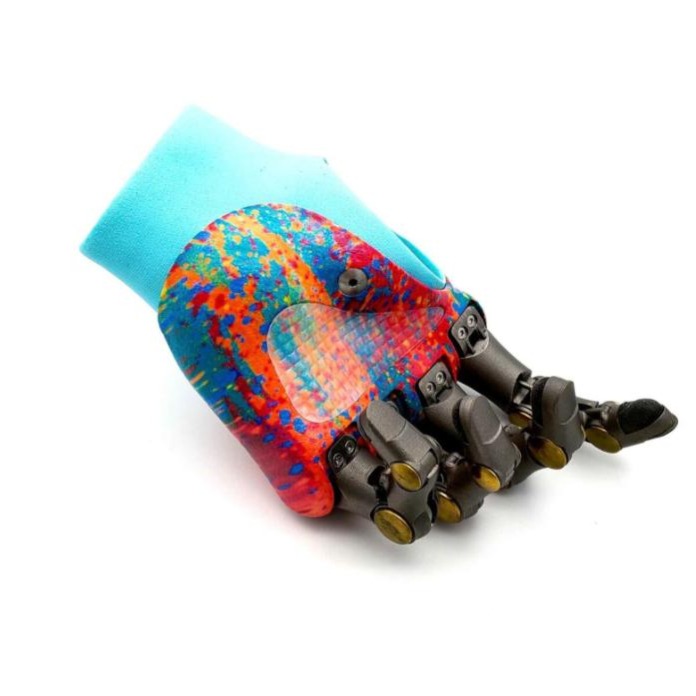
Finger prostheses can be combined on one custom socket when more than one finger is missing. Colours and covers are chosen by the user.
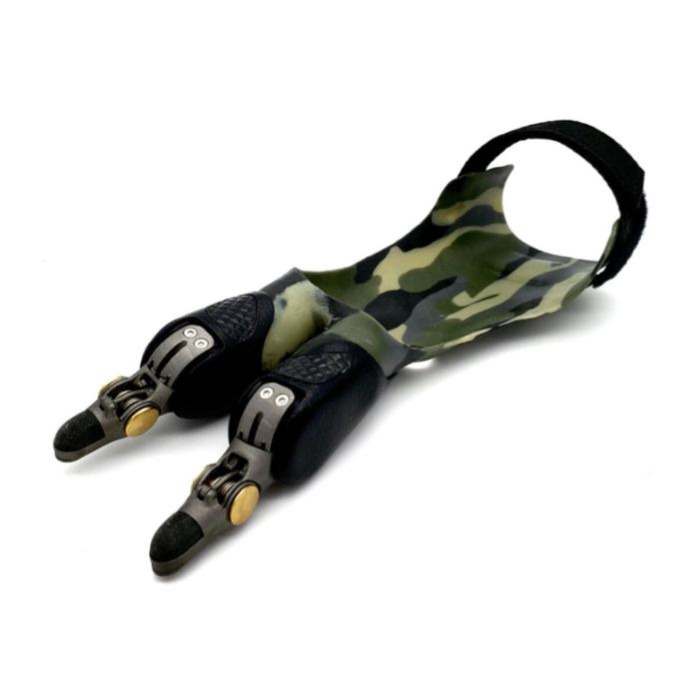
For a hand missing most of its fingers. A socket with positionable fingers gives the hand length and a surface to grip against. By Point Designs.
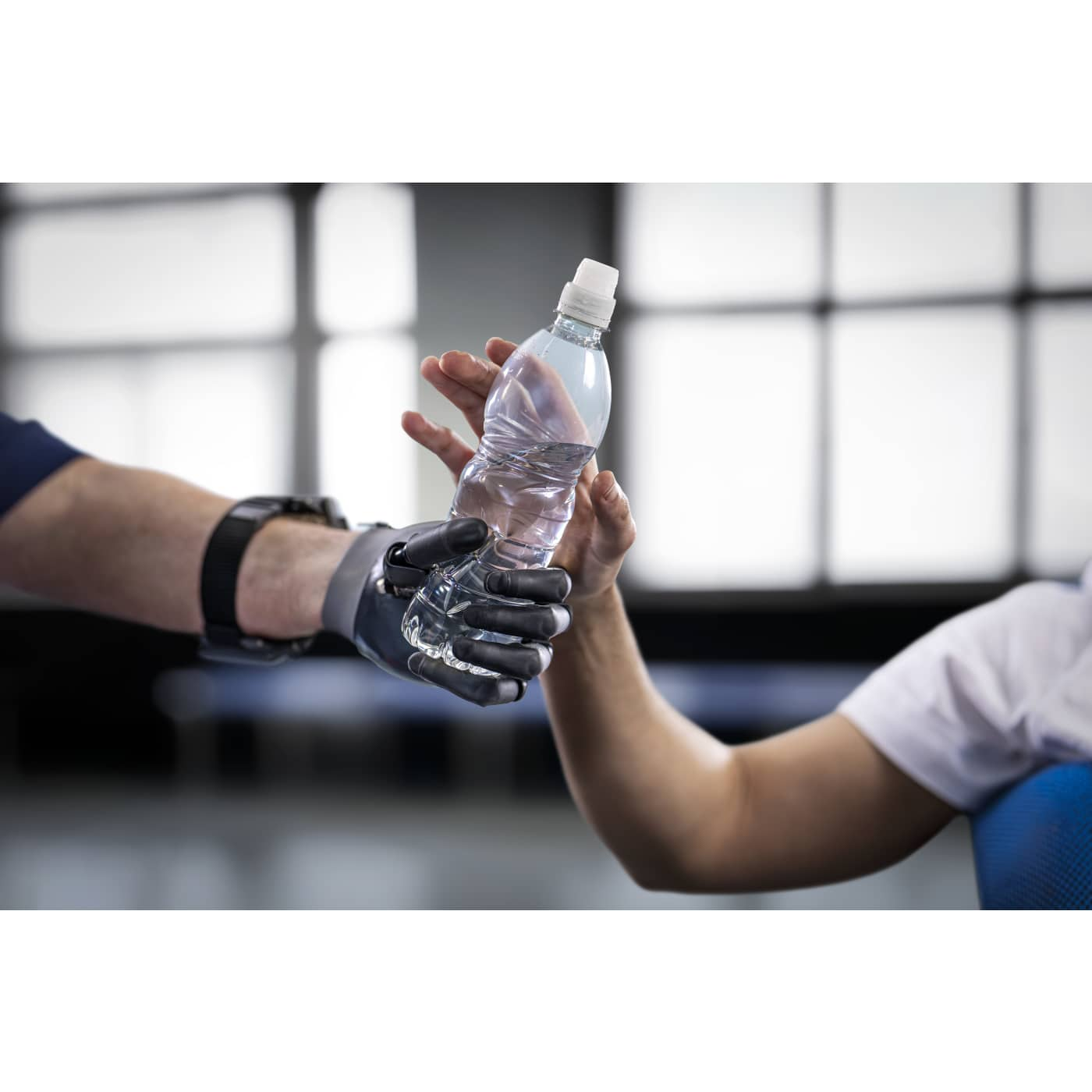
Motorised fingers controlled by your muscle signals, for one to five missing fingers. Batteries sit in a wrist band. Example: Össur i-Digits Quantum.
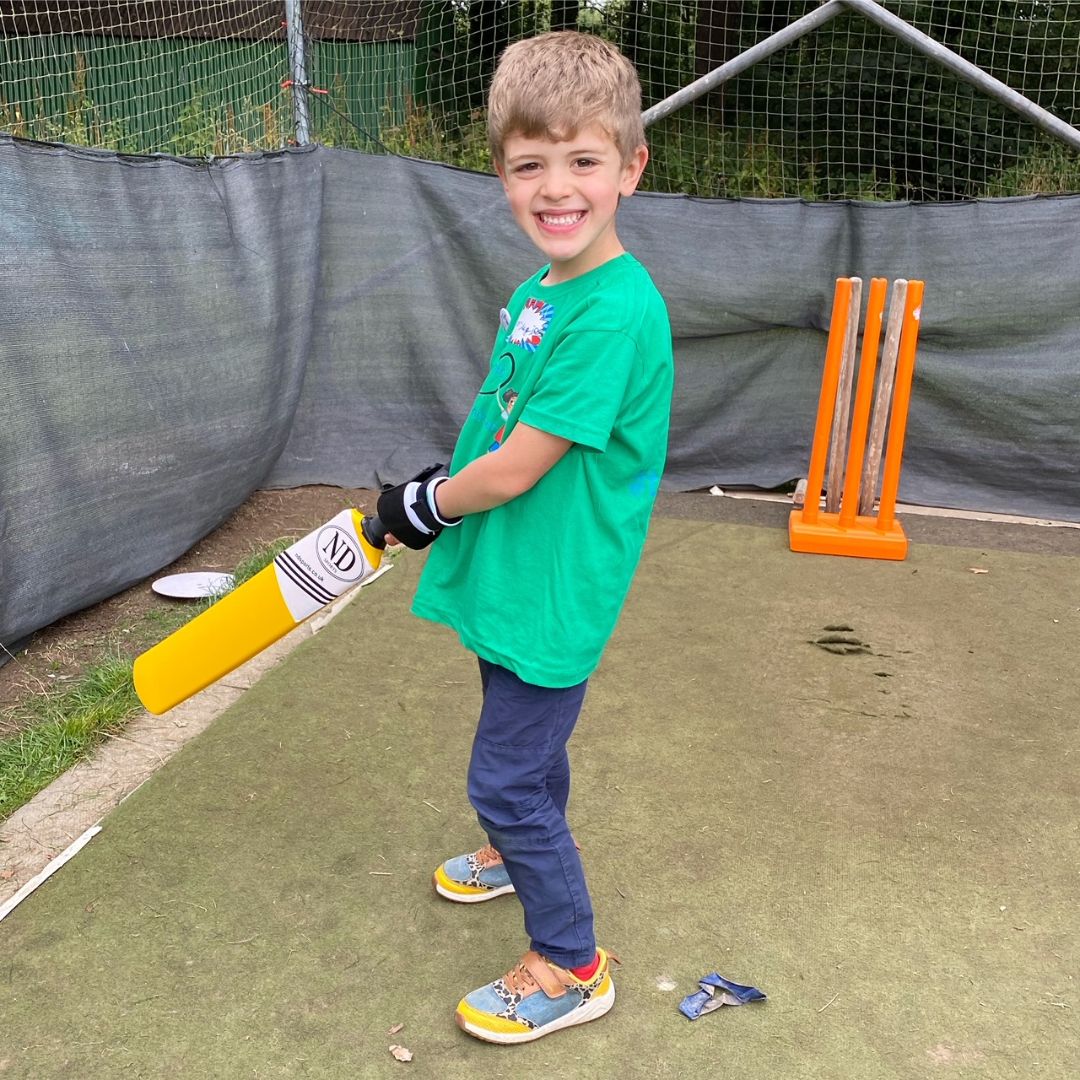
The Koalaa Paww. A soft sleeve with clip-on tools, worn over the hand with the wrist free. Fitted the same day. Shown here playing cricket.
Other finger prostheses include Paralid mechanical fingers, distributed in Canada by Ortho Active.
A bionic, or myoelectric, hand has motors in the fingers. Sensors in the socket read your muscle signals and open or close the hand. Newer hands have many grip patterns, a rotating thumb, and a phone app to change settings. They are heavier than a body powered arm, need charging, and cost more, so funding is reviewed carefully. These are the main hands available in Canada.
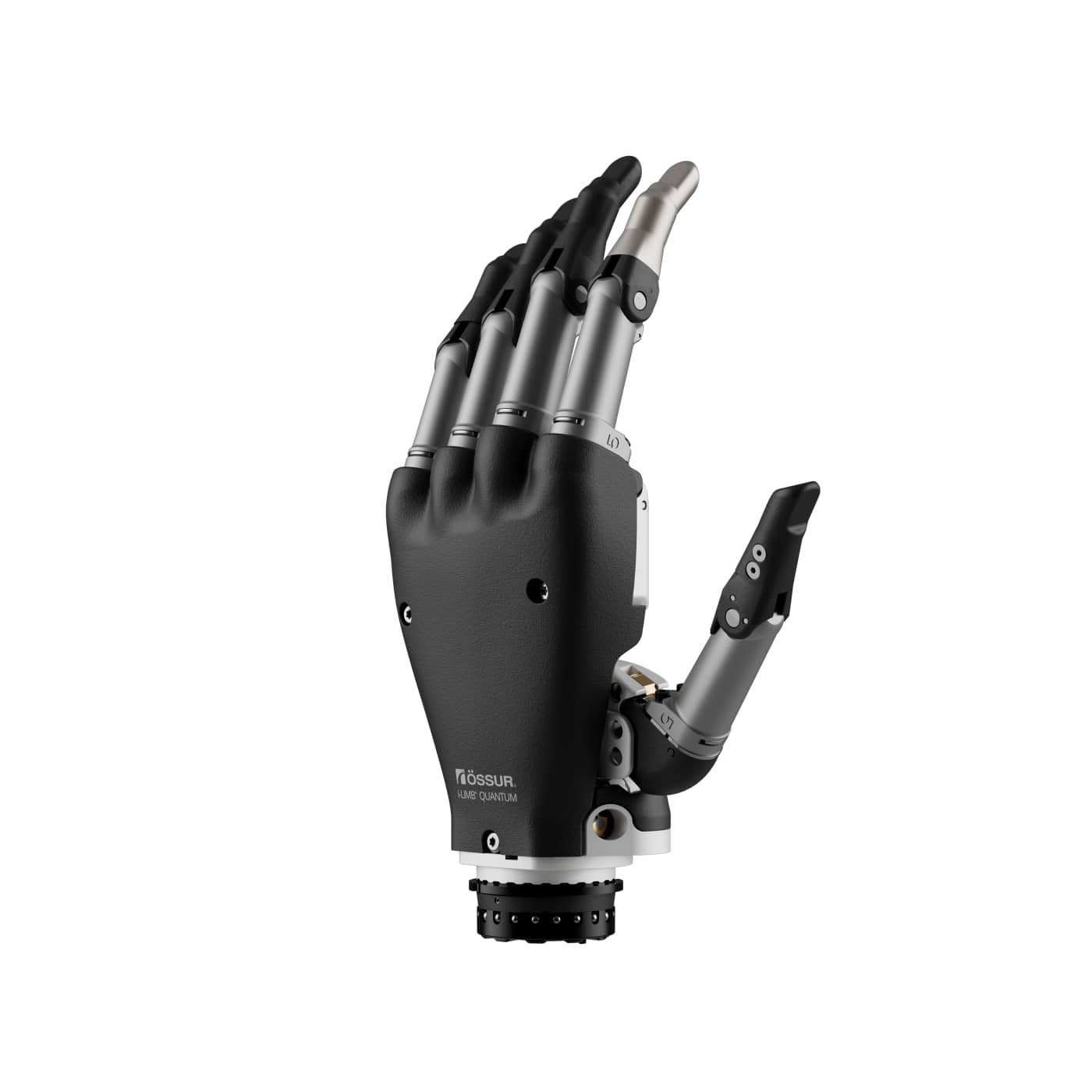
Five motorised fingers and a rotating thumb, with up to 36 grips. Change grips with a gesture, a muscle signal, a phone app or a proximity chip. Titanium digits. Also available as i-Limb Ultra and Access. By Össur.
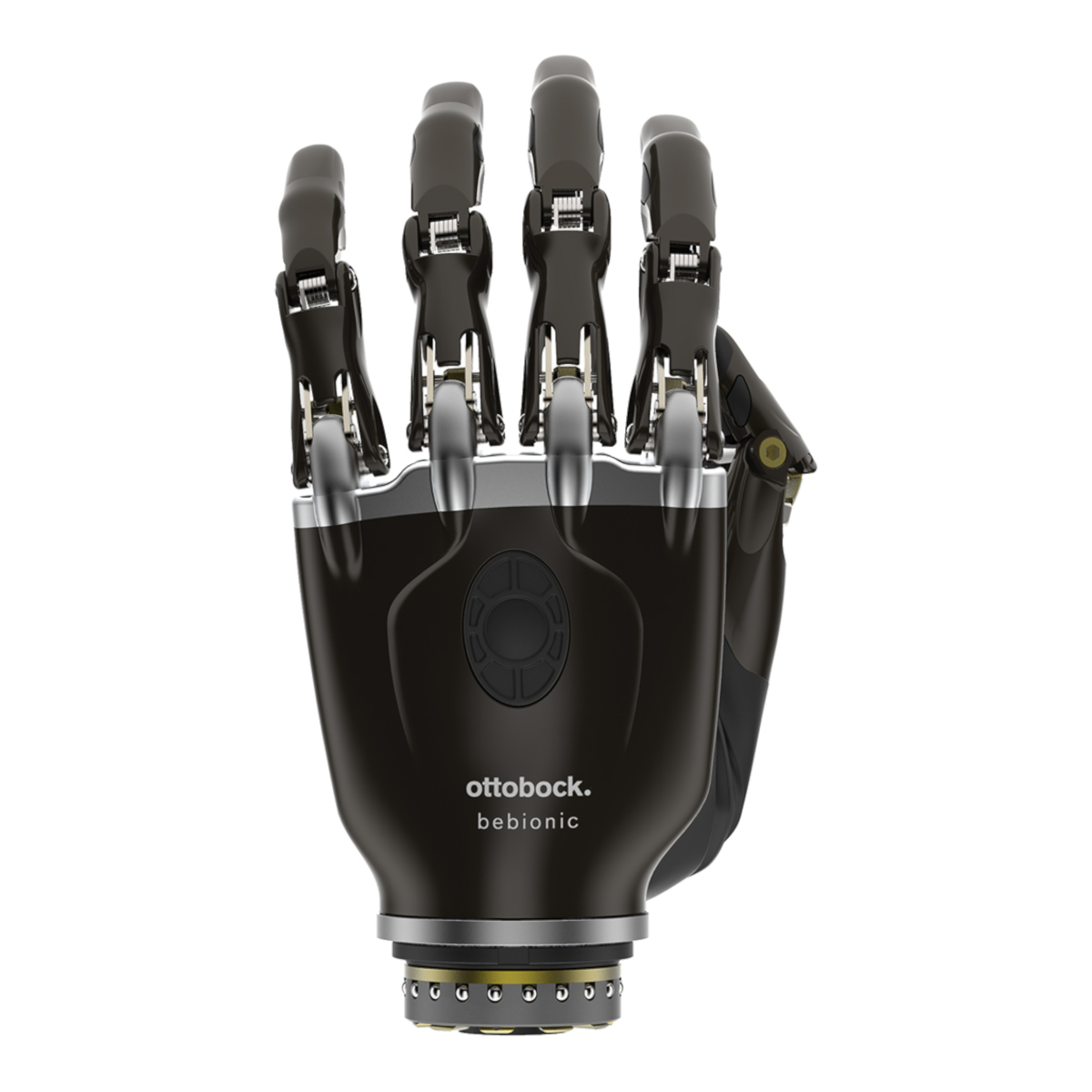
A multi-articulating hand with 14 grip patterns, individual finger motors and a thumb that can be set in two positions. Three sizes, with a small size for teens and smaller adults. By Ottobock.
A powered hand with a natural-looking wrist and seven hand positions, including a flat hand for pushing and a relaxed position for resting. By Ottobock.
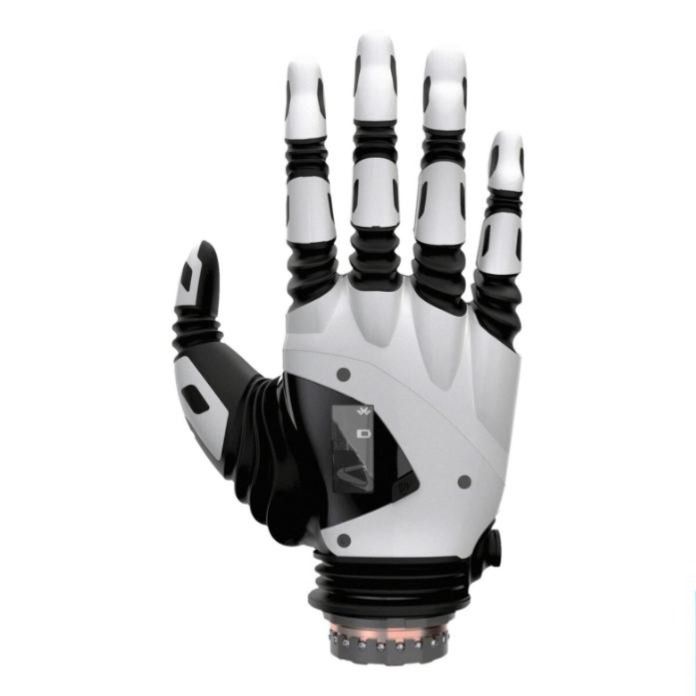
A multi-articulating hand with individually powered fingers, a powered thumb rotation and app control. By Covvi.
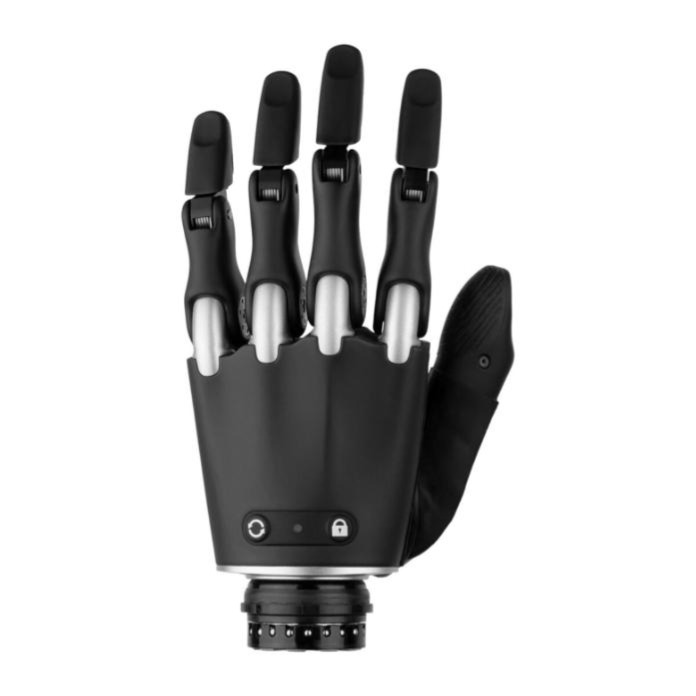
A strong multi-grip bionic hand with a rotating thumb and one of the highest grip forces available. By Aether Biomedical.
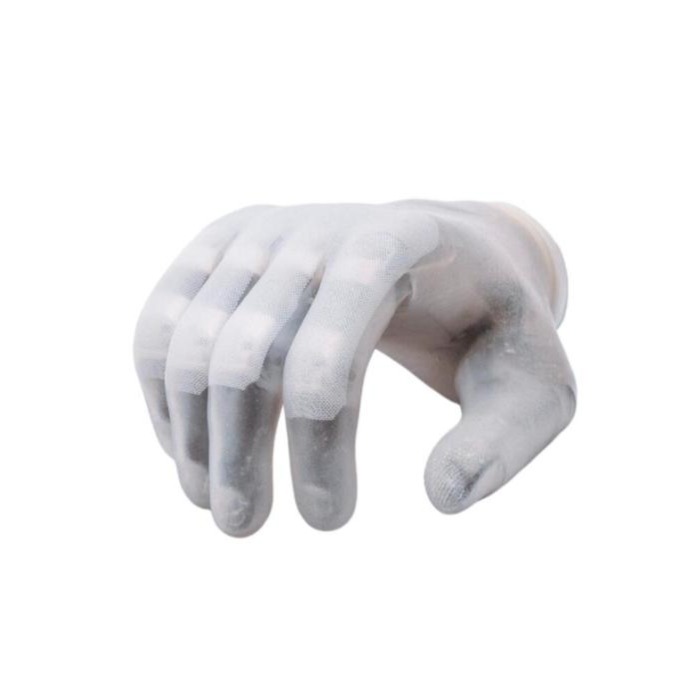
A bionic hand where one motor drives all fingers, so they wrap around any object shape on their own. By BionIT Labs.
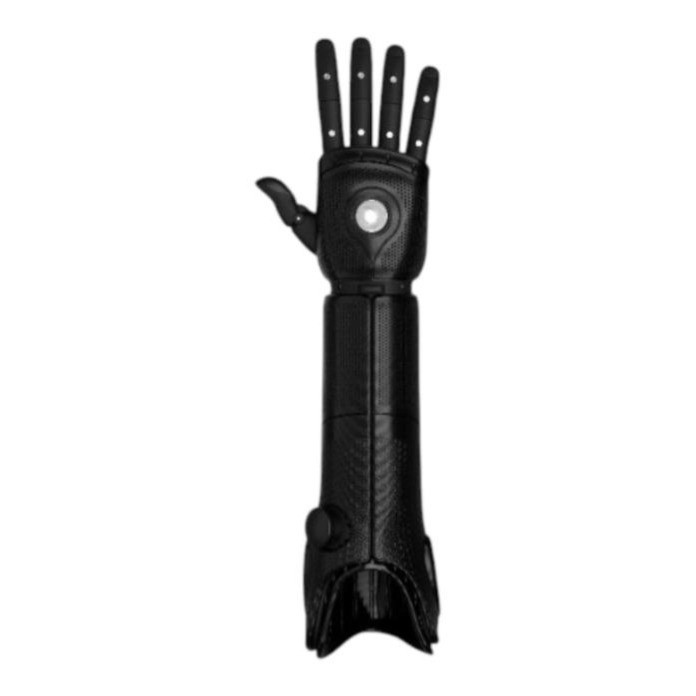
A lightweight 3D printed bionic arm for below elbow limb differences, for ages 8 and up. Swappable covers that children love. By Open Bionics.
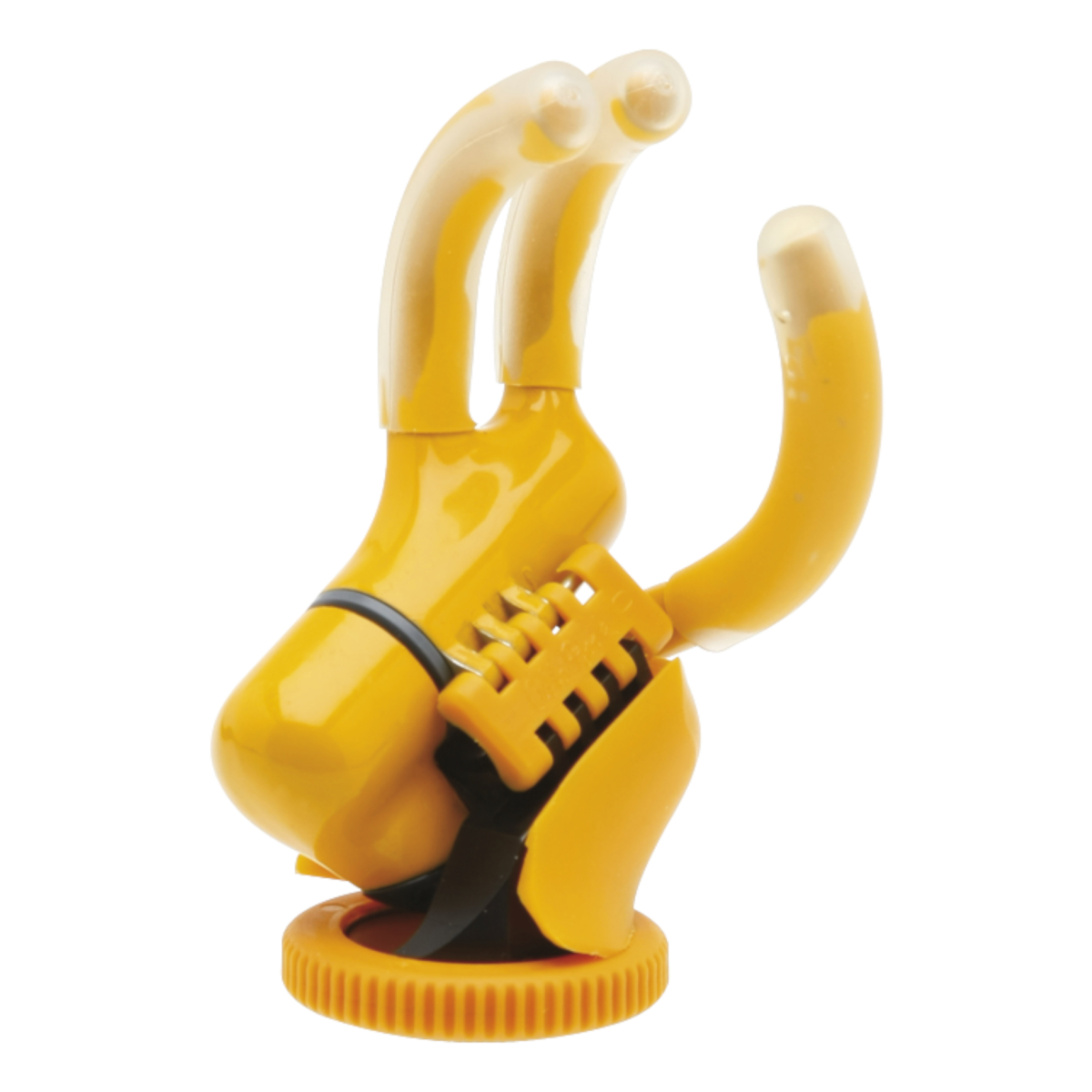
Small myoelectric hands are made for toddlers and children, often fitted from 12 to 18 months. The hand grows with the child through a series of sizes. Example: Ottobock Electrohand 2000.
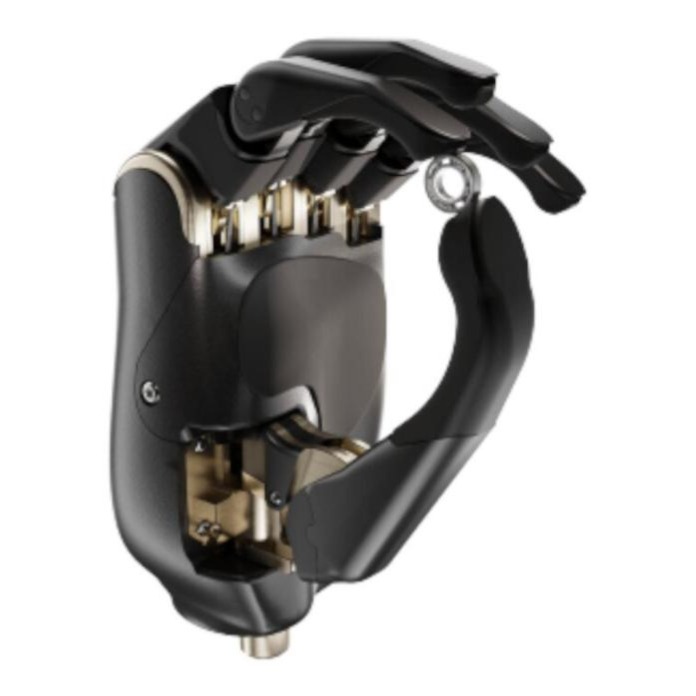
The Metacarpal GEM looks and grips like a bionic hand but is fully body powered. Waterproof, no charging, and the fingers wrap around whatever you hold. New to Canada in 2026. By Metacarpal.
Other bionic hands on the market include the TASKA hand, the Psyonic Ability Hand and the Vincent hand. Not every hand suits every person. The choice depends on your level, muscle signals, goals and funding.
A hand or arm prosthesis usually takes several visits, not one. The first fitting is almost never the final one. Most visits are about 1 hour. A soft sleeve is the exception and can be fitted in a single visit.
A prosthesis is a medical device, so it needs a prescription. You can book a consultation before you have one. Parents of a baby with a limb difference can come as early as they like.
A clinician checks your limb, skin and movement, and talks through your goals. For a soft sleeve, measuring and fitting can happen in this visit. For a socket, the limb is cast or 3D scanned.
A clear test socket is made first. You try it on so the fit, pressure points and control can be checked and changed before anything final is built. This is often called a check or test fitting.
Many people need two or three check fittings. Each one refines the fit and the setup of the hand, wrist or elbow. Taking the time here is what makes the final prosthesis comfortable.
The final prosthesis is built from the approved check socket and fitted. You learn to put it on, take it off, swap tools and care for your skin. Training with an occupational therapist is common for body powered and electric arms.
Fit and use are checked after a few weeks, then as needed. Children need regular checks as they grow. New amputees need socket changes as the limb settles, often within the first year.
Funding for a hand or arm prosthesis comes from different places depending on how the limb was lost and what coverage you have. Approval or payment is needed before a prosthesis is ordered or built.
If the injury happened in a vehicle, SGI may cover it. If it happened at work, WCB. Status First Nations and Inuit clients may be covered by NIHB (Non-Insured Health Benefits). Veterans may be covered by Veterans Affairs Canada. These programs can be direct billed when the prosthesis is approved.
The Saskatchewan Aids to Independent Living program. SAIL funding for prosthetics at a private clinic is reviewed case by case. The cost may be split between SAIL and you or your health benefits.
Many people have extended health benefits through their job or a family member’s job, from insurers such as Canada Life, Manulife, Sun Life, Blue Cross or Green Shield. Plans may cover all or part of the cost, and the rest is your responsibility. The price is the same no matter who pays.
The Child Amputee (CHAMP) Program helps families with the cost of artificial limbs and recreational devices for children under 18. The Adult Amputee Program may help adults. Visit waramps.ca.
See all funding options.
Most upper limb components reach Canadian clinics through a few distributors. Their websites are a good place to read more about what is available.
Hand and arm prostheses involve hand and plastic surgeons, physiatrists, pediatricians, family doctors and occupational therapists.
To refer, use your own prescription pad or the online referral, and fax to 1 (306) 912-7807. Include the diagnosis, the level and side, the date of surgery or that the limb difference is congenital, and what is needed. The patient is then contacted to book.
For a baby with a limb difference, refer early. A first visit can happen at any age, and a first prosthesis is often fitted around 6 months.
A prosthesis is a medical device. A prescription is required before it is made and dispensed.
Yes. A prosthesis is a medical device, so a prescription is needed before it is made and dispensed. You can book a consultation and assessment before you have one.
A first prosthesis is often fitted around 6 months, when babies start to reach and push up. Soft sleeves are made for babies from birth to age 3. Children fitted before age 2 are more likely to keep using a prosthesis as they grow.
A soft sleeve can be fitted within days of surgery, once your surgeon says it is safe, because it has no hard edges and sits gently over healing skin. A hard socket waits until the wound has healed and the swelling has gone down, often 2 to 6 months.
Yes. A soft sleeve like Koalaa is a prosthesis made of fabric instead of hard plastic. It is light, washable and quick to fit. Some people use it as their main prosthesis. Others use it alongside a body powered or electric arm.
The socket has to fit your limb exactly, and your limb changes as it heals. A clear check socket lets the fit be tested and changed before the final one is built. Two or three check fittings are normal. The definitive prosthesis is usually not what you wear home from the first fitting.
Body powered arms are lighter, tougher, waterproof and give you a feel for what you hold. Bionic hands offer more grips and a more natural look but are heavier, need charging and cost more. Many people own one of each.
A prosthesis should not be painful. Your skin needs time to get used to it, so you start with short wear times. Red marks should fade within 30 minutes after you take it off. Tell your clinician if they do not, or if you get blisters or sores.
Yes. Finger prostheses are driven by the joint you still have, or lock into position for strength. They can restore length, pinch and grip.
No. Many adults with a limb difference from birth try a prosthesis later in life, often to protect their other arm or for a new job or sport.
Soft sleeves, finger prostheses, body powered and bionic arms, for babies, children and adults.
Call 306-566-4666, email [email protected], or request an appointment online.