
Pediatric Baby Helmets
Helmet treatment for plagiocephaly and brachycephaly in Emerald Park, just outside Regina, for families across Saskatchewan. Measured with a 3D scan at every visit.
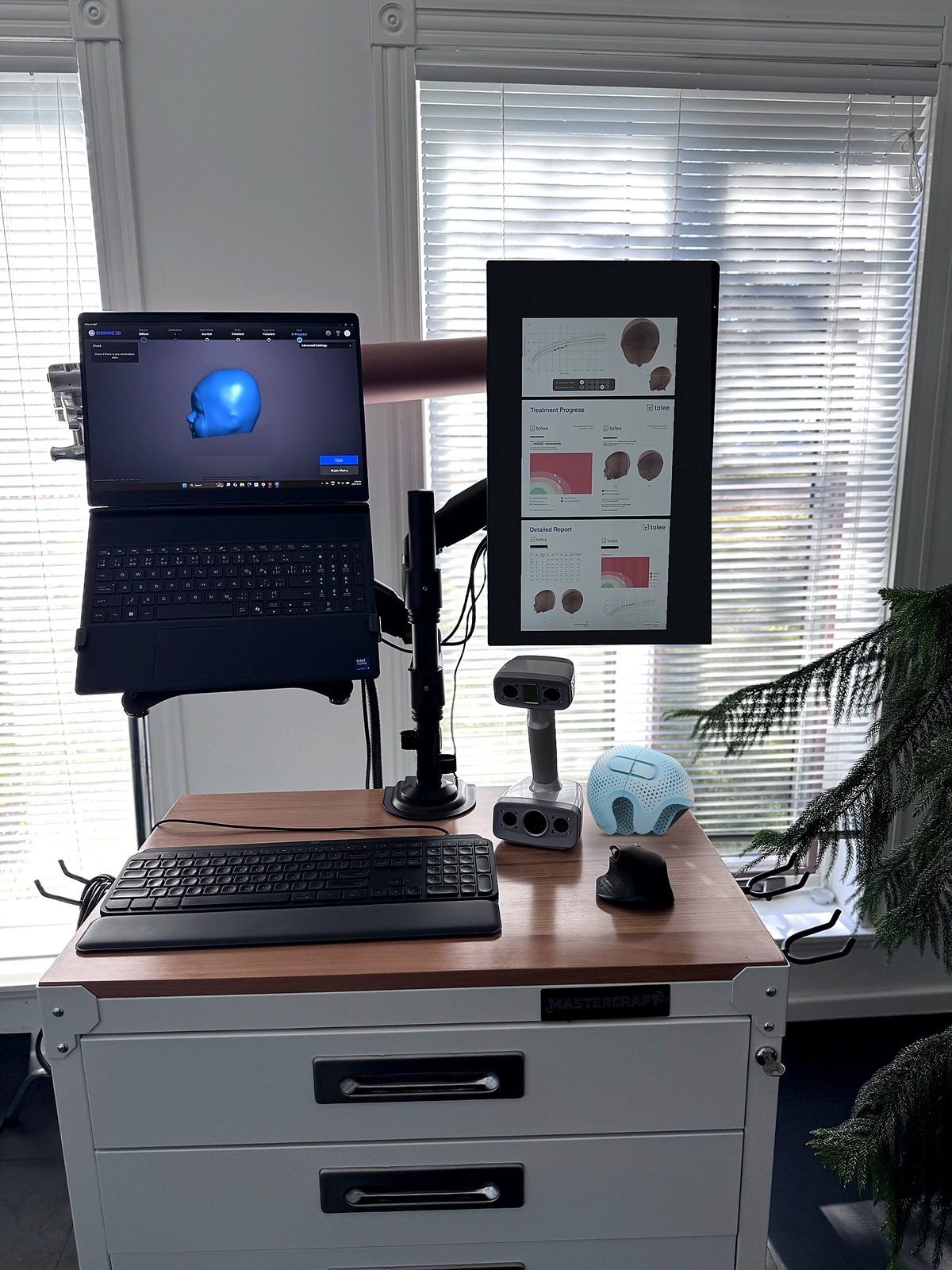
3D scanQuick, with a soft cap
14-day goalFrom scan to helmet fitting
One helmetAdjusts as your baby grows
Close to homeJust outside Regina
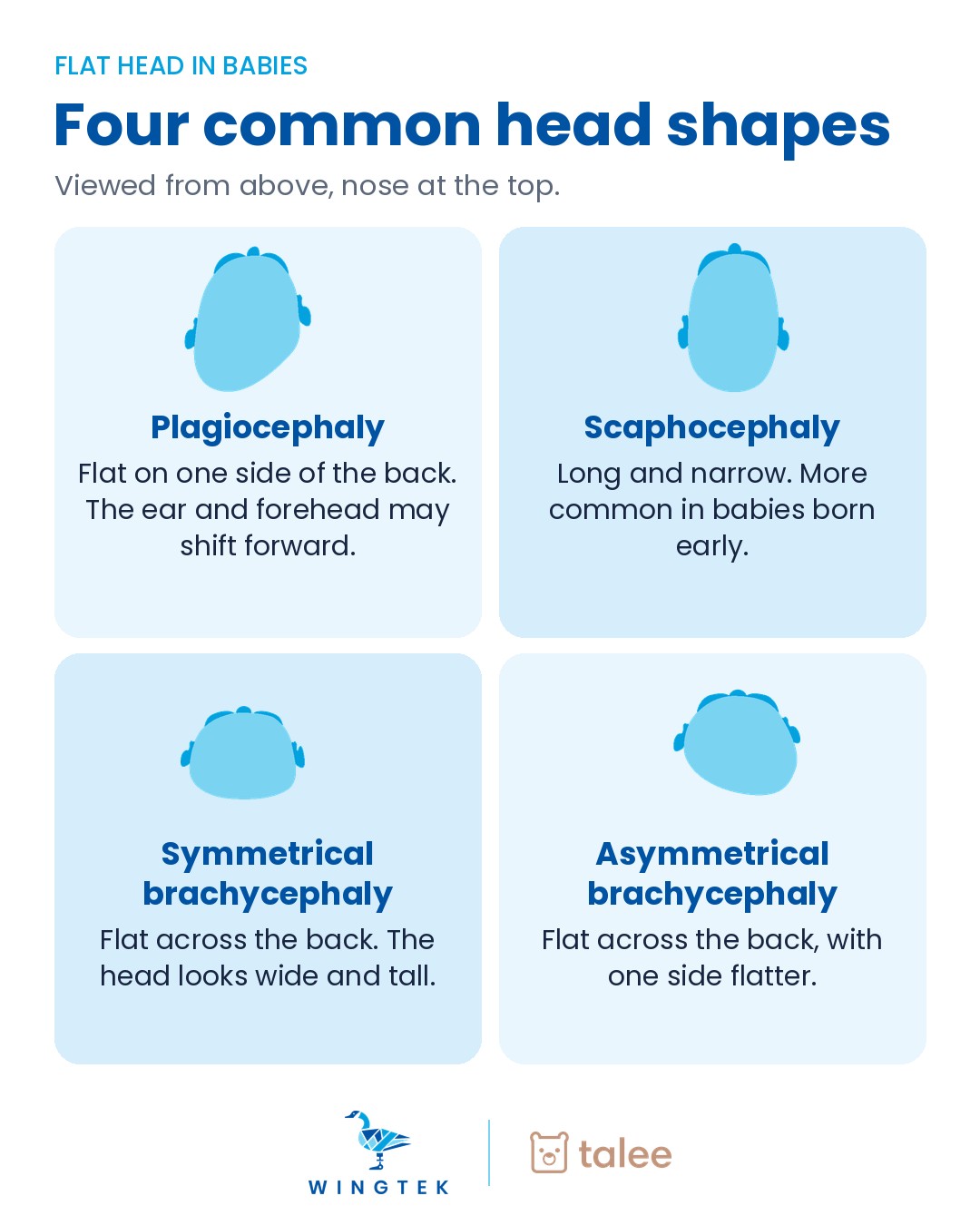
Look down at your baby’s head from above, ideally at bath time. One side of the back may look flatter, one ear may sit further forward, or the head may look wide and flat across the back. Babies who always turn one way are more likely to develop a flat spot.
A flat head is not just cosmetic. It can shift the ears, forehead and jaw, affect how the eyes line up, and make sports helmets and glasses fit poorly later on.
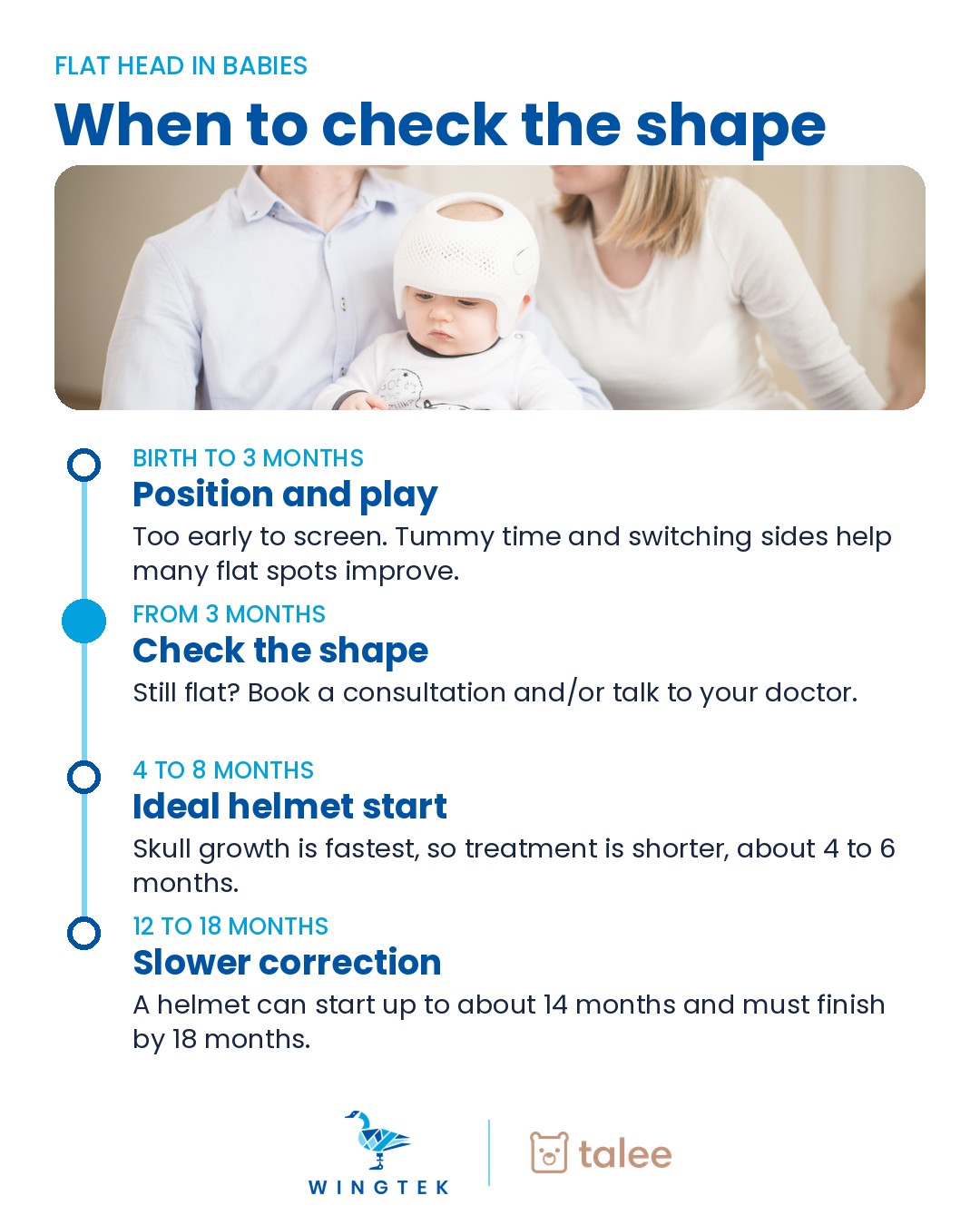
The skull grows fastest in the first months, so timing matters. If you notice a flat spot, the earlier it is measured, the more options your baby has.
Tummy time while your baby is awake and watched helps prevent flat spots. It also builds neck, shoulder and core strength. In this short video, a physiotherapist shows five easy positions.
Video: MyHealth.Alberta.ca
For more tips, see the Saskatchewan Health Authority Tummy Time handout (PDF) and our post on flat head in babies.
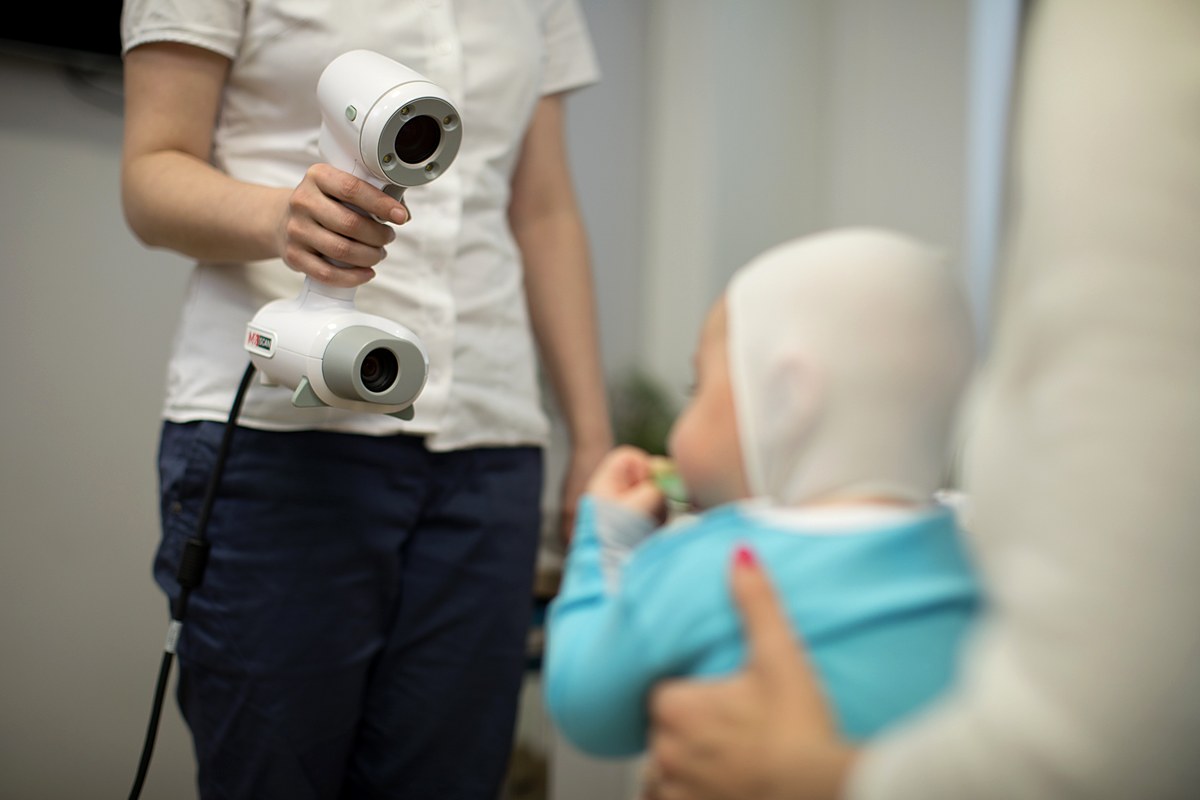
A 3D scan at every visit shows exactly how your baby’s head is changing. You and your doctor get the numbers.
The Talee 2in1 helmet changes inner layers as your baby grows. Invent Medical reports one helmet completes treatment in about 98% of cases.
Production is fast-tracked, with a goal of fitting within 14 days of the scan, because the skull grows fastest early.
Care from a Certified Orthotist, CO(c), in Emerald Park, just outside Regina.
We send reports to your doctor and work alongside your physiotherapist and pediatrician.
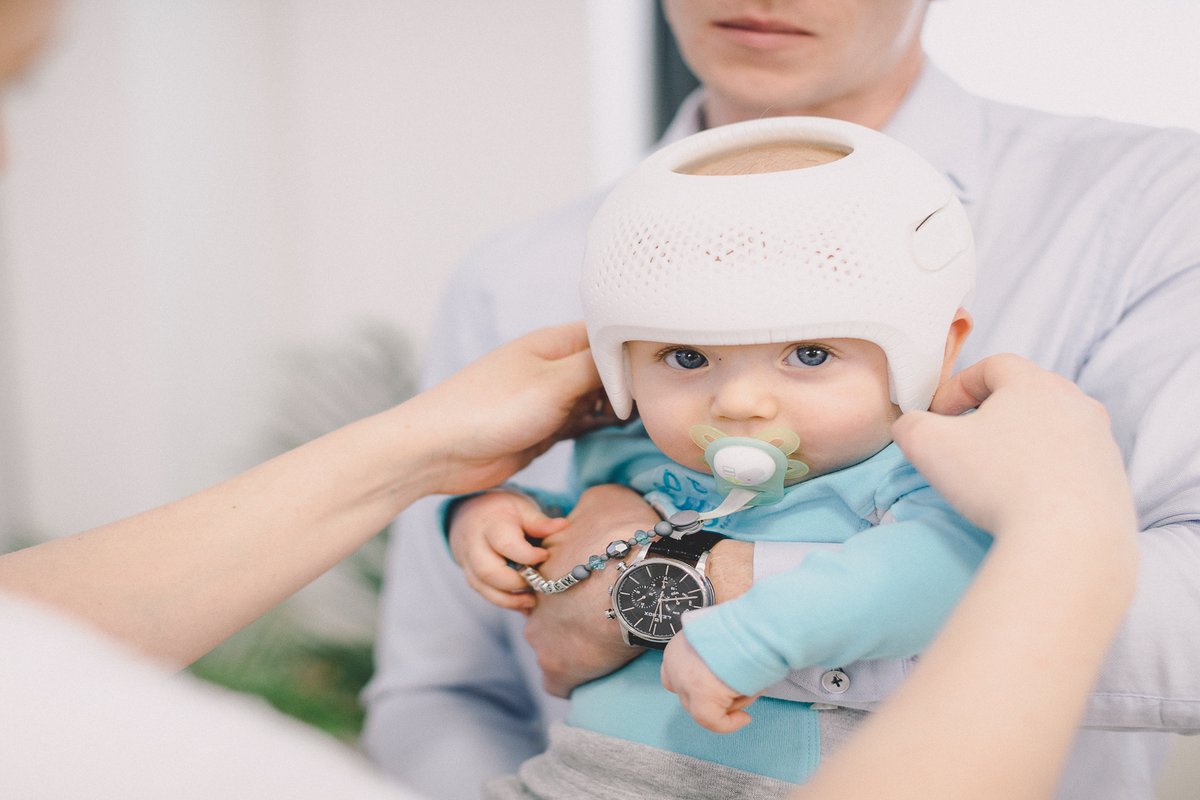
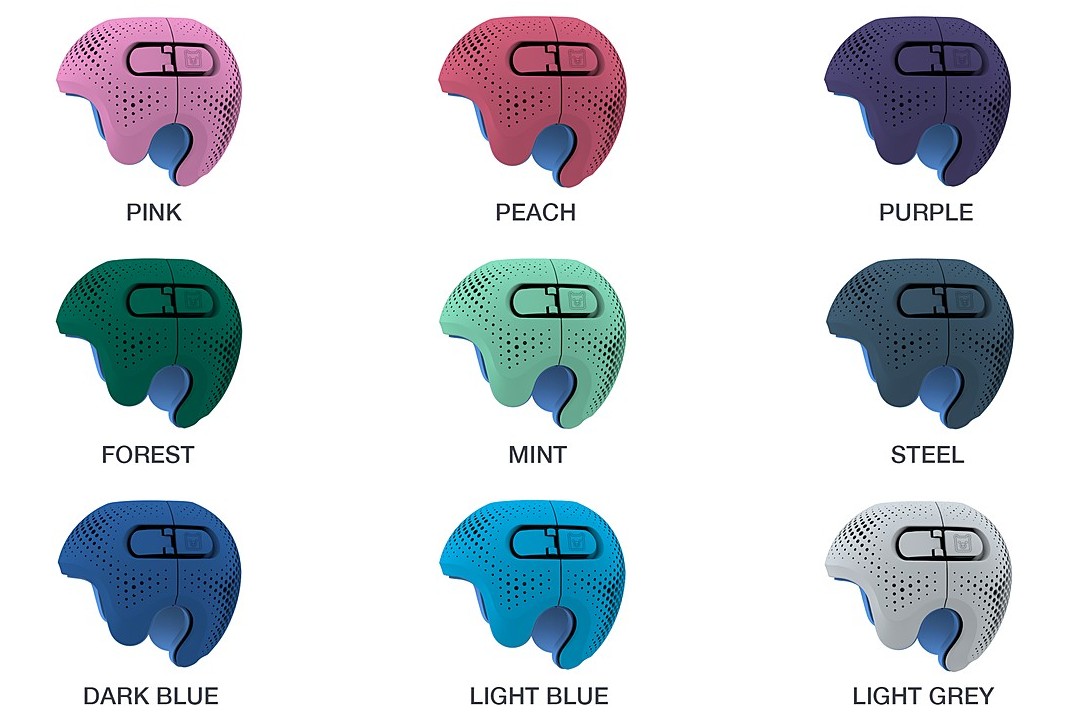
Talee is a thin, light, breathable 3D-printed helmet made from your baby’s scan by Invent Medical. Families choose a colour, a name and a symbol, and get progress reports with charts and 3D views, plus the Talee Parents app for support at home.
After craniosynostosis surgery. Some babies have surgery because a seam in the skull closed too early (craniosynostosis). After surgery, the neurosurgery team may prescribe a helmet to guide head shape as your baby grows. We fit the Talee Post-Op helmet for this, for babies about 3 to 18 months old. Ask us about Talee Post-Op.
Need a helmet to protect the head? Helmets for seizures, falls or after a craniectomy are different from baby helmets. Learn about our protective helmets.
Refer by fax to 1 (306) 912-7807 with the baby’s name, date of birth, parent contact and your concern, or use our online referral. We contact the family to book.
For moderate to severe flattening, you receive a report with the 3D measurements, giving you objective data to decide whether a helmet is indicated and to prescribe. A prescription is required before a helmet is made and dispensed. Suspected craniosynostosis should be assessed by a physician or neurosurgery first. After surgical repair, we also fit Talee Post-Op helmets when prescribed.
You can book a consultation and scan without one. A prescription from your doctor is needed before a helmet can be made and dispensed. If you do not have one yet, we send the scan report to your doctor to help them decide. Ideally, babies with a flat head are also seen by a pediatric physiotherapist and a pediatrician.
Screening starts after 3 months. The best time to start a helmet is 4 to 8 months, while the skull grows fastest. A helmet can start up to about 14 months and must finish by 18 months.
Usually 4 to 6 months for babies under 12 months. The helmet is worn about 23 hours a day after a 5-day break-in.
No. Your baby wears a soft, stretchy cap over the head and a small cape over the shoulders. The handheld scanner does not touch your baby and takes only a few moments.
Yes. WingTek fits Talee helmets, made by Invent Medical, in Emerald Park just outside Regina, for families across Saskatchewan.
Once we have your doctor’s prescription, production is fast-tracked. Our goal is to fit your baby’s helmet within 14 days of the scan, which allows time for production and delivery.
Call 306-566-4666, email [email protected], or request an appointment online.